A Fleeting Visit To a Great Museum

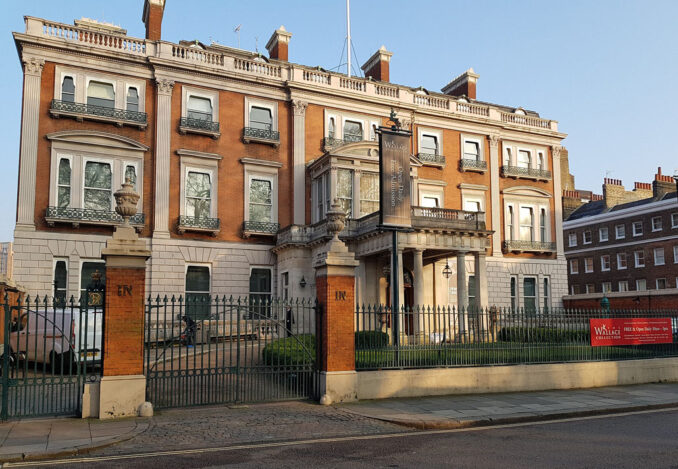
The Wallace Collection, Hertford House, Manchester Square, Marylebone, London

Hertford House, Manchester Square, London.
Hertford House, Home of The Wallace Collection.
CVB, CC BY-SA 4.0, via Wikimedia Commons. Cropped.

There are surely few greater joys than visiting a top flight museum, and getting close up and personal with some of the great creations of mankind.

It could be a visit to Duxford to see, and walk inside Concorde, or a visit to any of the Kensington museums, or to a municipal museum, where you might be flabbergasted to find yourself suddenly face to face with a great Lowry or Old Master painting.

A day trip to the Wallace Connection in Manchester Square, London, was a highlight of my first year as a university student – but that was a long time ago.

Some years later, in October 2025 to be precise, I found myself staying at a hotel in Marylebone for a family birthday celebration.

It was a weekend, and as I knew Manchester Square was just round the corner, I resolved to stagger round to the museum on the morning after the party, and drag along any partygoers who might be interested in having a look around as well.

This would be my first visit to the museum since student days, when it was billed, as it still is to this day, as a bit of a hidden gem, and a ‘don’t miss’ sort of place.

The Wallace Collection self-describes as: “……home to one of the most significant collections of fine and decorative arts in the world, including paintings, sculpture, furniture, arms and armour, and porcelain.”

It’s hard to disagree with that description.

The collection is displayed in a domestic setting within the main London townhouse of its former owners, Sir Richard and Lady Wallace, and is housed in twenty-seven rooms and galleries on the ground and first floors.

There is an additional Temporary Exhibition Gallery which was hosting the last day of an exhibition of ‘work’ by Grayson Perry on the day we were there. We gave that a miss.

When we arrived, the museum seemed a lot larger from the outside than the image I had in my mind’s eye from my previous visit in the 70s, but the inside was reassuringly familiar. Almost identical, in fact.

Being a Sunday morning, the place had a good number of visitors, and there was even a queue for a table in the restaurant.

We had no route plan, nor any desire to see any particular items, or objects from a particular period, or of a particular type, so we began to wander and browse the rooms as we came across them – as you do.

It’s the sort of place where you can turn a corner and see something you might recognise. The treasures here are, quite simply, superb.

Of course your brain can only absorb so much beauty, and after about an hour and a half, we’d had enough, and left for a coffee back at our hotel.

A fleeting visit barely scratches the surface, and we didn’t even start on the armour.

These days, photography is allowed inside the museum, because most people have smartphones which are silent, and can easily have the flash disabled. Gone are the days of clicking shutters and clacking camera mirrors, and for high end museum visitor photography, silent, mirror-less cameras are now available.

There’s little more to say, so here are some random pictures instead. Let the art speak for itself.
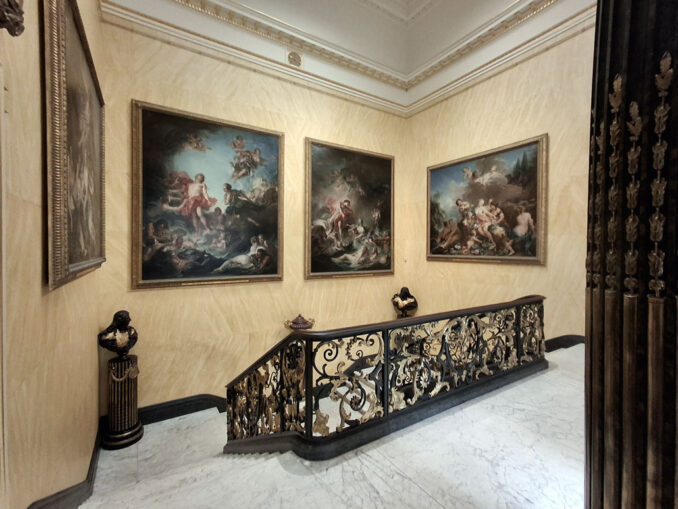
Wallace Collection grand entrance staircase
The top of the grand Entrance Staircase, with wrought iron balustrade, made in 1719 for the Banque Royale in Paris, commissioned by John Law (1671-1729). You’ll have to visit yourself if you want to see the staircase in all its glory from ground level. The voluptuous Rococo paintings are by François Boucher (1703 – 1770).
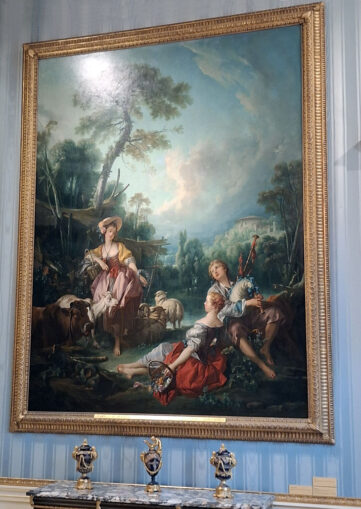
‘Pastoral with a Bagpipe Player’ by François Boucher
A closer look at a François Boucher painting ‘Pastoral with a Bagpipe Player’, featuring a shepherdess, a flower girl and yes, a young man playing bagpipes, the picture set in an Italianate landscape. I can’t help thinking there’s a weakness in this painting, as the flower girl is leaning back rather awkwardly, either against the man’s leg, or simply against thin air.
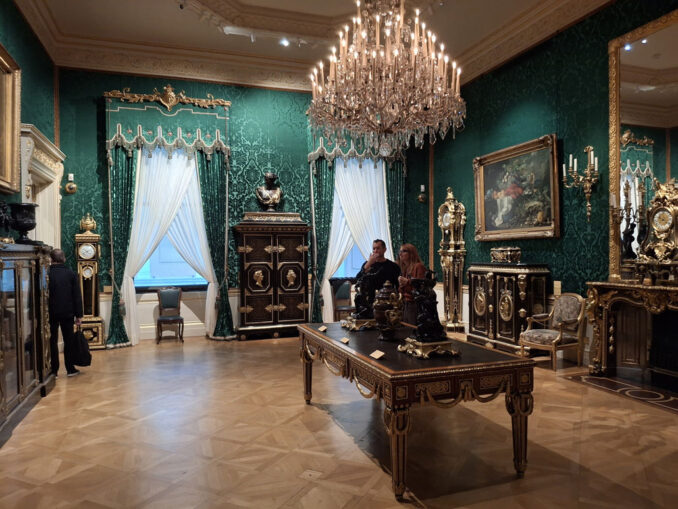
The Large Drawing Room at The Wallace Collection.
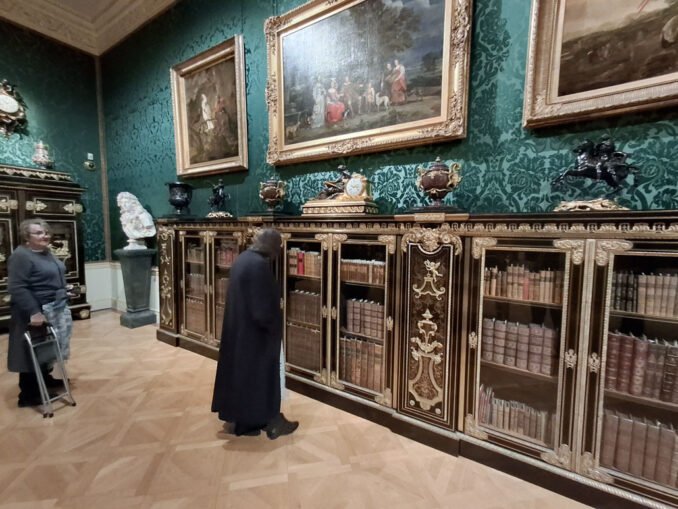
The Londonderry Cabinet
That’s some bookcase! The Londonderry Cabinet made by Etienne Levasseur (1721–1798).
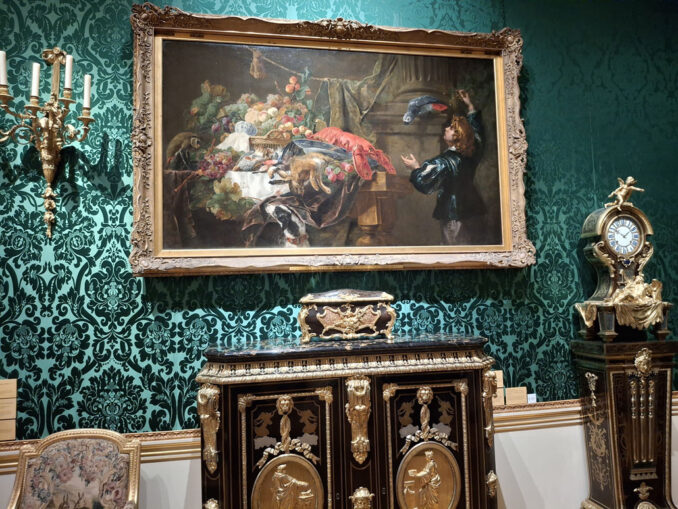
‘Still life with a Page’ by Joannes Fyt.
‘Still life with a Page’, painted by Joannes Fyt (1611 – 1661), or possibly Erasmus Quellinus (1607 – 1678).
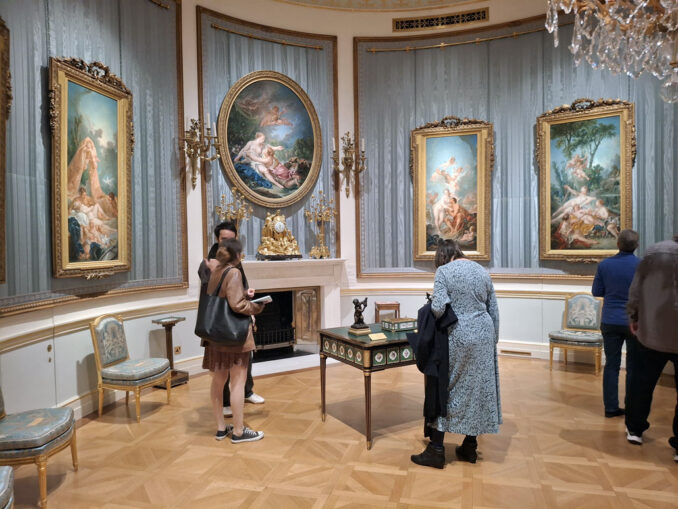
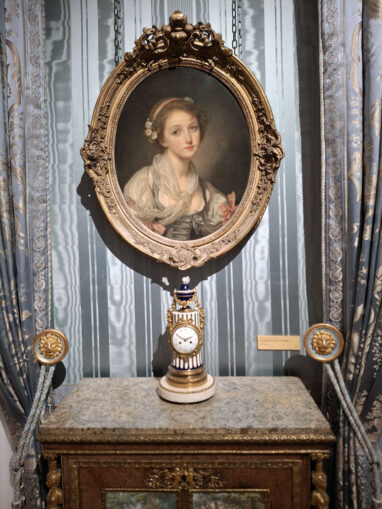
The Oval Drawing Room at The Wallace Collection.
‘Girl with a Gauze Scarf’ by Jean Baptiste Greuze.
‘Girl with a Gauze Scarf’ by Jean Baptiste Greuze (1725 – 1805).
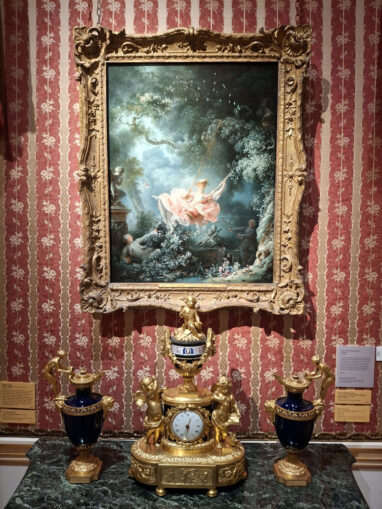
'The Swing' by Jean-Honoré Fragonard
You’ve surely seen this painting before, and should be able to come up with the correct title, but you are less likely to be able to name the artist. It’s one of the most emblematic images of 18th-century French art. ‘The Swing’ by Jean-Honoré Fragonard (1732 – 1806). The French title ‘Les hasards heureux de l’escarpolette’, translates to ‘The happy accidents of the swing’.
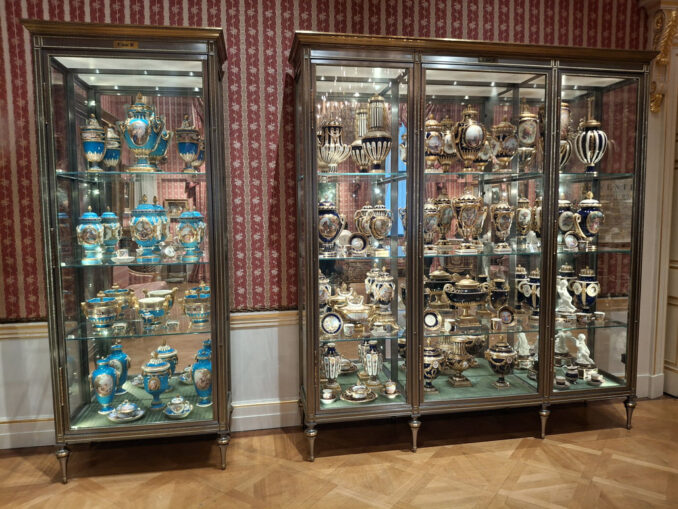
Sèvres porcelain.
Two splendid cabinets of Sèvres porcelain in The Study. Pieces in the luminous turquoise blue known as ‘bleu céleste’ in the left hand cabinet, and in ‘bleu lapis’, and ‘bleu nouveau’ (later known as ‘beau bleu’), to the right.
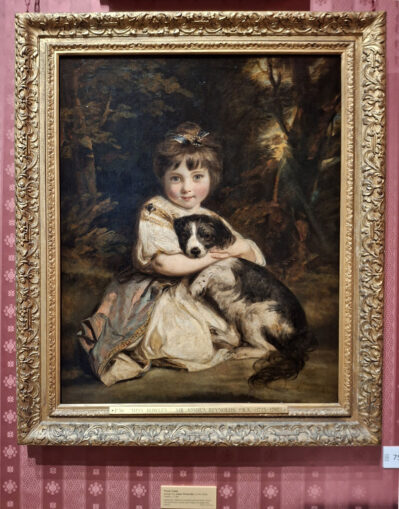
'Miss Bowles' by Sir Joshua Reynolds.
‘Miss Bowles’ (grabbing her dog tightly, as children do), by Sir Joshua Reynolds.
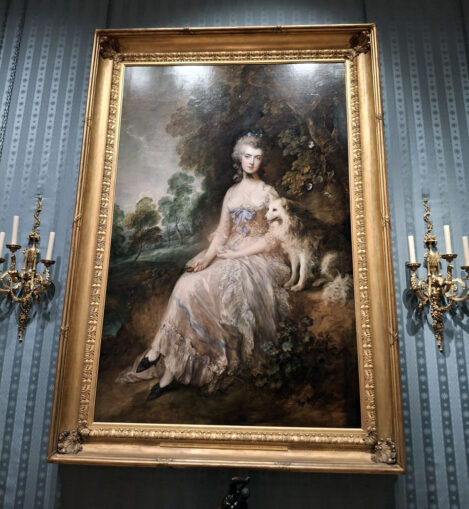
‘Mrs. Robinson’ by Thomas Gainsborough
‘Mrs. Robinson’ (Perdita) painted by Suffolk-born artist Thomas Gainsborough (1727 – 1788) in 1781. Mary Robinson was an accomplished authoress and actress who met the 17-year-old Prince of Wales (later George IV) while playing Perdita in a production of ‘The Winter’s Tale’. She later became his mistress.
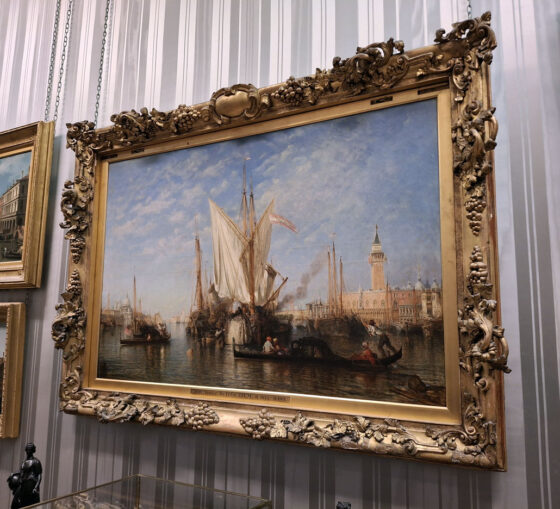
‘Venice: the Bacino di San Marco with Fishing Boats’, by Félix Ziem
What museum is complete without a painting of Venice? The Wallace Collection has a whole roomful in its dedicated ‘Venice Room’, primarily featuring works by artists like Canaletto and Guardi. This painting is ‘Venice: the Bacino di San Marco with Fishing Boats’, by Félix Ziem (1821 – 1911).
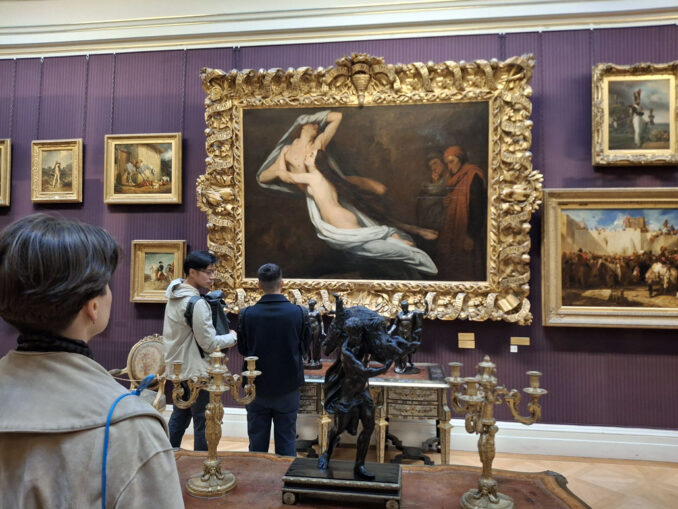
‘Francesca da Rimini’ by Ary Scheffer
‘Francesca da Rimini’ by Ary Scheffer (1795 – 1858), whose story is told in Dante’s ‘Inferno’ – a tragic tale of love, betrayal, and murder. The canvas is housed in the grandest of frames, with an image size of 166.5 x 234 cm.
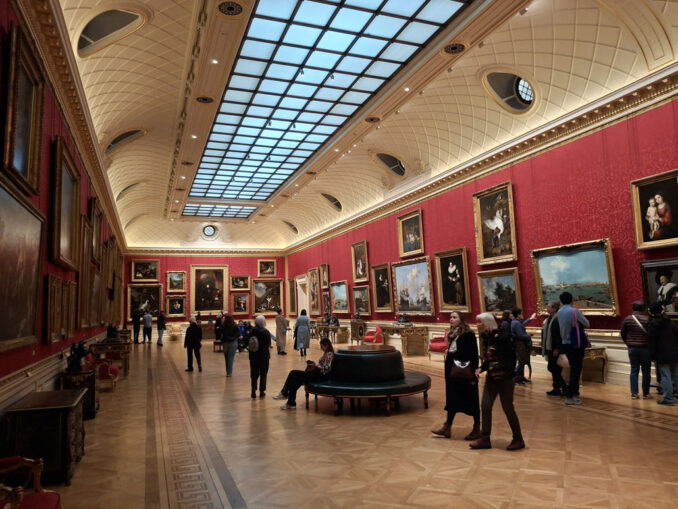
The Great Gallery at The Wallace Collection
The wonderful toplit Great Gallery contains many famous and priceless works. The Laughing Cavalier by Frans Hals (1582/3 – 1666) can just be seen at the extreme right of the photo.

The museum has uploaded 234 videos onto its YouTube video channel at the time of writing, but I’ll end with a very short video (0:16) I made of something that caught my eye in the Large Drawing Room. While photography is allowed, the use of tripods, monopods, and suchlike is definitely not allowed, for obvious reasons, so there’s a little camera shake in the video.

Text & Images © 2025 NeverUpToTheJob