
Last time, we looked at the three serious candidates in the forthcoming Gorton and Denton by-election: representing the Greens, Labour and Reform UK. This time, we will look at the constituency.
Part of it lies within the Manchester City Council local authority area, and part within Tameside. There are eight wards: four from the former and four from the latter, although only parts of Tameside’s Audenshaw ward and Denton North East ward fall within the parliamentary constituency.
Not entirely unknown territory to those who live outside the area, Puffins will be aware that Gorton was the home of the Beyer Peacock locomotive works, parts of which remain on Gorton Lane. Likewise, Longsight is famous for its railway depot, although the actual sheds and sidings lie just outside the constituency boundary.
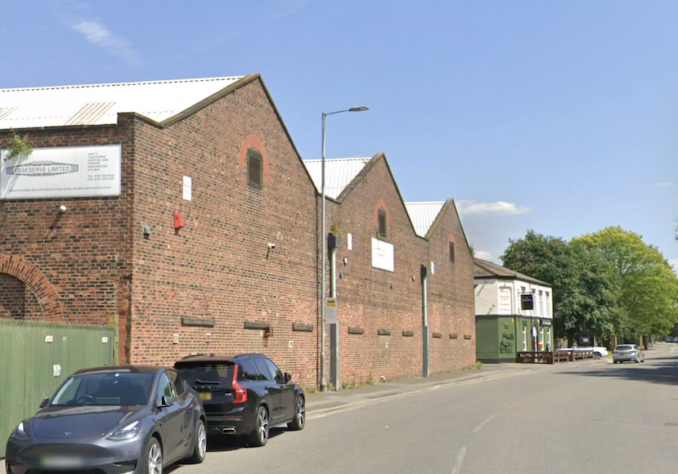
© Google Street View 2026, Google.com
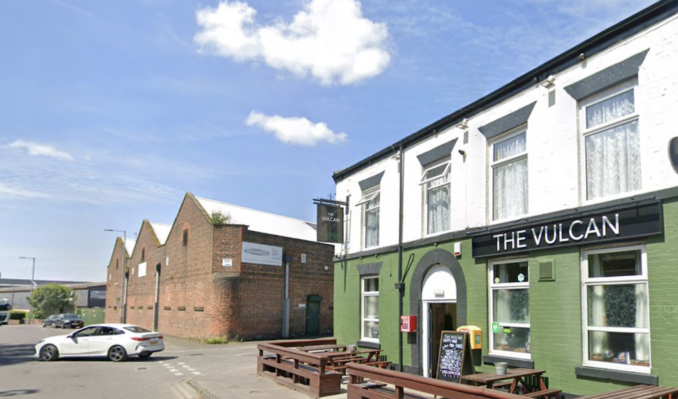
© Google Street View 2026, Google.com
When I was there, decades ago, I would lodge in Whalley Range, a couple of miles away. Even then, long-time residents were leaving as the area changed and became unsafe, especially for women. A similar process has also taken place in the nearby wards, which now have noticeably different demographic profiles. Elsewhere, areas in Tameside, particularly around Denton, are largely White British and tend to have a strong working-class character, while the Manchester wards are more densely populated and include high numbers of students, graduates and Muslims.
Overall, the constituency’s White British population stands at 51.1%, well below the national average, alongside a Muslim population of 29.6%, and a mix of other ethnic groups, including 5.4% from other White backgrounds, 4.2% from mixed or multiple ethnic groups, and 3.5% from other ethnicities. In terms of religion, the area is marked by a large Muslim presence.
Reflecting the racially and religiously segregation of Mayor Andy Burnham’s Manchester, the ward with the largest Muslim population is Longsight, where around 60.1% of residents are Muslim. Levenshulme also has a very high share, at about 51.1%, making these two Manchester wards the highest in the constituency for Muslim population. Other Manchester wards, such as Burnage and Gorton and Abbey Hey, have smaller Muslim proportions (36.0% and 18.1% respectively), while the Tameside wards (Audenshaw, Denton North East, Denton South and Denton West) have much lower percentages, typically under 7%.
If you’re wondering what Levenshulme is like, log on to Mumsnet and check out the histotic posts of a certain Ms Hannah Spencer, who happens to be the Green Party candidate:
‘It is just hugely blighted by a mile long row of (suposedly) money laundering takeways…It is centred around one of the busiest roads in Manchester which makes walking around not great. I thought I would regret leaving it but I’m so glad I moved, you can get so much more for your money elsewhere.’
Setting aside religion, nearby Longsight also has a diverse racial profile. According to the 2011 UK Census, 72.9% of the population being, up from 50% in 2001. By the 2021 Census, only around one person in six in the ward was White British. And let’s not forget, in the intervening five years, there has continued to be mass, uncontrolled, unlimited immigration.
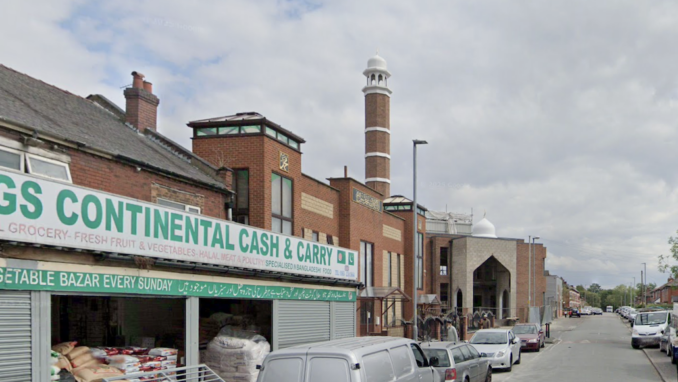
© Google Street View 2026, Google.com
When it comes to the by-election, caveats apply. The Muslim population tends to be young; according to the 2021 Census, 33% of Longsight’s population is under 18 and therefore not eligible to vote. Now you know why Labour wants to lower the franchise to 16. On the other hand, Muslim participation increases as they vote as a block organised by ‘community leaders’ – not least in postal voting. Keep in mind, there is nothing to stop people from voting by post from Pakistan.
In the 2024 general election, turnout in Gorton and Denton was only 48%; therefore, a disproportionately high Muslim vote would be decisive in the by-election. With George Galloway’s Islam-leaning Workers Party of Great Britain not fielding a candidate, one might assume that Labour, with a 50% constituency vote share at the last election, would be a shoo-in. Think again, and advise your Labour Party contacts to re-consider the implications of lowering the voting age.
In their end-of-January polling, Electoral Calculus predicted that, at a general election, all the Tameside wards would fall to Reform UK, along with Manchester’s Gorton and Abbey Hey. The other three Manchester wards would be won by the Greens, with Reform UK having a 61% chance of taking the seat.
However, the local 26 February plebiscite is not a general election. As a result, the Greens can flood the constituency with volunteers — 400 a day, according to the party — travelling from as far afield as Birmingham, Barnsley and Belper. They claim that all 40,000 properties can be leafleted in a single day, with flyers distributed from boxes draped in Palestinian flags to highlight the Greens’ support for Gaza.
Earlier this week, in an attempt to dampen leadership-destroying speculation about their relationship, Wes Streeting released details of private conversations with Peter Mandelson. Included were the following lines regarding Streeting’s Ilford constituency:
“I fear we’re in big trouble here — and I am toast at the next election. We just lost our safest ward in Redbridge (51% Muslim, Ilford South) to a Gaza independent. At this rate, I don’t think we’ll hold either of the two Ilford seats.”
In response, Labour will seek to shore up its Muslim block vote; expect the long-deferred definition of Islamophobia to be published conveniently during this campaign. But is it too late? Might the bookies tell us?
They agree with Political Calculus – sort of. Oddschecker places Labour a distant third at around 9/1, the assumption being that it has lost its Muslim block vote. Reform UK hovers at around 7/4, with the Greens clear favourites at 1/2 on.
This does not necessarily contradict the Electoral Calculus data. Rather, it reflects an assumption that, in the wards they dominate, the Greens will secure a higher turnout than Reform will in theirs, owing to a more organised vote, combined with an “anyone but Reform” sentiment driven by Farage-phobia and the Nazi card — rhetoric deployed by Labour but benefiting the Greens.
For the Zac Polanski (NHRN) led party has (successfully) shifted their personal Ovenden window beyond environmental issues to a hopelessly naive, but attractive to some, virtue signalling over human rights, international law, anti-colonialism, and opposition to occupation and military violence. In this constituency, thinly disguised dog whistle code words for anti-semitism.
Simultaneously, Labour does the Greens campaigning for them. When speaking to the press, Labour candidate Angiliki Stogia said of Reform UK: “I am angry. I am very, very angry. How dare they come here and spread this division?” “For them, this is a show. For me, this is my community. These are my people,” said the Greek of her Muslim-dominated constituency.
The Guardian reports that she is emphasising themes of unity and standing against division, framing her candidacy around bringing communities together and rejecting the ‘divisive politics’ of Reform UK’s messaging. In doing so, she drives her voters towards the sectarian go-to Green Party and encourages herself to last place among the three principal contenders.
A Green victory may not be so bad for Farage, as across more representative constituencies it will persuade voters towards his side of what has now become the sectarian politics of modern Britain. The worst outcome would be for Starmer, with the Greens being able to claim all three of the Islam, hopeless naivety, and stop-Farage cards.
© Always Worth Saying 2026