It’s been a while since I wrote my last article. 4 years ago, to be precise. I have been reading all the comments for my sins and you guys have made me think and made me laugh over the years and I thank you all, especially Swiss Bob for all his hard efforts running this site. This is still (see what I did there?) the greatest place on the internet.
And through all those years, I have been enjoying my number one hobby: flying distilling. Particularly distilling gin.
However, despite saving a huge amount of cash by drinking my own, I was never really getting that dry juniper smell and flavour that you get from commercial gins. I had used my Still Spirits T500 to boil off the alcohol from the ferment and pass it over a hanging muslin cloth of botanicals where the infused vapour would condense at the top of the column. Despite the convenience of an “all in one” process, the result of this method stripped botanical flavours from the vapour and totally buggered up the saddles in the distillation column, which required regular thorough cleaning.
A few years ago, I went with Ms Geeks to the Bombay Sapphire Distillery in Witchurch, Hampshire for one of their tours and then it struck me. I had been making my gin the wrong way.
The answer was standing tall in front of me in all its majestic, cuprous glory. Bombay Sapphire’s process is to buy in their neutral 96% ABV alcohol from another supplier, where it is evaporated in a copper Carterhead still and the vapours are passed through a mesh basket containing the botanicals, condensed, diluted with water and bottled.
So, I decided to change my original gin making process and break this down into two stages: –
- Create the purest alcohol I can
- Pass this pure alcohol through a clean basket of botanicals
The first stage was to create the alcohol by using the Still Spirits Pure Turbo Pack and 6kg of cheap Costco refined sugar and create a 15% ABV alcohol ferment. This takes around 7-10 days plus 2 days extra for clearing.
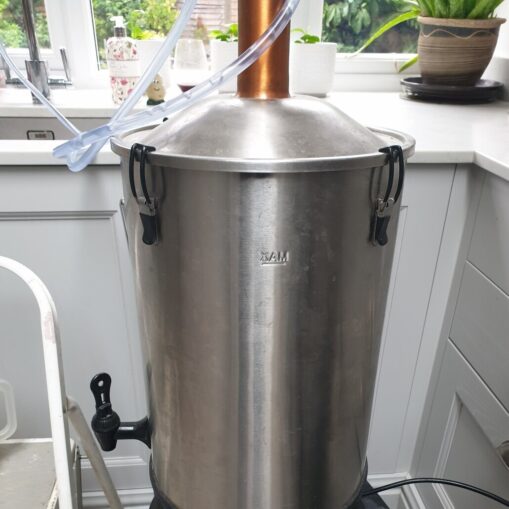
This ferment was then distilled in the T500 to get around 3.7 litres of 92% alcohol.
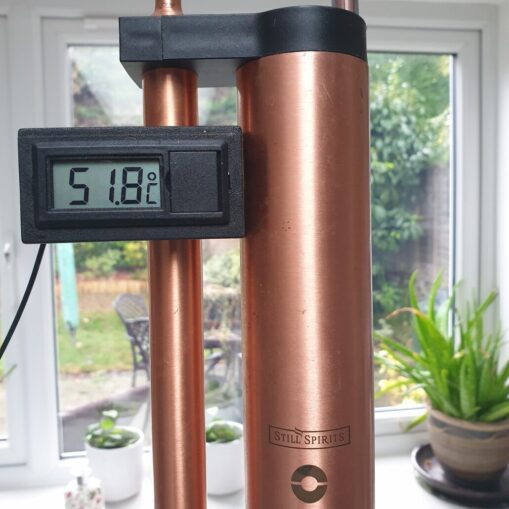
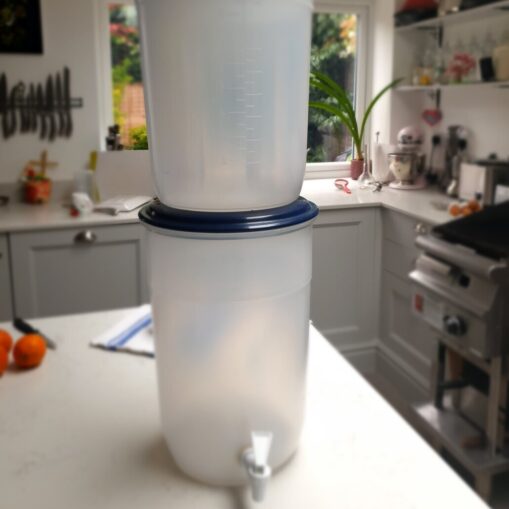
To purify the alcohol further, the Still Spirits EZ Filter carbon system was used to remove any odours, unpleasant flavours and long chain alcohols resulting in a brighter, fresher alcohol. The alcohol is first diluted to 40% ABV with filtered water (or tap water but remove the chlorine by using half a Campden tablet) and allowed to drip through the carbon filter. This process takes around 8 hours, so it’s best carried out overnight.
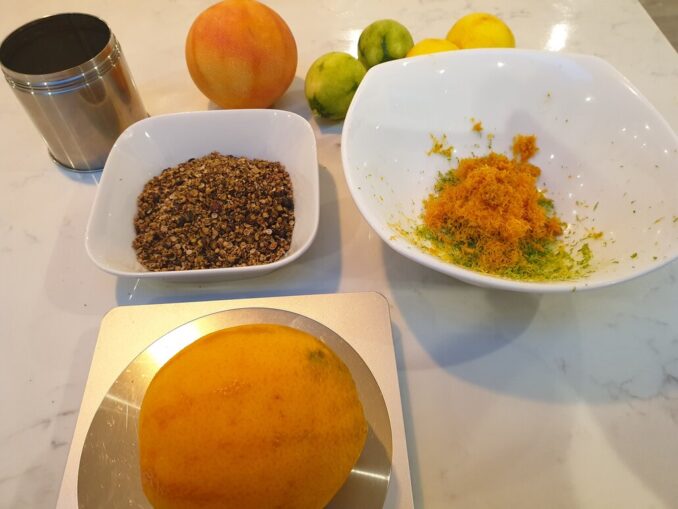
The next stage is to make your botanicals mix. There are plenty of recipes out there and I like a very dry London gin flavour, so I opted for this recipe: –
- Juniper: 40g
- Coriander: 20g
- Lemon zest (or dried peel): 1g
- Angelica root: 2g
- Orris root: 1g
- Liquorice root: 2g
- Cardamon pods: 1 crushed
- Grains of Paradise: 1g
You can buy a Still Spirits Gin Botanicals London Dry Gin packet for £4 with a similar make up to the recipe above, but sometimes it’s nice to experiment with your own flavours. I’ve tried dry roasting the coriander seeds for a more Christmassy, caramel tone, for instance.
Using a pestle and mortar, lightly crush the botanicals to release their oils. Do not put them into a coffee bean grinder and create a block of powder – you will lose flavour and possibly create vapour locks in your still.
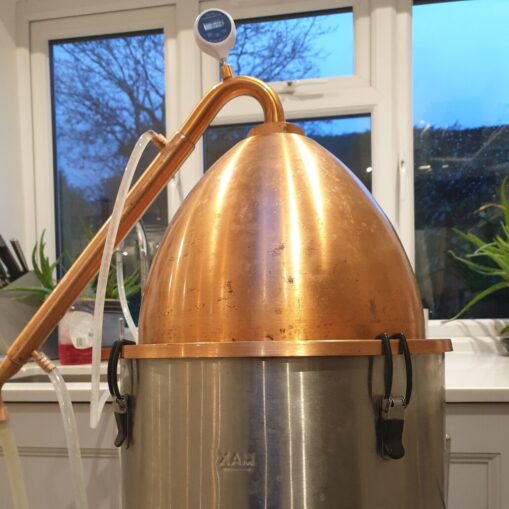
Place this in your Still Spirits Botanical Basket which fixes onto the copper T500 Alembic Dome and attached Condenser.
Add the filtered 40% alcohol to the boiler and make up to 20 litres using filtered water. This extra water will create a smoother distillation process and final product. The final %ABV will be a little lower than not adding the extra water, but the product will have a better flavour. This process will take an hour or so and there’s no need to take off any heads at the start of the run. Make sure you stop the distillation when the flavour profile from the condenser starts to drop off or the temperature reaches around 93°C. There’s lots of smelling and tasting with this distillation lark, so leave your car keys in the drawer!
You can then use an alcoholmeter to calculate the final %ABV and dilute it with filtered (or distilled) water to your preference. I go over the full Tanqueray Export Strength to 50%, ‘cos my liver is hardcore. Leaving it diluted in the bottle helps to fully bring out all the botanical flavours as well, so do not store it straight out of the still. The gin may go cloudy (louching) when you mix it with tonic, but this is due to the dissolved botanical oils in your homemade gin. Commercial brands often remove the oils to avoid cloudiness through chill filtration or stabilisation.
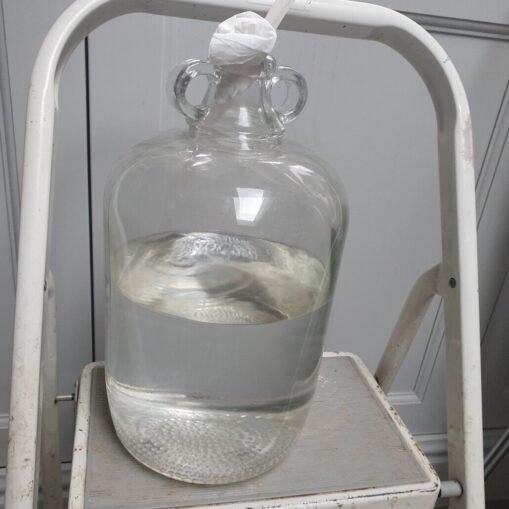
To make the perfect G&T, I take a large, chilled gin glass and add a handful of ice, a good splash of Geek’s Mental gin, a Fever Tree (refreshingly light on its feet) Mediterranean tonic water and a slice of pink grapefruit. For that raging quare look.
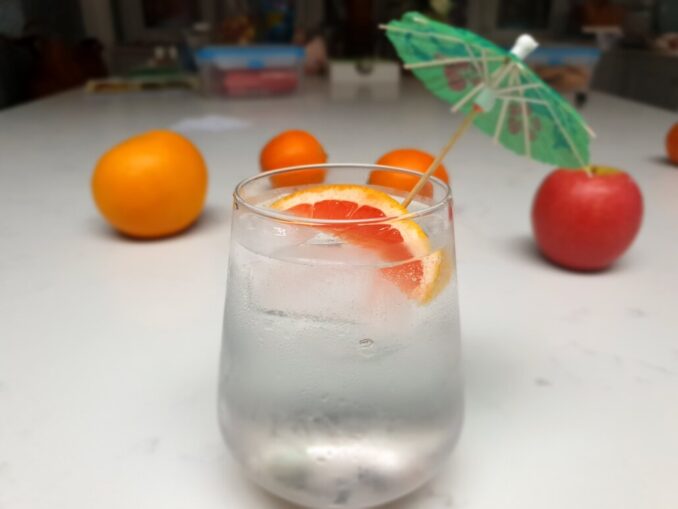
I can honestly say that this extended distillation process, inspired by the Bombay Sapphire Distillery, creates a London style dry gin that is indistinguishable from any of the top commercial brands and at £2.90 a litre, is an absolute bargain!
Text & Images © Beware of Geeks Bearing GIFs 2026
The Goodnight Vienna Audio file