
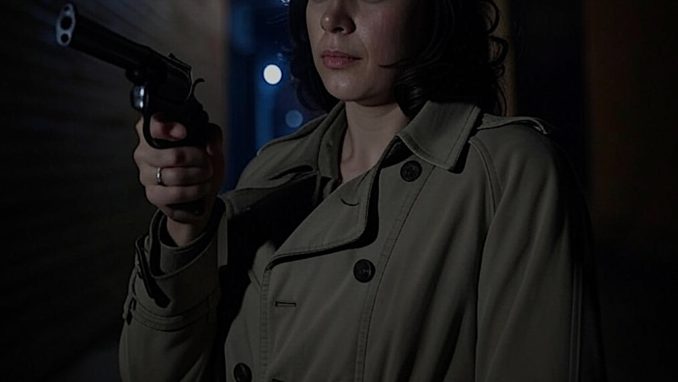
Image generated using GROK AI
Clara escorted Jinnie down to reception in the Executive lift and then back up to Mission Planning in one of the standard lifts. Clara said, “I hear you once ran this department.” “Yes, that was my domain before I left to have my twins,” replied Jinnie, “and Alan was my deputy. I guess I could have been ‘C’, the PM at the time told me the job was mine, if I chose to come back from maternity leave. But it was a choice of working here full time or developing my catering interests, where I could work from home and from the office in Potters Bar, and raise my twins. I chose to develop the catering career and the twins, and I have never regretted it. I still get asked to take part in the occasional special mission.” “So, you know Greta then?” asked Clara. “Oh yes,” answered Jinnie, “it was me who recruited her. We went to school together; in fact, we were in the same class.”
***
Clara pressed the buzzer outside Mission Planning and waited until a voice said, “Hello, can I help you?” Clara spoke into the grill, saying, “It’s Clara, ‘C’s PA. I have Dame Jinnie De Luca with me. She has a meeting with Greta.” The door lock buzzed and Jinnie heard the lock click open. The voice said, “Please come in and wait. Someone will be with you immediately.” As she waited, Jinnie took in the open-plan office. It was exactly as she remembered it. It had clearly been repainted recently, but in the same colour scheme. Jinnie recognised a lot of the staff, several of whom nodded to her or mouthed ‘hello’.
Greta bustled out of her office and called Jinnie over. Once in the office, Greta closed the door behind them and hugged Jinnie, saying, “Hello, it’s good to see you. Gosh, you are brown. I didn’t expect that. I might have to change your legend.” “As I have no idea what it is,” said Jinnie, “I can’t comment.” “Oh, I forgot, you haven’t been briefed yet,” said Greta. “I suppose we’d better get on with it, as I understand you are needed on station. Right, this time round you are a rich Swiss widow who got a fortune left her by her dead husband. I suppose you could have been to the Caribbean on holiday. It sounds like something a rich widow would do. Anyway, this legend gives you an excuse to speak French and Italian as well as German, and maybe not be absolutely perfect.”
“It’s also a good way to get into Germany,” continued Greta, “as there are regular trains to Berlin from Basel, and you can fly to Basel from multiple British airports. Basel Airport is a little strange, as you can exit into either France or Switzerland. The airport is actually in France but is divided into French and Swiss parts for arrivals and departures. When you get off the plane, you go through either French or Swiss immigration and customs. In your case, you go through the Swiss side and get a taxi into Basel. It is a fixed 50 Swiss Franc fare to the city centre. You travel down a motorway that is designated as Swiss, despite being in France for about the first mile, and then over the border, which doesn’t exist except as a line on the map, into Switzerland.”
“That all sounds very odd,” said Jinnie. “It is a bit,” said Greta, “but it works. I have had a bit of a change of plan. I was going to send you into Basel on a British passport and swap you onto a Swiss one once there. But how about we have you coming back from a Caribbean holiday via a short break in London? I’m sure we can have the records show you flying return on BA, Basel to London, and, say, London to Antigua, staying a month in a hotel with a stop-off to visit friends in London on the way back. A wealthy Swiss-German lady like you will have flown first class and stayed at the best hotels. We can lean on people to fabricate the records. That will explain the tan, and if we get the right stamps in your Swiss passport, it will look good.”
“That all makes sense,” said Jinnie. “Have me having stayed at the Ennios Hotel in Antigua and at Heathrow. They are both five-star, and I can guarantee they will cooperate, as they are part of my group of companies.” “Excellent,” said Greta. “BA will cooperate, they always do. They know which side their bread is buttered. Now, we set up a luxury flat in Basel ages ago, and the paperwork shows that you took sole ownership four years ago when your husband, Thomas, died in a climbing accident. The legend is sound, as a Thomas Meier died in an accident and it was in the French papers at the time. He was a rich banker and left everything to his wife, Marie. She retains his businesses, takes little to no interest in them, but enjoys the income it generates, likes to travel, and lives off the income.”
Greta continued, “The real Marie Meier is on an extended cruise around South America with a man friend who is not acceptable in Swiss society, so it is all hush-hush, and she will be out of touch for at least two months. We will make that happen. Her house on the banks of Lake Zurich is locked and shuttered. Contract gardeners and house maintenance companies look after the property, but Marie hasn’t been seen in many months and is not expected any time soon. She looks similar to you, with blue eyes and long blonde hair, so that helps. However, we have had to invent a reason for your visit to Berlin, and the best we could come up with was a newish German man friend. Some years ago, we invented a rich German industrialist who lives in Berlin but has interests in various German cities. We had him buy a business in Basel last December, so he could meet you. He has visited Basel several times since and has even been seen visiting the flat several times.”
“The cover story has him visiting Frankfurt for business and joining you on the train from Basel to his home in Berlin,” said Greta. “Hence why you are travelling by train and not flying from Zurich. We have had this agent in place, in this role, for over two years, and he has been invaluable to us for passing on industrial espionage, and his companies are actually making money and helping pay for this mission. Anyway, his home is a luxury apartment in Mitte, which is where the TV tower is, and he has underground parking for his Mercedes GLS Maybach and his SLM Roadster.”
“How secure is the apartment?” asked Jinnie. “As secure as we can make it,” replied Greta. “All the staff, from his housekeeper to his cleaner, have been on our books for years. The apartment is scanned daily for bugs. Our other agents have never picked up a whisker of suspicion about Manfred Hoffmann. The business is genuine, pays all its taxes without question, and even has contracts with the government.” “What is Manfred like?” asked Jinnie. “He is handsome,” said Greta, “and really nice, or was when he was here three years ago when we produced his legend and planned his mission. He is ex-SAS and had half the girls out in the office lusting after him. He speaks perfect German and French. We put him in as a sleeper, and it was ‘C’s decision to activate him.”
“We need you out in Berlin soon. The quicker this tower is down, the better. ‘C’ is ready to tell Hanna to ‘go’. You are the last piece in the puzzle. We have you on a BA flight on Wednesday lunchtime, and we think it best if you spend a couple of days in Basel and catch a train on Friday lunchtime. Manfred will join you at Frankfurt Bahnhof, on the train into Berlin, arriving early evening. At the moment, the operation is timed for Saturday night/Sunday morning. Your sister has already done a recce and is happy, but we have Saturday afternoon for you to have a look for yourself.”
***
In the chauffeured hire car from the airport to the Basel apartment, Jinnie reflected on how easily she had passed through the Swiss side of the airport. The passport had operated the e-gate without the slightest hesitation, and she was through to pick up her bags. As suited a wealthy widow, she had matching suitcases filled with lots of freshly laundered and dry-cleaned clothes in Ennios packaging. A butler at the Ennios Heathrow had packed the cases and had them put in the VIP airport shuttle Bentley to Terminal Five, where the driver had hailed a porter who took them to the BA Business Class check-in.
Marie Meier had spent the previous night in one of the VIP suites and had dined in the ‘Trattoria Trevi at the Ennios Heathrow’ and really enjoyed the meal. The food had been excellent, and the service faultless. Jinnie had never visited the hotel and was certain the staff had no idea who she was, and that, in effect, she was a ‘secret shopper’. Jinnie had thought if every visitor was treated as well as she had been, the hotel’s five-star rating was safe. She would talk to Rick when she got back from the mission.
She was also happy with this car service. The chauffeur was smart, polite, and knew to only speak when spoken to. She was dropped at the apartment entrance, and the driver carried her suitcases to the front door. Before she had tipped the chauffeur, a man Jinnie took to be the butler had opened the front door and said, “Welcome home, madam. Elena has the coffee on, and I’ll tell her to bring the pot through to your sitting room, while I take the cases to your suite. Heidi can unpack.” Jinnie handed the chauffeur a 50 franc note and walked through the front door, which the butler closed behind her.
Jinnie and the butler watched the chauffeur drive away on the CCTV, before Jinnie said, “Hello Les, it’s been a while since we last worked together. I didn’t know you had been taking acting lessons. You nearly had me fooled there was a full staff here, but really, Heidi? I nearly burst out laughing.” “It was the only Swiss name I could think of at the time,” said Les with an ear-to-ear grin. “But the coffee is on, though you’ll have to have it in a mug in the kitchen. I’m not really a butler, and I’m not a very good cook.”
Jinnie spent the next couple of days being a rich widow on an SIS credit card. She shopped, met friends (who were more agents) for coffee and dinner, and watched for a tail. All she spotted was the occasional glimpse of Les, who was her protector. Over breakfast on Friday morning, before Les drove her to the station in the burgundy Bentley, Jinnie said, “The Cross is going all out on this mission. No expense has been spared to create this back story.” Les replied, “I have no idea what the mission is. It’s probably better that I don’t know. But when they pour this much money and effort into something, I know it’s important and will be certain to make a splash in the press soon.”
***
This time there were no porters at Basel SBB, the station for trains to Germany, so Jinnie was happy she had opted for a smaller wheeled suitcase that she could pull. Switzerland was as modern as most other Western countries, and she had downloaded her train ticket onto Maria’s iPhone wallet. Although neutral and not part of the Nazi empire, Switzerland was in a free travel union with Germany, and Maria didn’t need to show a passport to travel to Germany. She had, however, got it with her, not knowing when it might be needed. The ICE carriage attendant lifted her bag onto a luggage rack she could see from her reserved first-class window seat and asked if she required a booking in the restaurant car for lunch or dinner.
Maria/Jinnie asked for a single seat for lunch and two seats for dinner, as a friend was joining her at Frankfurt. Jinnie settled back in the armchair-like seat and pulled out a Kindle to read on. As an American product, it was not sold in Germany but was in Switzerland, so it was quite normal for a Swiss person to possess one, even if they could not download new books while in Germany. Jinnie’s Kindle contained mainly books in German, although there were a few in French and Italian, as a multilingual Swiss would have. Jinnie hadn’t been reading very long when she noticed someone coming through the carriage checking tickets, so she retrieved her phone from her pocket and opened the iPhone’s ticket wallet.
The ticket collector checked the ticket by holding her phone close to a reader and smiled when it buzzed before saying to her in German, “I assume you are Swiss? No German trusts their version of the technology. But we use it all the time on Swiss railways.” Bending low, he whispered close to her ear, “Sometimes travelling into Germany is like going back in time. Like your Kindle there, the German equivalent is awful and much more expensive. If the ordinary German only knew how far behind the West they are, there would be a revolution.”
When the collector had moved on, Jinnie looked around the carriage and realised she was the only one reading a Kindle. Just about everyone had a book, magazine or newspaper. Jinnie chuckled to herself and thought back to how Britain had been under the Germans. It had changed dramatically in under ten years, but Germany didn’t seem to have moved on greatly. Even this ICE train was made by a French company, Alstom, in Switzerland. Since the Germans had been thrown out of France, Alstom had become a major train manufacturer. But the French company weren’t able or willing to sell to what was still effectively an enemy. Instead, the neutral Swiss bought French trains, built in a huge factory in Zurich, and Swiss Railways operated them on a network of expresses from Zurich, Basel, Bern and Geneva to all the big German cities.
The train pulled into one of Frankfurt (Main) Hauptbahnhof platforms. Looking out of the carriage window, Jinnie wondered how many platforms there were, as the station was enormous. Her train was on Platform 8 and on one side there appeared to be at least a dozen more platforms. Three quarters of the carriage seemed to be emptying out, and Jinnie kept a careful eye on her suitcase. She didn’t want anyone walking off with it! Before she realised what was happening, Manfred had slipped into his reserved seat next to her and kissed her on the cheek, hugged her and whispered, “I think there are Gestapo on the platform. They ignored me but are looking for someone.”
Jinnie looked out of the window as the train pulled away and saw someone being held by two men. She whispered back, “It’s all clear, someone has been detained.” Manfred replied, “I wouldn’t put it past them for that to be an act to catch someone else out. But I think we are in the clear, so few got on with me and none of them were people I had pegged as Gestapo, or maybe Kripo. Now I think about it, they could have been Kripo looking for someone smuggling from Switzerland. A lot of it goes on, people want things like smuggled ‘ink pens’, the German ones are crap.”
Jinnie said, “I have been keeping an eye on who got on. There was you, a single old lady and that family with the little girl. The old lady is too old and too fat to be security, and would German security use a child of five or six as cover?” “I don’t think it’s very likely,” said Manfred. “They were next to me on the platform and the little girl was excited about seeing Granny in Leipzig. If they are Gestapo then the little one should be on the stage.”
The train’s tannoy announced the first sitting for dinner in the restaurant car and Jinnie said, “That’s us, I hope you’re hungry.” “I am,” came the reply, and they set off hand in hand. Jinnie expected the food to be like an airline meal and was pleasantly surprised to find that the leek and potato soup, Thai green chicken curry and chocolate cake with whipped cream were actually very good. Manfred said, “Don’t forget this is a Swiss train, they have a reputation for good restaurants and food.”
***
The train finally arrived in Berlin just a little late, nearly eight hours after leaving Basel. Jinnie and Manfred made their way up an escalator and at the top Manfred said, “Look, there’s Karl, my driver.” Jinnie saw a man in an old-fashioned chauffeur’s uniform pushing through the crowd towards them. Karl reached them and said, “Good evening, Sir, welcome home.” Turning to Jinnie he continued, “Good evening, Madam, may I take your bag?” “Thank you, Karl,” Jinnie answered, handing her case over. “The car is on the third floor of Car Park B, Sir, and the lift is working today,” said Karl.
Jinnie approved of the car, a burgundy Mercedes Maybach with white leather upholstery. She had seen very few modern Mercedes cars. Of course, they had been common in Britain before the War of Liberation, when every petty official had one. But following the ejection of the Nazis from much of Europe, new German cars had only been available in the Third Reich and neutral countries like Switzerland and Sweden. In her head, Lizzie compared the car to Sir Nigel’s Rolls.
The car swept almost silently through the streets of Berlin, past sights Jinnie remembered as a student but also past several new buildings. The Germanic style of architecture was familiar. It had crept into most cities in the occupied Third Reich. There were buildings of this style still in London, Paris, Nice and Rome, just not so many. Karl pulled into a car park under a smart apartment building on the north bank of the River Spree and parked in a marked slot. Karl shot out and opened the door for his boss, who got out. Jinnie slid across the back seat and followed him. Manfred took her hand and said, “Come on, Maria, the lift to the penthouse is over here. Karl will bring the luggage up.” As they walked to the lift, Jinnie saw several CCTV cameras and guessed Manfred was playing to them.
Manfred swiped a card through a card reader and the lift doors slid open. They entered the lift, the button for ‘Penthouse One’ was pressed, and the mirror-walled lift clanked up to the 7th floor before the doors opened, revealing a plushly carpeted corridor covered by yet another CCTV camera. Manfred opened a hugely thick door with two locks and ushered Jinnie into the hallway, before closing, re-locking and bolting the door. Jinnie asked, “What about Karl?” “He will use the goods lift,” replied Manfred, “it serves the servants’ quarters. We must be seen to be doing things correctly. No doubt you saw all the CCTV cameras. You never know which ones are being monitored. A friend tells me it is probably only one in fifteen at any time, but there are far more about than the obvious ones. There are a couple of hidden ones in the corridor and another behind a two-way mirror in the lift, and they have microphones.”
“Don’t worry,” continued Manfred, “there are no bugs in here. Karl sweeps it at least once daily and always when we come home if the place has been left empty. Both Hanna and Lina have been here while Karl and I have been missing. But I’m not being a good host, let me show you your suite, then you can freshen up before we all meet in the drawing room.”
***
A little later Jinnie joined the rest of the group in the drawing room. Jinnie didn’t like to call it a ‘cell’ but guessed that was what it was. Manfred said to her, “I think you know everyone.” She had met Manfred and Karl earlier, Hanna she knew of old, but the surprise was Lina, who was actually her sister Penny, who sat there grinning at her. Penny said, “Hello, Sis. How did you like that train journey? It’s an even longer time on the train when you have to change and wait for an hour for your connection.” “Well, I had company for part of the way,” replied Jinnie. “You were lucky,” said Penny. “I was stuck in standard class with a carriage full of soldiers who had just finished basic training and were getting progressively more drunk because they knew they were about to be sent to the Russian front.”
Hanna said, “OK, we have heard this moan several times. Let’s talk business. Maria needs to be brought up to speed with the details of the operation. You know the basics, we plan to bring down the Fernsehturm. Are you aware that Karl here is a demolitions expert and with his help we think it will be possible to bring the tower down so it falls across the Alexanderplatz station?” “Yes,” answered Jinnie, “the PM mentioned it when I got a basic briefing at the Cross.” “Good,” continued Hanna, “since we had that disastrous takedown of my group I have been working to re-establish it. I spent time in Poland with a unit there before making my way back here. I have had to avoid the university because there were people there who knew me. Instead, I took a job in a small engineering company where I used my knowledge of manufacturing, it was what I taught, and helped the company grow. We got several contracts from the army and were doing quite well.”
“To cut a long story short,” Hanna went on, “the Cross organised for me to meet Manfred, and I introduced him to the company owner, and we became part of Hoffmann Industries GmbH, of which I am now Manufacturing Director. So naturally I spend a lot of time with the Gesellschafter. The company has grown considerably, and we now have a mandatory supervisory board. Lina is a Swiss national who has recently joined the company as a PA to me, and Karl is officially the boss’s chauffeur and general factotum.”
“Manfred and I run the company by day and build our network by night,” said Hanna. “He is the head of the company, and I am the head of the network, and it works. The company has made Manfred a rich man and we are rather proud of it. For example, we have made and supplied night vision goggles to thousands of troops, which work well but can develop faults if we so instruct them. We haven’t had to use that little trick yet and are saving it until the fighting is with the Allies.”
Manfred stepped in, saying, “We have an office cleaning company in the group, and they have the contracts for several businesses in the two low-rise blocks near the tower. People have got used to seeing our vans around the offices at night, together with the vans of other companies. Over the years we have been building up to this operation, we have acquired keys to get us onto the building roofs. We have also been able to build up a picture of comings and goings at the TV tower. It is open to visitors during the day but closes promptly at seven each evening. By 22:00 the staff have all gone home. Unless there is an emergency, then you will often see vans from one or two of the TV companies that broadcast from the tower, or from the telecoms companies that share the tower.”
“We have acquired several Deutsche Telekom vans,” continued Manfred, “consequently, if a load of vans and people going backward and forward to them are there on the evening of the operation, no one will be suspicious. The idea is we will stack the explosives inside the tower to Karl’s instructions, aiming to blast outwards and blow a hole in the base of the tower, so it topples in the direction of the station, just like a lumberjack felling a tree and making it fall in a particular direction.”
“What about CCTV?” asked Jinnie. “There have been cameras everywhere I have been.” “We thought about that. Apart from having people in the control room, we have taken out thousands of cameras over the past six months,” replied Hanna. “I heard about the successful campaign in London to kill the camera enforcing the Mayor’s ULEZ zone and thought we could do something similar. We started a campaign here, ‘People for Privacy’, and my people started taking out cameras. The idea was to build up the campaign so that we had most around the tower out on the night of the raid. But the campaign took off and cameras were being taken out every night, but not by us. Last night, our man in the control room reported three quarters of the city’s cameras were out. The city council can’t replace them quickly enough, even if they could afford it. In the last month, the masked men have taken to killing all the cameras in a couple of districts every Saturday night. On Saturday night, PfP will attack the areas around the Fernsehturm.”
“So, where do we come in?” asked Jinnie. “You are our emergency back-up,” replied Hanna. “One on the roof of either block with a backup team of spotters and lookouts. We hope you will not be needed, but you will have both ordinary and explosive ammunition just in case you must take out trucks or cars. My people will bring the rifle and ammunition to the rooftop and take them away afterward. We aim to be well away before the explosion.”
In Chapter 31 – The TV Tower
© WorthingGooner 2025

