A solicitor-turned-engineer who built the world’s first smart home, sold weapons to everyone, championed solar power, and became the richest man in Britain. Sound familiar?
Lock & Whitfield, CC BY 4.0, via Wikimedia Commons
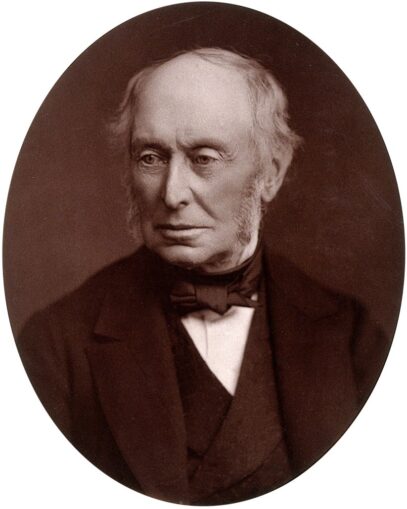
If you pitched Lord Armstrong’s life story to a Hollywood studio, they’d tell you to tone it down. A lawyer who jacked in his legal career after a fishing trip, went on to invent modern artillery, built the world’s first house powered by hydroelectricity, employed more people than most towns had residents, sold weapons to anyone with a chequebook, and spent his evenings predicting solar power would save civilisation; all while planting seven million trees for fun.
And yet, unless you’re from Newcastle, there’s a decent chance you’ve never heard of him. Which is extraordinary when you consider that William George Armstrong was, by any reasonable measure, the Elon Musk of his age: minus the tweeting, plus considerably better sideburns.
The fishing trip that changed everything
Armstrong was born in 1810, the son of a Newcastle corn merchant, and did what respectable middle-class Victorian lads did: he trained as a solicitor. He qualified, joined a firm, and appeared destined for a life of conveyancing and wills.
Then he went fishing.
On a trip to the Northumberland countryside, Armstrong watched a waterwheel in action and became fixated on how spectacularly inefficient it was. Most people would have shrugged and gone back to catching trout. Armstrong went home and essentially reinvented hydraulic engineering in his spare time, eventually abandoning the law entirely in 1847 to set up an engineering works on the banks of the Tyne at Elswick.
Musk quit a PhD at Stanford after two days to start an internet company. Armstrong practised law for over a decade before a badly designed waterwheel made him snap. Different centuries, same energy: life’s too short to do the boring thing when you could be building machines instead.
From cranes to cannons (the pivot nobody expected)
AnonymousUnknown author, Public domain, via Wikimedia Commons
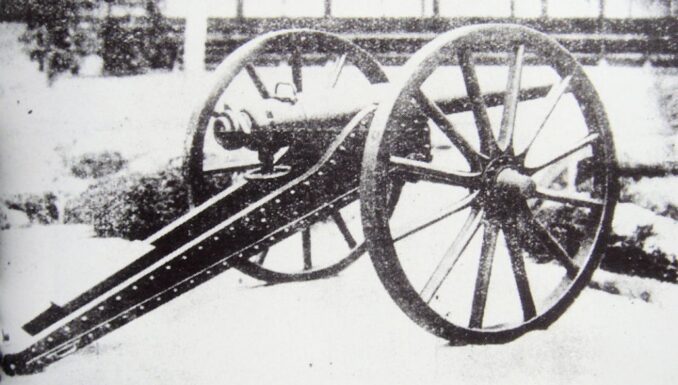
Armstrong’s Elswick Works started out building hydraulic cranes for the Newcastle docks. Perfectly respectable. Then the Crimean War kicked off in 1854, and Armstrong watched British troops struggling with outdated smooth-bore cannons that couldn’t hit a barn at range. He decided he could do better.
Within a few years he’d designed and built a revolutionary rifled breech-loading artillery piece that was lighter, more accurate, and far more devastating than anything in existence. The British government loved it. They gave him a knighthood, made him Engineer of Rifled Ordnance, and handed his factory a massive contract.
Then, in 1862, the government cancelled the contract.
Most industrialists would have sulked. Armstrong simply pivoted. If Britain didn’t want to buy his weapons exclusively, he’d sell them to everyone else. Japan, Italy, Brazil, Chile, the Ottoman Empire: if you had a flag and a conflict, Armstrong had a catalogue for you. Punch magazine took to calling him “Lord Bomb,” which he apparently found more amusing than offensive.
Musk builds rockets for NASA, electric cars for commuters, and flamethrowers for laughs. Armstrong built cranes for docks, guns for empires, and warships for whoever was buying. Both men share the same unsettling gift: the ability to pivot from civilian tech to military hardware without breaking stride, all while insisting they’re ultimately making the world a better place.
The world’s first smart home (Victorian edition)
Cragside House by PAUL FARMER, CC BY-SA 2.0, via Wikimedia Commons
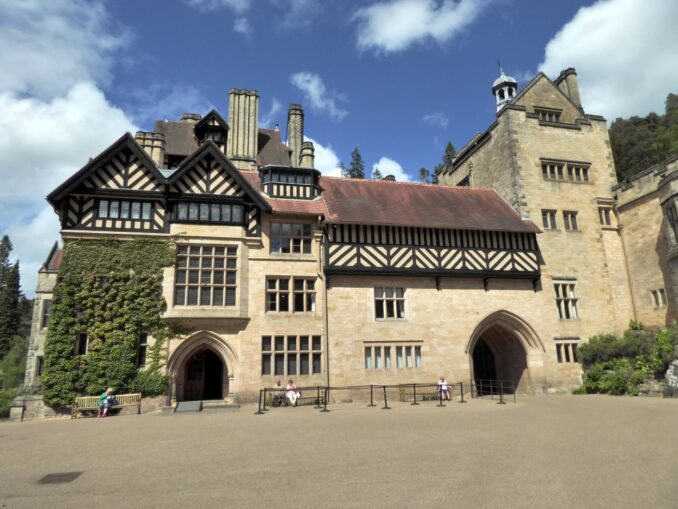
Here’s where it gets properly mad. In the 1860s, Armstrong bought a modest country retreat near Rothbury in Northumberland and turned it into what can only be described as a Victorian Tony Stark compound. He called it Cragside.
Working with architect Richard Norman Shaw, he expanded the house into a sprawling Tudor Revival mansion perched dramatically on a rocky hillside. Then he wired the entire thing with technology that wouldn’t become standard for another century.
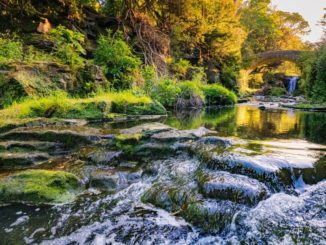
In December 1880, Cragside became the first house in the world to be lit by hydroelectric power, using incandescent lamps supplied by his mate Joseph Swan (another Geordie genius, who invented the lightbulb independently of Edison and deserves his own article). Armstrong dammed the estate’s burns and created five artificial lakes to generate the power.
But the lighting was just the start. The house featured a hydraulic lift, a water-powered rotisserie in the kitchen, a hydraulic laundry system, an early form of dishwasher, fire alarm buttons, internal telephones, a Turkish bath suite, and a passenger lift: all powered by water pressure from the lakes above. The man essentially built a 1,700-acre Internet of Things a hundred and forty years before anyone coined the phrase.
Musk has his smart tunnels, his Neuralinks, his plans to colonise Mars. Armstrong had hydraulic kitchen appliances and a rotisserie powered by a lake. Both were obsessed with bending their homes and surroundings to their will through engineering. The difference is Armstrong actually finished his projects and they still work.
The greatest showroom on Earth
Cragside wasn’t just a home. It was the most extravagant sales pitch in Victorian history.
Armstrong understood something that modern tech billionaires would recognise instantly: if you want to sell warships to foreign governments, you don’t send a brochure. You invite the head of state to your hydraulically-powered mansion in Northumberland, light 10,000 bulbs for their arrival, and let them wander around the first electrified house on the planet wondering what else you could build for them.
The guest list at Cragside reads like a who’s who of Armstrong’s client nations. The Shah of Persia visited in 1889. The Crown Prince of Afghanistan came in 1895. The Chinese Viceroy Li Hung Chang stayed in 1896. The King of Siam passed through. And the Japanese connection ran deepest of all: Armstrong’s firm built warships for the Imperial Japanese Navy, and the Tokugawa family (relatives of the Empress of Japan) became close personal friends. Cragside still has its Bamboo Room, a Japanese-themed guest suite filled with gifts from the Tokugawa clan spanning three generations. When half the Japanese fleet that won the Battle of Tsushima in 1905 had been built on the Tyne, and the entire fleet was armed with Armstrong guns, you start to see how the dinner invitations paid for themselves.
Russia was a customer too. Armstrong’s yards built the armoured cruiser Rurik and the world’s first polar icebreaker Yermak for the Tsar’s navy; which means Armstrong was simultaneously arming both sides of the Russo-Japanese War. Musk catches flak for selling Teslas in China while courting the Pentagon. Armstrong was literally building the warships that would shoot at each other.
The green warrior who sold arms
And here’s the contradiction that makes Armstrong genuinely fascinating rather than just impressive. This man, the biggest arms dealer in the Victorian world, whose factory at Elswick employed over 25,000 people churning out warships and artillery, was also a passionate environmentalist. In 1863.
Armstrong gave a landmark address to the British Association warning that coal was being “used wastefully and extravagantly in all its applications.” He predicted that Britain would exhaust its coal supplies within two centuries and advocated for water power and solar energy as replacements. In the 1860s. While running the largest armaments factory on Earth.
He didn’t just talk about it, either. The entire Cragside estate was a functioning proof of concept for renewable energy. The five lakes, the hydroelectric system, the water-powered everything; it was Armstrong’s demonstration that fossil fuels weren’t the only game in town.
Musk champions Tesla and solar power while simultaneously courting military contracts and cosying up to governments. Armstrong championed water and solar power while literally manufacturing the weapons that were reshaping global warfare. At least they’re consistent in their inconsistency.
Seven million trees and a royal light show
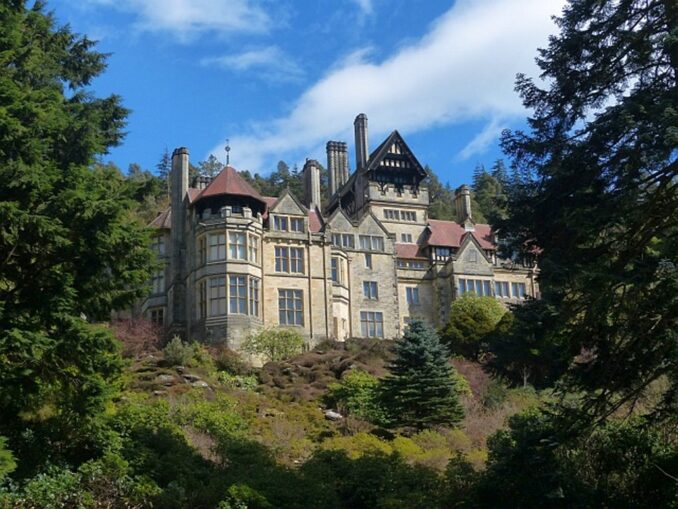
Robin Drayton / Cragside, Northumberland
The Cragside estate eventually sprawled across 1,729 acres, within which Armstrong planted an estimated seven million trees and shrubs. Seven million. The man didn’t do anything by halves.
When the Prince and Princess of Wales visited in August 1884, Armstrong illuminated their arrival with ten thousand electric lamps, strings of Chinese lanterns hung through the trees, fireworks launched from six hot air balloons, and a massive bonfire lit on the Simonside Hills visible for miles around. This was three years before most Londoners had ever seen an electric lightbulb. Armstrong basically threw a rave in Northumberland in 1884 to show off to royalty.
The bridges, the peerage, and the legacy
Armstrong didn’t limit his engineering to weapons and country houses. His hydraulic systems powered the Swing Bridge on Newcastle’s Quayside, which he personally designed and funded because the old bridge was too small for his warships to pass underneath on their way to Elswick. The same technology went on to power Tower Bridge in London. So every time a tourist photographs Tower Bridge opening, they’re watching Lord Armstrong’s engineering at work.
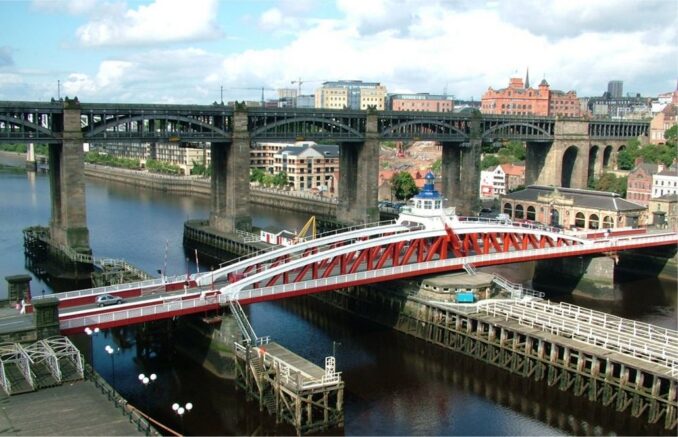
Tagishsimon (talk) (Uploads), CC BY-SA 3.0, via Wikimedia Commons
In 1887, Armstrong became the first engineer and the first scientist to be raised to the peerage, becoming Baron Armstrong of Cragside. He was, by this point, one of the wealthiest men in Europe. His factory complex at Elswick stretched for miles along the Tyne and was producing everything from hydraulic cranes to battleships. A BFI film from 1900 shows 20,000 workers streaming through the Elswick gates, and that wasn’t even the full workforce.
He was also a prolific philanthropist. He was the driving force behind what became Newcastle University, funded parks, hospitals, and schools across the region, and gave away vast sums during his lifetime. He died in 1900, aged 90, having transformed Newcastle from a regional coal town into one of the most important industrial cities on the planet.
So why don’t we talk about him more?
Armstrong’s relative obscurity outside the North East is genuinely baffling. He was a man who trained as a lawyer, became the world’s leading arms manufacturer, built the first electrically-lit house on Earth, predicted renewable energy 150 years early, engineered two of Britain’s most iconic bridges, founded a university, planted seven million trees, and threw a party with ten thousand lightbulbs for the future king; all while being called “Lord Bomb” by the national press.
Musk gets a documentary every six months. Armstrong doesn’t even get a decent BBC drama.
Perhaps the comparison is the point. We’re fascinated by Musk’s contradictions: the eco-warrior who builds rockets, the free-speech champion who picks fights online, the visionary who can’t resist controversy. But Armstrong was doing the exact same dance in frock coats and top hats: the green energy pioneer who armed the world, the philanthropist who got rich from warfare, the gentle naturalist who planted millions of trees on an estate powered by technology that wouldn’t be mainstream for a century.
The Victorians had their Musk. They just had the good sense to give him a peerage and a really excellent house.
© Paranoid Android 2026