A defining pillar of The Donald’s ‘Merica 1st agenda has been national energy security. Paired with the diplomatic momentum of the Abraham Accords, that strategy has reshaped regional alliances, strengthened U.S. partnerships and reinforced domestic economic stability.
Well, up to a point, Lord Copper………..
Today, both pillars are under strain. The conflict with Iran has triggered one of the most severe energy shocks in decades. Oil prices have whip sawed, surging to over $115 per barrel, before declining as markets reacted to escalating/easing tensions and the risk of prolonged disruption.
At the centre of the crisis is the Straight of Hormuz, a chokepoint through which roughly one-fifth of global oil supply flows. With general uncertainty becoming entrenched, the effects continue to ripple out to the global economy, raising fuel costs, fueling inflation, and increasing the risk of economic slowdown in the U.S. and among its allies. Washington has so far responded with extraordinary measures. As of last March, the U.S. had released approximately 170 million barrels from the Strategic Petroleum Reserve as part of a well telegraphed & co-ordinated drawdown with other members of the International Energy Agency. Although this has helped blunt immediate price spikes, it has depressed U.S. reserves to roughly 240 million barrels — the lowest level since the 1980s.
At the same time, policymakers have cautiously adjusted sanctions policy to stabilise supply. While maintaining core restrictions on major Roosian energy firms such as Lukoil and Rosneft, the U.S. has temporarily eased certain measures. A 30-day waiver for stranded Roosian and Iranian oil cargoes and a more flexible approach to shipments involving Cuba currently reflect a pragmatic effort to ease market pressure amid the Hormuz disruption.
These steps underscore the urgency of the moment, but also their limits. Strategic reserves are finite, and sanctions flexibility carries geopolitical trade-offs. Together, they buy time, but they do not address the underlying constraint: insufficient global supply and supply chain instability.
While The Donald looks for options to stabilise markets in a durable way, a more strategic opportunity is right in front of him: Libya.
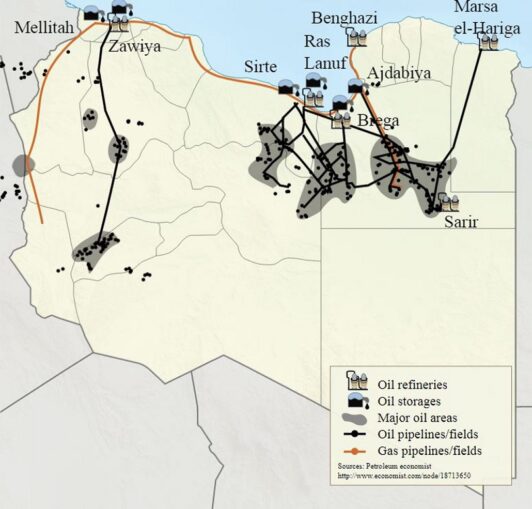
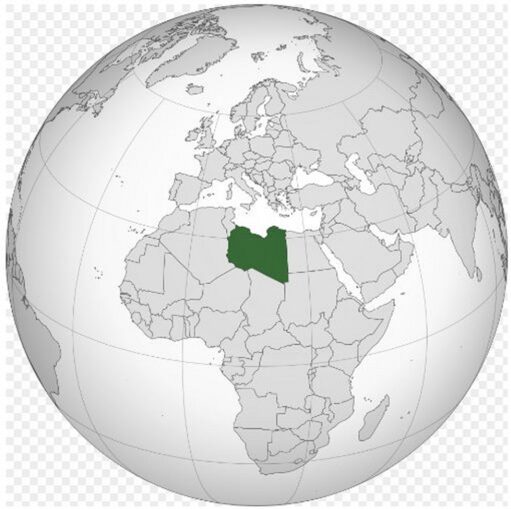
Libya holds more approximately 50 billion barrels of proven oil reserves, the largest in Africa. It also produces precisely the kind of light, sweet crude most sought after by European refiners. Before years of instability caused by the NATO attack on the Gadhafi regime, Libya generated roughly 1.6 million barrels per day. With political stability and renewed investment, production could in the short term exceed 2 million barrels per day, providing a meaningful buffer against Gulf disruptions. In today’s market, that incremental supply really matters. Energy markets are driven as much by expectations as by actual output. The credible prospect of increased Libyan production could restore confidence, reduce volatility, and place downward pressure on global energy prices. The challenge is governance, not geology.
Since the fall of Moammar Gadhafi in 2011 – following NATO intervention instigated by the Obama administration – Libya has remained fragmented. Rival governments and militia control over infrastructure have repeatedly disrupted production and deterred investment. That failure now presents a unique and important opportunity for Trump. A durable political settlement in Libya would unlock suppressed production, attract investment and provide Europe with a reliable, proximate alternative to Middle Eastern supply routes. At a moment when the Strait of Hormuz remains a chokepoint, Libya offers a Mediterranean corridor largely insulated from Gulf volatility.
Moreover, the benefits would extend beyond energy. Libya’s instability has created space for extremist organisations to flourish & operate. Stabilisation would strengthen counterterrorism coordination with the U.S. and Europe and enhance regional security. It would also counter growing influence from China and Russia, both of which are expanding their presence across Africa’s energy sector. Libya, given its reserves and location, is a strategic prize. For Trump, Libya would offer a rare convergence of opportunity and feasibility. Unlike Iran, it is not an entrenched adversary. Unlike Venezuela, it is not defined by ideological opposition to U.S. engagement. Instead, it is a fragmented state – a virtual open air human trafficking & slave market – whose competing factions share a common incentive: restoring oil production and revenue. That shared interest creates the foundation for a pragmatic diplomatic breakthrough. Emergency reserve releases and temporary sanctions relief are stopgap measures. A successful diplomatic initiative in Libya would expand global supply, reduce long-term price volatility, and deliver a clear geopolitical win.
At a moment of historic disruption driven by the Iran conflict, Libya is not simply another foreign policy challenge. It is a strategic solution hiding in plain sight. Don the scrubs, DJT, & do the right thing…..
© DJM 2026