
© Always Worth Saying 2026, Going Postal
Burnham, Starmer, by-elections, defence reviews, World Cups, wars and the cost of living? Meh. Never mind all of that, what’s happening in the realer world of little trains? I have an embarrassing gap on my layout; that’s what’s happening. Like a missing tooth or an oblong of unbleached wallpaper where a Rembrandt used to hang, it must be filled.
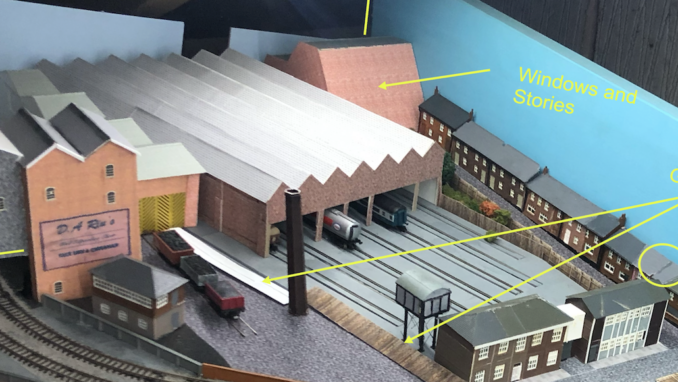
At one end of my layout sat a half-decent, naive but passable home-made Kingmoor steam shed. However, it lived on an upper level and guess where the little trains were always derailing? Yes, on the tight curves that ran concealed beneath its floor and roof. Taking the whole lot apart to re-rail was an endless nuisance. Why not do that part of the ‘upper’ as one easy-to-lift unit?
Not as easy as it sounds, as there are all sorts of movables on the upper tracks, especially at the depot. Plus, where to place it in the meantime in a cluttered family attic?
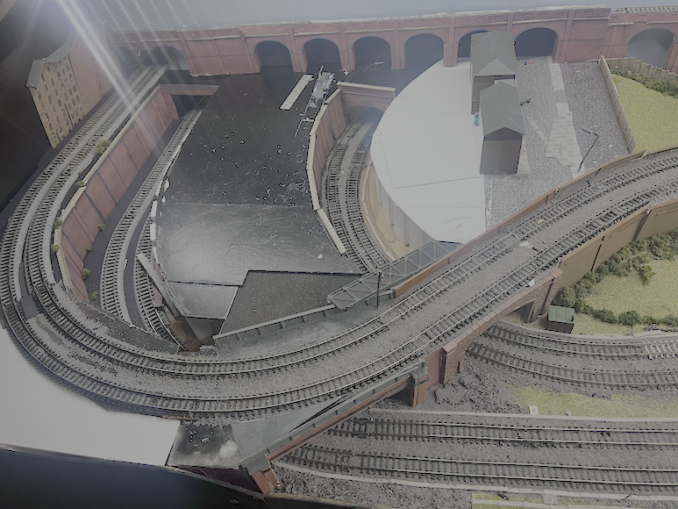
The obvious thing to do was to make the concealed curves into cuttings and – as per the real-life realities of Beeching – chop the hapless Kingmoor sheds into something smaller and place them elsewhere. Having done so, I’m dead happy with the resulting improved running but have the aforementioned awkward gap. See below:
© Always Worth Saying 2026, Going Postal
Yes, yes, I know you’re not supposed to build these things in a north country attic where the temperatures vary from boily track-bending hot, with a drip or two of nighttime condensation, to freezy, freezy cold, but where else to put it?
Incidentally, before I discovered the life-changing properties of strings of self-adhesive LEDs, it was awfully dark up there. I was forever banging my head on roof joists while banging my fingers with hammers.
I used to stand there crying, shivering in the cold, blood running down my brow. Why bother? Because the realer world of little trains is far superior to the nonsense that happens outside the attic or, worse still, beyond the ample and comforting hedges of chez Worth-Saying.
By the way, that building on the top left of the picture is my attempted recreation of a one-to-one-scale structure of historical importance that graces a riverside at a place down south called Yorkshire.
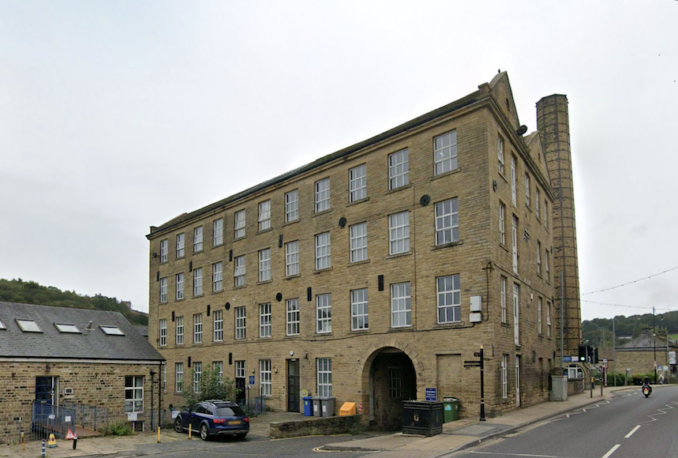
Worth-Saying’s Mill sits beside the River Calder and was one of the first factories in England. Nearby is a short (20 yards according to Google Maps) Worth-Saying Terrace, next to an unlikely 15-story skyscraper opposite the impressively named Industrial Road.
© Google Street View 2026, Google.com
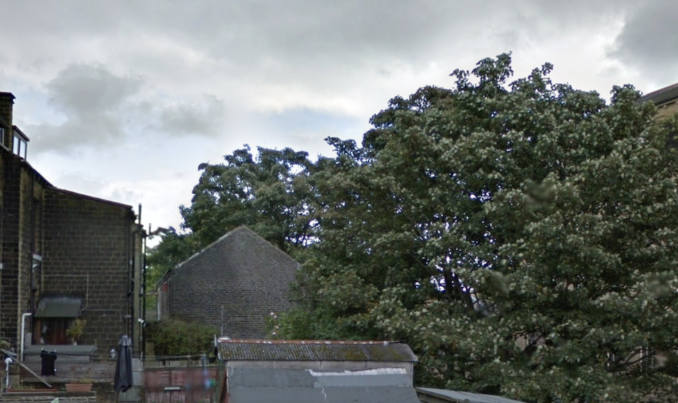
Number 1 Worth-Saying Terrace stands alone elsewhere in the township and backs onto the Rochdale Canal. A faded gable-end sign advertises patent plastics. It is tucked behind a differently named road, as if the original terrace extended all the way to the shortened one, but was subsequently built over.
Of the mill, our friends at Grace’s Guide to British Industrial History inform us it was built around 1793 for William Worth-Saying, with mid-19th-century additions and alterations. The interior is of cast-iron columns, reportedly post-1840. The 1793 date was given by George Worth-Saying (son of William) at an enquiry of 1834.
Described as the earliest known integrated woollen mill in Yorkshire, it was water-powered and used for wool-carding, spinning and filling. In other words, a series of (literally) cottage industries scattered around the countryside was concentrated to process fleece into cloth on a single site, thereby creating world-changing economies of scale for consumers and considerable wealth for the Worth-Sayings.
© Google Street View 2026, Google.com
Referencing old newspapers, we discover a family marriage less than three and a half miles away at Darcy Hay near Halifax. Passing the information onto the Temp, she informs us that a George Worth-Saying was associated with Darcey Hey and Skircoat and died on 15 January 1837.
He was born on 22 February 1769 at Darcey Hey and was a merchant, manufacturer, and partner (with relative William and others) in woollen milling and related businesses in the Sowerby Bridge area, including at ‘my’ mill. He and his wife Elizabeth (née Marsh, daughter of Rev. Philemon Marsh) lived at Darcey Hey and were involved in local philanthropy, including purchasing land for the local Christ Church and a National School.
This matches historical records tying him to Sowerby Bridge mills and merchants, and to family memorials and windows at Christ Church.
That window is a Victorian stained-glass memorial donated to honour the family. It features an image of a lamb — a nod to the wool trade that built the family’s fortune.
In the modern day, Darcey Hey survives as a Halifax lane, where modern properties exist likely on or near the site of historic estates or houses associated with prosperous Industrial Revolution plutocrats.
At one end lies Skircoat, one of the old townships that are now part of the Halifax sprawl. Prominent there are gardens and parkland that once surrounded the now-demolished Manor Heath mansion built by Edward Crossley, heir to one of Halifax’s Victorian textile magnates.
In the nineteenth century, the rich built grand stone houses around abouts that were followed by less opulent but still substantial detached, semi-detached and terrace houses and the executive houses of the present day. Of the 21st-century locale, Yorksview reports:
‘Skircoat Green is an example of what is often referred to nowadays as Middle England. Such places exist in most of our towns and cities, though not built of millstone grit and blown by the Pennine winds. It is the sort of place people want to live despite the sniffy disdain of metropolitan intellectuals for the provincial suburbs.
It is safe, clean and civilised. You know the type of place – well cared-for properties, laurel and roses, law-abiding people, active churches, shops where items are sold in imperial measures and paid for in cash, bowling clubs and golf. If perhaps it’s not what it was (in retrospect, the 1950s and ‘60s were a special time), it is better than most of the alternatives.’
In other words, Puffin Central, and I bet they all have model railways. Which brings us to the crux of the matter:
What would entrepreneurial William and the good plutocrats of prosperous western Halifax have done with a gap in the landscape? Built on it with profit in mind after following the sound advice of a worldly land agent and a canny architect. The modern-day equivalent of which is Grok:
‘I have a gap in my N gauge model railway, and I’m having trouble deciding what to fill it with. Please fill in the white and black spaces as if a northern mill town of terraced streets.’
Oh, I say:
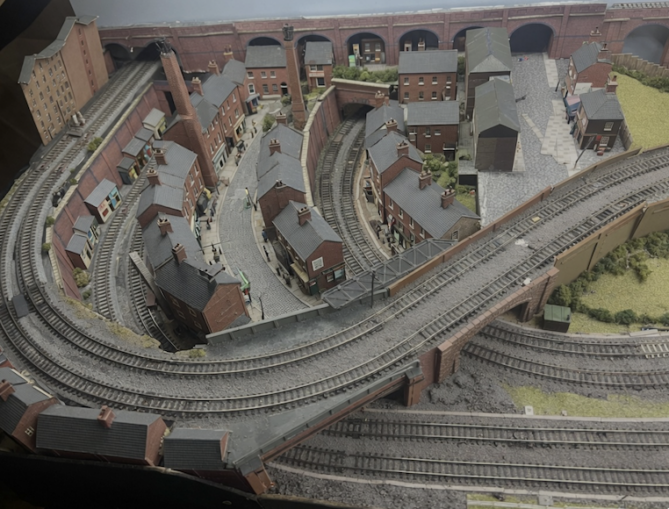
Image generated using GROK AI
Apart from the jamming of humble urban dwellings right next to the track as if Hanoi in the 1970s, one has to be quite impressed. I can hear my old art teacher saying, ‘Don’t fight with the curves, go with them. Curves are your friend.’
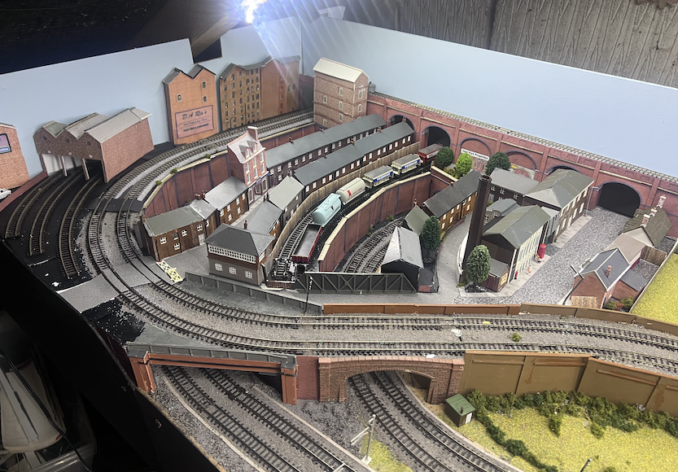
Anyway, I had quite a lot of bits and pieces lying about the railway end of the attic, and, without any additional financial outlay, I managed to cobble together this:
© Always Worth Saying 2026, Going Postal
Quite happy with it.
© Always Worth Saying 2026