A second piece about activities on the school farm.
As I’ve said in the last piece the place was a massive source of entertainment for teenage boys.
Let’s get down to details though.
Sheep
The school sheep were a lowbrow harmless bunch – sort of like Lib Dems but without being on the sex offenders register.
Think we had about a dozen ewes. Can’t put my finger on which breed though. It wasn’t the really woolly one the Merino but neither were they short hairs like Suffolk. I’d go with Corriedale at a push and a couple of Border Leicesters.
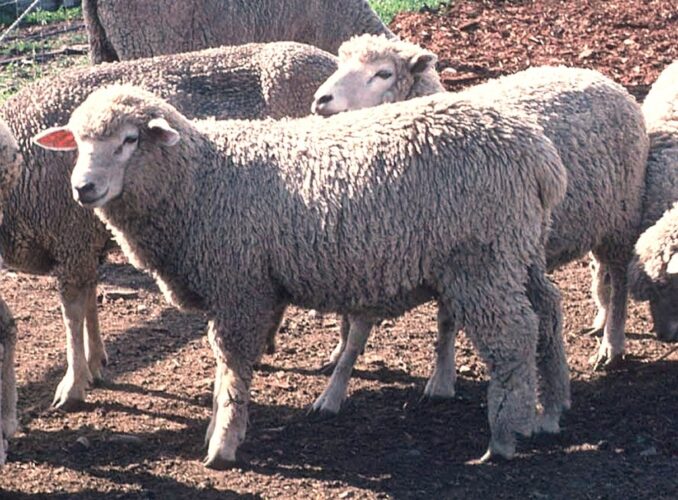
Corriedale_sheep_MT.JPG: Bob Nicholsderivative work: Coycan, Public domain, via Wikimedia Commons
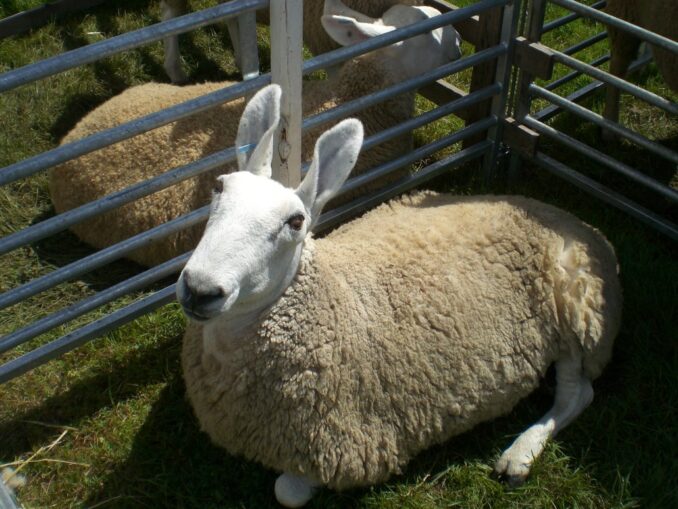
Xabier Cid, CC BY-SA 2.0, via Wikimedia Commons
We bred them too. I can’t remember whether we had an in house ram or whether we just rented one for a few weeks.. In breeding season he was just turned loose in the paddock with the females.
The issue here is knowing which of the dozen ewes he’d covered so to speak. The trick was to put some kind of device containing blue dye adjacent to his old fellow. I don’t know who got the pleasurable task of attaching that contraption but it definitely wasn’t me. Which one of his willing partners he’d managed to jump on board with could then be identified by a blue smear on their rumps. Perhaps we should use this device with our politicians.
One year some enterprising individuals extended this to dyeing most of the sheep in rainbow colours ( part of the 6th form end of year festivities). A sort of early 80s forerunner to doing the same to police cars and laces on football boots.
The sheep did require a fair bit of care though. Tail docking was almost universal in Australia. Some short haired sheep don’t have much of a tail but the woolly ones which we had grow tails maybe 8 inches long. Trouble is the shit sticks to the wool and then there’s issues with fly strike (blowflies laying eggs in it).
Mulesing was another practice which was performed for more or less the same reason. Cutting woolly areas from around the sheep’s anus to again prevent fly strike. Scar tissue after does not grow wool. Painful but better for the sheep’s health until you decide to eat them.

Australian Public Broadcasting Agricultural Fair, Dubbo NSW, CC BY 4.0, via Wikimedia Commons
We also had a sheep dip – a sort of bath you run them through. The water has insecticides and fungicides in it and helps protect the animals from parasites like ticks and blowflies. Another process not popular with econutters nowadays.
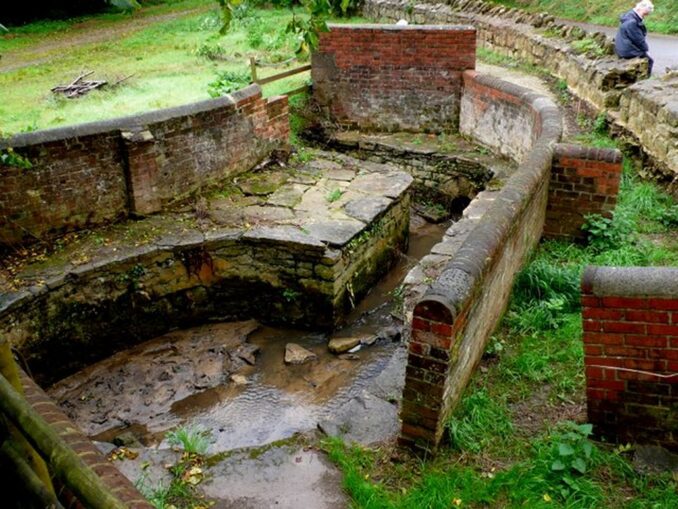
Sheep Dip by Nigel Mykura, CC BY-SA 2.0, via Wikimedia Commons
In the end the sheep on the school farm had a good life. Rams only at the right time and a complete lack of deviants looking to expand their sexual experiences unlike say Wales, Norfolk or New Zealand.
Crops
The school farm featured about two or three acres given over to growing things.
Mostly smallish plots where classes did stuff as part of their Agriculture course (we had to do it to A level). Vegetables, bit of hydroponics but also things like wheat and corn.
It was also an area ripe for bad behaviour. Dirt clod fights were a regular feature ( seem to have spent quite a lot of my younger years throwing things) but there was better. A period when I was about 16 setting other kids’ hair on fire was a bit of a fad. This was the most popular area for it as in the open air and away from the prying eyes of the staff.
Thing is hair doesn’t have nerves so the usual way of being alerted to it was the smell. Fortunately we all had early 80s shaggy hair styles so this happened before it reached your scalp and started to do serious damage. We all carried matches or cigarette lighters around as a matter of course.
The orchard though was the best part. I think I’ve mentioned in a previous piece that I often rounded the school year off by filling my school bag with as many peaches as I thought were edible. Fruit fly is a big problem in Oz so you had to make sure the whole place hadn’t been sprayed with insecticide before consuming the produce. Oranges were another source of food – my main mistake was nicking a load of them before they were ripe – like eating lemons.
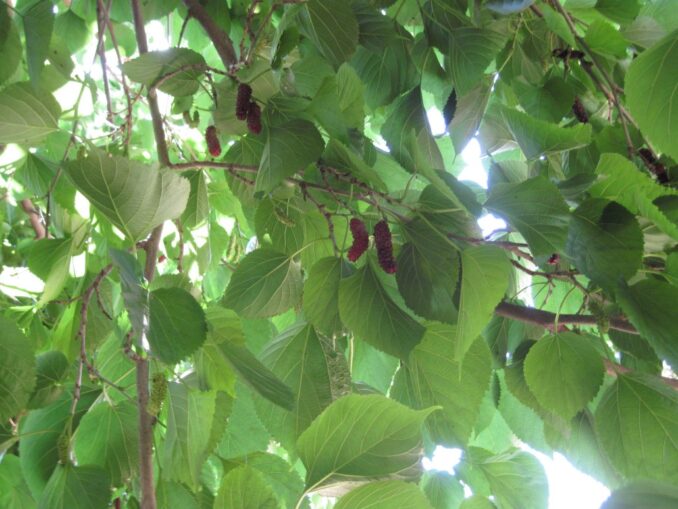
The crowning glory though was the mulberry tree. These things are massive if you let them grow. I think they bore fruit in the middle of the year and annually – if we’d behaved well you got a 10 or 15 minute go on the fruit. Hence a lot of people covered in fuschia coloured juice. Eating so much raw fruit so quickly meant a fair few had the shits the next day or farting like Emily Thornberry after a good time at the buffet. No doubt it was a pleasant experience for the teachers.
Glmory, CC0, via Wikimedia Commons
There were also a few macadamia trees. Macadamias are the king of nuts but I have never seen a tree here. Problem with them is its impossible to open them without nutcrackers or a hammer. Once I’d harvested a few dozen I had to get home and surreptitiously remove the family nutcrackers from the kitchen drawer. Then try and crack them open without attracting the attention of my folks.
Looking back Mum and Dad must have known what I was extracting from the school farm but chose not to delve into it.
The Dam
The dam was right in the nether regions of the farm – a good 15 minute walk from the school buildings. I’m not quite sure how it was formed but from memory it was a natural pool from a creek that had been built up by blocking some of the waterflow at one end.
I’m guessing it was about a 100 yards long and maybe 30 yards wide. It featured a grassy ban on both sides with rear end having a bit of forestry before the houses started.
One year there was a drought – I mean a real one not the sort the BBC and Daily Mail promote. The dam shrunk to about 50 per cent of it’s normal size. This killed a fair bit of the wildlife in it whose rotting corpses fetched up on the side. Unfortunately this was mainly eels who made you think of people like Mandelson rather than wondering whether to jelly them and eat with mash.
One of the consequences was that the lower end of the dam was reduced to a stream maybe three feet wide. I remember lounging on the bank at the back while one of my classmates was on the other side and wondering the quickest way round. We beckoned him to just skip across the mud, leap the stream and join us. None of us realised that because the mud had been underwater for years it was really deep. He got about four paces in before he was up to his arse in the stuff. It was probably quite dangerous when I think about it.
Those school trousers probably had to go in the bin when he got home.
As you can see I was a lucky lad to have had all these experiences.
Wouldn’t change it for the world
© ArthurDaley 2026