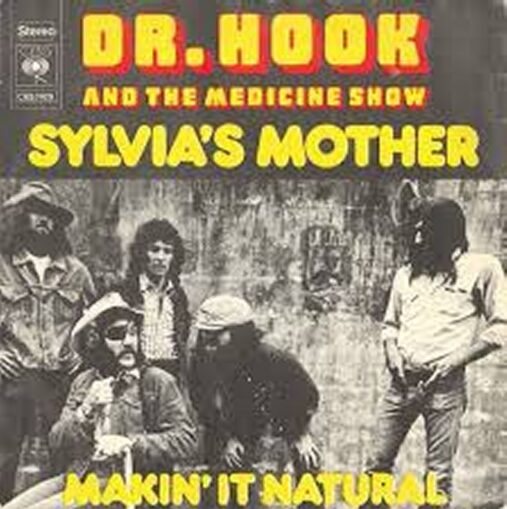
The recent passing of Dr Hook & The Medicine Show’s singer Dennis Locorriere unexpectedly led me down a rabbit hole and sparked an idea for an article—or even a series. Listening to Dr Hook’s ‘Sylvia’s Mother’—the plaintive attempt of the protagonist to resurrect a failed relationship by telephoning the mother of the woman he once loved—I wondered whether the song was based on a real story or pure fiction. It turned out to be real, but it wasn’t the experience of Dr Hook’s lead singer. It was that of the band’s primary songwriter, Shel Silverstein.
Fair dealing/fair use
Silverstein wrote many of the group’s early hits and went on to create several other songs with the same unique blend of conversational storytelling, dark humour and raw emotional honesty: Johnny Cash’s ‘A Boy Named Sue’, the whimsical folk standard ‘The Unicorn’ by the Irish Rovers, ‘The Ballad of Lucy Jordan’ by Marianne Faithfull, and witty country tracks for Bobby Bare, Loretta Lynn and Waylon Jennings.
As I dug a little deeper, something clicked. I recognised the name Shel Silverstein from a childhood favourite book, The Giving Tree. Could it be the same man? It was—and the more I looked, the more I realised this was only the tip of his creative iceberg. He was a bestselling author, poet, cartoonist, playwright, singer and actor: an extraordinary creative polymath of the 20th century. Oh, and he lived at the Playboy Mansion on and off for months at a time for many years. Quite the character.
Early Life, Playboy and the Hedonist Years
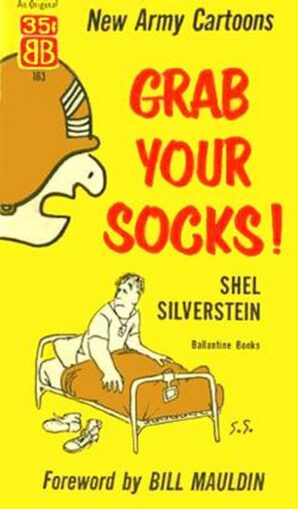
Silverstein was born into a middle-class Hungarian Jewish family in Chicago in 1930. He began drawing and writing as a child, but after two unsuccessful stints at college he was drafted into the Korean War. His skills as an illustrator landed him a job on the military newspaper Stars & Stripes in lieu of frontline combat. However, his cynical attitude to the war and its institutions didn’t go down well with the top brass, and he was progressively banned from making cartoons about anything except civilians and animals.
Fair use/fair dealing
Back in the US he worked as a freelance cartoonist until 1956, when Hugh Hefner—another Chicagoan—hired him for the fledgling Playboy magazine. The gig quickly evolved into a role as the magazine’s foreign correspondent. For years Silverstein travelled the world, producing edgy travelogues and satirical cartoons that brought a distinctly bohemian perspective to the page.
Working for Hefner gave him far more than a pay-check. It provided a chaotic spiritual home. He became a foundational part of Hefner’s inner circle and lived at the infamous Playboy Mansion on and off for many years. Silverstein never married. He embraced the free-love lifestyle to the full, allegedly sleeping with hundreds—perhaps thousands—of women.
Children’s Books and the Reluctant Classic
Not exactly the CV you’d expect for a children’s author, and Silverstein never planned it. He claimed he had to be dragged “kicking and screaming” into his publisher’s office by a friend who convinced him that his poetic style and minimalist drawings were perfect for the medium.
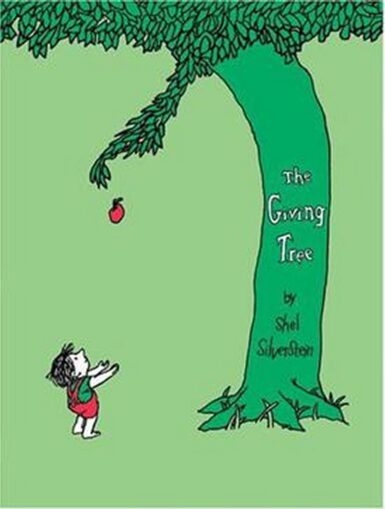
The Giving Tree still ranks in the top 15 best-selling children’s books of all time
Yet it is as the creator of The Giving Tree and other children’s masterpieces that he is best known in America (and far beyond). He wrote and illustrated massive bestsellers such as Where the Sidewalk Ends and A Light in the Attic. His witty, subversive and emotionally honest verses, paired with iconic pen-and-ink drawings, have sold tens of millions of copies worldwide and remain classroom staples.
Songwriter, Playwright, Actor
Silverstein’s talents stretched far into adult subcultures, theatre and mainstream music. Biographers and critics often call him a true “Renaissance man” for mastering such disparate fields with equal success. Crime anthologist Otto Penzler captured this perfectly in his 1998 anthology Murder for Revenge:
The phrase “Renaissance man” tends to get overused these days, but apply it to Shel Silverstein and it practically begins to seem inadequate. Not only has he produced with seeming ease country music hits and popular songs, but he’s been equally successful at turning his hand to poetry, short stories, plays, and children’s books. Moreover, his whimsically hip fables, beloved by readers of all ages, have made him a stalwart of bestseller lists. A Light in the Attic, most remarkably, showed the kind of staying power on the New York Times chart—two years, to be precise—that most of the biggest names (John Grisham, Stephen King and Michael Crichton) have never equaled with their blockbusters. His unmistakable illustrative style is another crucial element to his appeal. Just as no writer sounds like Shel, no other artist’s vision is as delightfully, sophisticatingly cockeyed.
As well as ‘Sylvia’s Mother’ and the Grammy-winning ‘A Boy Named Sue’ (1970), he wrote rock hits like ‘The Cover Of The Rolling Stone’ for Dr Hook and country gems such as ‘One’s On The Way’ for Loretta Lynn and ‘Put Another Log On The Fire’.
He also authored numerous off-beat one-act plays and co-wrote the 1988 screenplay for Things Change with David Mamet. True to his chaotic nature, he even acted: a credited role as “Bernie” in the 1971 Dustin Hoffman film Who Is Harry Kellerman and Why Is He Saying Those Terrible Things About Me? (for which he also wrote the soundtrack), plus uncredited cameos and his distinctive gravelly voice narrating animated adaptations of his own books.
He lived fiercely independently, splitting his time between a houseboat in Sausalito, a cabin in Martha’s Vineyard and a home in Key West as well as his stints in the Playboy mansion, following his creative whims wherever they led. Silverstein also fell into the category of the tortured artist, with tragedy frequently following him. The mother of his daughter died of cancer when Shoshanna was young; then, at just 11 years old, his daughter Shoshanna herself died. (He dedicated A Light in the Attic to her memory). Silverstein died of a heart attack at his home in Key West, Florida, on 10 May 1999, aged 68.
Why the Fragmented Legacy?
If Silverstein was this prolific, you may ask, why don’t we talk about him in the same breath as other multi-talented mid-century icons? It’s an exaggeration to call him forgotten, but his legacy is certainly fragmented.
The biggest obstacle is the Shel Silverstein Estate, which maintains an exceptionally tight grip on his intellectual property. It routinely denies biographers and filmmakers permission to quote his text or reproduce his drawings. Without the ability to feature his actual work, big retrospectives and documentaries simply don’t happen.
A large part of his output was also decidedly adult—decades of satirical cartoons and travelogues for Playboy—which sits awkwardly alongside his wholesome children’s brand. Corporate publishers understandably protect the lucrative, child-friendly image. Yet Silverstein’s writing for children was never sanitised. Often compared to Dr Seuss, he proudly wrote “good books for bad children”, refusing tidy happy endings because he believed they lied to young readers about life’s complexities. A Light in the Attic and others were frequently challenged or banned in US schools in the 1980s and ’90s for promoting “disobedience, violence and anti-adult sentiment”.
Even his songwriting successes have been compartmentalised. Most people associate ‘A Boy Named Sue’ with Johnny Cash and ‘Sylvia’s Mother’ with Dr Hook rather than with Silverstein himself. Because he chose the quiet life of a writer over the spotlight, the music world kept his achievements separate from his literary identity.
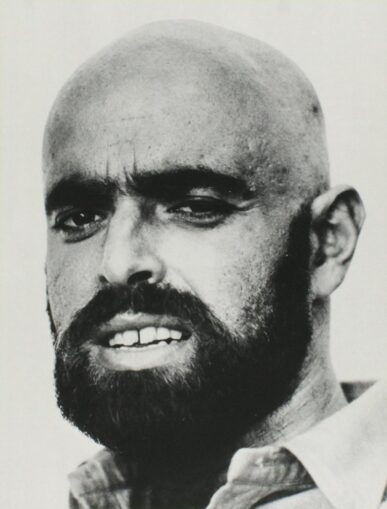
Jerry Yulsman, Public domain, via Wikimedia Commons
Finally, he was fiercely private. There are very few photographs of him; the one on the back of The Giving Tree has become the defining image, and it is, frankly, pretty alarming for a children’s book. (When researching this piece I came across an amusing X post in which someone admitted they kept the book facing forward at all times as a child because the author’s photo terrified them.) In other shots he looks like a roadside grifter from The Revenant who calls for help and then attacks you. He hated the machinery of fame and refused television appearances, book signings and standard press interviews. The result is a distinct lack of archival material to fuel modern biographies.
Shel Silverstein was exactly the kind of gloriously messy, multi-talented maverick who deserves a proper rediscovery. He proved that a single creative mind could write a Grammy-winning country song, draw his iconic minimalist illustrations, pen global satirical travelogues and elite theatre, and still create the poems that teach generations of children how to love reading. He may not have a glitzy Hollywood biopic or an estate eager for commercial exploitation, but his work endures exactly where he probably wanted it: in the dog-eared pages of poetry books passed down through families and in the timeless melodies still playing on the radio.
© Whistler80 2026