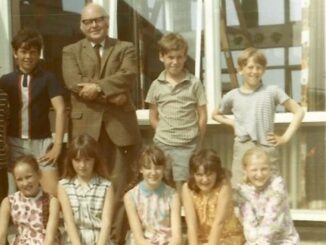
I took the reading appellation off this piece as it’s not really about that but about a particular aspect of my high school education.
The school I went to can be described as brutally academic. Founded as an agricultural high school the school grounds included a 25 acre farm.
The farm was an integral part of school life and a weekly double period was spent doing practical stuff down there. It was set up to enhance the education process rather than be commercially viable. There was an orchard , an area to grow vegetables and do crop experiments as well as several paddocks for livestock. There was also a dam – more of that later
The livestock consisted of several dozen chickens, half a dozen cattle, couple of horses, couple of goats, about a dozen sheep and a few ducks. We were not allowed to keep pigs as they smell and the neighbouring residents wouldn’t have put up with that.
Even from these short sentences readers will be able to see that this was a goldmine for teenage boys. I don’t think anyone was actually caught having sex with one of the animals but there were a couple in the years above me who looked the type.
The farm featured a home brew unit that had been set up years before by a group of the 6th formers. It was carefully hidden away in the nether regions and moved around to prevent an over inquisitive teacher finding it and stealing the produce.
I don’t know quite where to start with this stuff but maybe it’s just best to run through the animals and our interactions with them. I think it’s reasonable to say the horses, goats and ducks were minor so we’ll deal with the rest and a few other bits that are of interest
Chickens
There were 50 or 60 chickens housed in three separate groups in the hen house.
All Leghorns if I remember correctly – you know the white ones with a red comb.
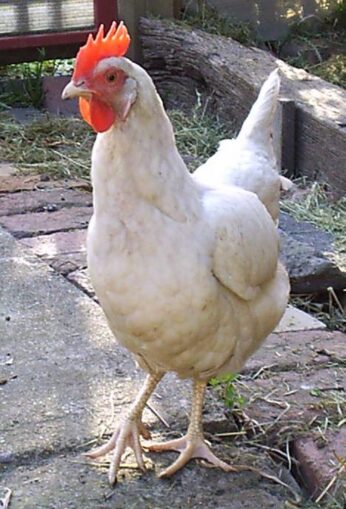
Chickens are very tribal. You can have 20 hens in a group but only one cock -sort of like a political party.
When I was about 15 one of the Ag teachers had the bright idea of getting an extra one and introducing it to one of the enclosures. It took about 10 seconds for the new one to square up to the old one while all the hens flapped around in the hope they’d get a better shag. We’d taken the precaution of removing the spurs otherwise they could do serious damage on the scale of a cockfight in Manila or Bangkok.
After about 30 seconds of them circling, flapping and flying at each other the said teacher realised he could get in trouble with the higher authorities at the school for putting on entertainment that was actually illegal so he stepped in. Trying to subdue an enraged rooster is no easy task. He took a few pecks which made us all laugh. No idea where the thing ended up – probably in his oven the next Sunday.
The chickens did serve a practical purpose however. They were used as one of the main bits of the annual dinner for departing sixth formers. A consequence for those of us a bit lower down the school is that one of the practical agriculture lessons was devoted to getting one of the cursed beasts prepared for it.
Basically we had about an hour and a half to go from catching a live one to having it ready to go to be cooked.
Catching one in the henhouse was easy but then it started to get nastier. I don’t know how chickens get slaughtered these days but the method we used was beheading. We’d heard that if you laid them on a piece of concrete with head on the ground and flicked a piece of chalk really fast in front of their eyes it would hypnotise them. The axe could then be wielded without delay and not worrying about trying to hit a moving target.. After half a dozen goes at this we gave up and the school chopping block was produced. A couple of us held it in place while one of my classmates wielded the axe. They do flap around a bit after but eventually we were able to move on to the next piece of the process – plucking.
Taking feathers off a dry corpse is difficult and time consuming but there was an answer. A couple of people had filled up a small metal bin with warm water and the headless corpse was dumped in there. After a few minutes it was extracted and the feathers came off in our hands.
Leaving the final bit – gutting them.
You can take the giblets out through the neck but the rest of it has to come out the other end. Trying to get your hand up a chicken’s arse is quite the experience although I have heard one or two stories from medical people about individuals who make a habit of that kind of thing (although it’s usually not their hand). It’s kind of like pulling a jumper inside out. One clumsy idiot made the schoolboy error of piercing the intestines which made the smell even worse.
There’s a bit of knifework required to facilitate proceedings but it’s actually not too difficult and hey presto once you have the feet off and run a bit of hot water through the interior the freezer and oven await.
I will say it teaches you a bit about what gets meat into butchers and our homes.
From time to time we were also called on to do a bit of debeaking. This is a precautionary measure rather than the sort of sadism that serial killers try out on family pets when they’re 9. The upper side of chicken beaks can get long and sharp if left unattended. Taking a centimetre or so off doesn’t inhibit their ability to do essential things like eating but it does stop them harming their colleagues. The beak is placed into a metal contraption where a hot blade then comes down and takes off the end of the top half of the beak. Job done.
Worth noting although this is legal in the UK and France places like Germany and Scandinavia have total bans
Cattle
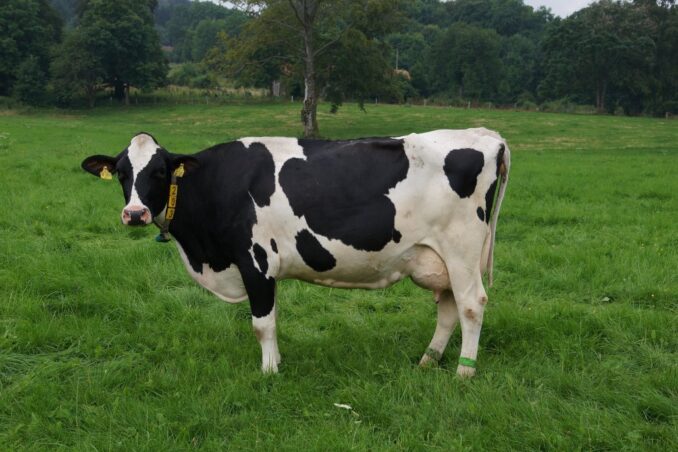
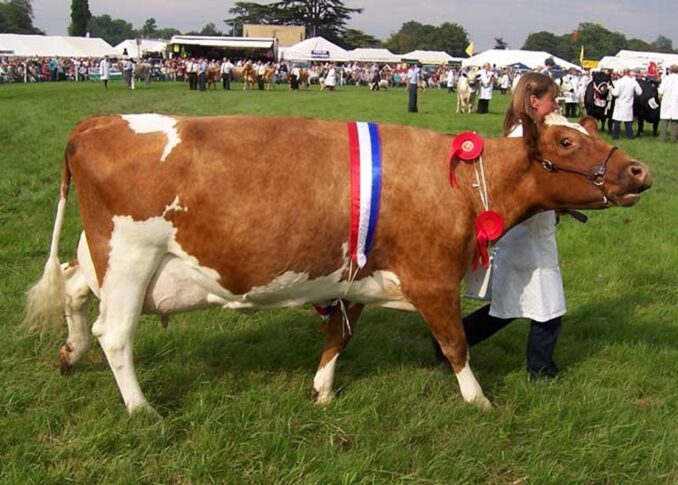
The school possessed 6 or 8 dairy cattle. Mostly Friesian but also an Ayrshire and a Jersey. Anyone vaguely familiar with this stuff will know that creaminess of milk produced is in inverse proportion to volume. Hence Jersey produce the lowest volume but creamiest and Friesians sit at the other end of the scale with high volume / low cream production
Friesian
Ayrshire
Jersey
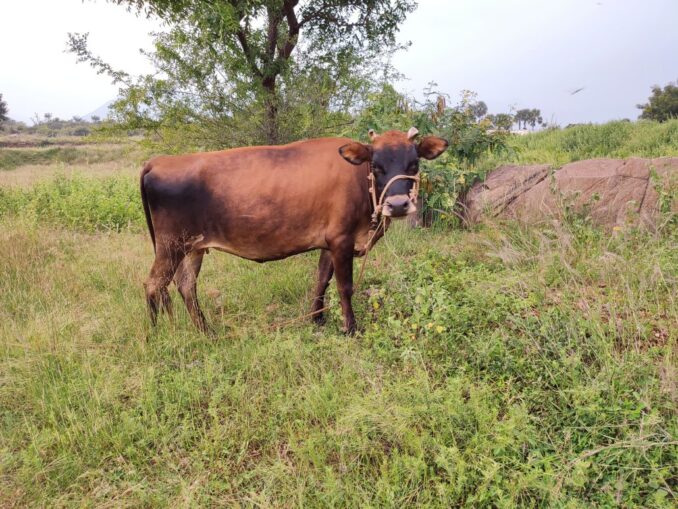
The cattle were a benign bunch allowing 14 year old lads to herd them from the paddock to the milking shed or, more ominously for them, the cattle crush ( more of that device later). I strongly suspect this was very routine for them and if we’d just opened the gate they would have made their way to the milking shed of their own accord.
There were some traps for young players here though. Early on we learnt not to stand too close to their rear ends. Cow shit drops straight down so unless your shoes are directly below the chance of getting soiled is fairly low. The urine though comes out from them in a jet that is likely to soak you from the chest down if you’re within two or three feet. And trying to get on an early bus home reeking of piss was not an easy task.
We also learned not to walk to close when herding them along. Cows – even the small ones – weigh a lot and having one inadvertently step on your foot hurt badly.
We bred them but bulls were too difficult to keep and potentially dangerous so in the interests of avoiding costly litigation artificial insemination was the preferred method. This required a needle. Not the sort used to patch socks or even the sort used for giving inoculations. This was about a foot long.
Filled with semen it needed to be inserted into the cow’s vulva and past the cervix before shooting the juice to give the best chance of a pregnancy. A cow’s vaginal canal is a lot longer than a human’s and the chance of misdirection if unguided quite high. Hence help was needed. The way to do this was for someone to coat their arm up to the shoulder in a plastic sleeve and insert it up the cow’s backside to guide the needle below home.
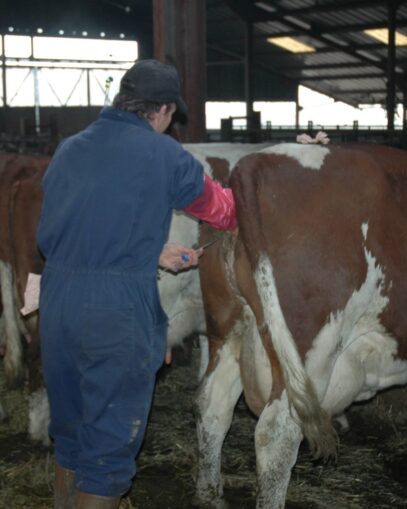
Every class got the opportunity to do this but when it came to our turn 95 per cent of us stepped smartly backwards and some poor bastard who hadn’t been paying attention to what was going on got lumbered with the task.
A cow calf was fine and welcomed into the school herd but a bull calf was different and required an early castration while the Ag department desperately tried to find an abattoir or pet food factory to deal with it.
Castration was also a process the Ag department thought we should observe and unless you were evasive enough get involved in.
There were three ways to do it. Elastration seemed the most humane to me at the time. A device like a pair of pliers was used to expand a tight rubber ring that was then placed over the calves scrotum. The pliers were then removed and the ring snapped shut. Eventually the blood supply to the whole area caused the scrotum and testicles to drop off.
Anyone fancy doing that to Piers Morgan or Jeremy Vine? Castr… pliers
Emasculation involves removing the penis and testicles and we didn’t do that but basic castration I witnessed a few times. This involved pinning the calf down and using a sharp knife to cut open the scrotum. Testicles are slippery – like oysters covered in baby oil. One of the teachers while severing the connecting tissues used his teeth to remove the items.
Then there was the cattle crush. A metal cage where cows could be given veterinary examinations without the danger of them moving around too much. A sort of pincer like device could be closed round the neck to help with the process.
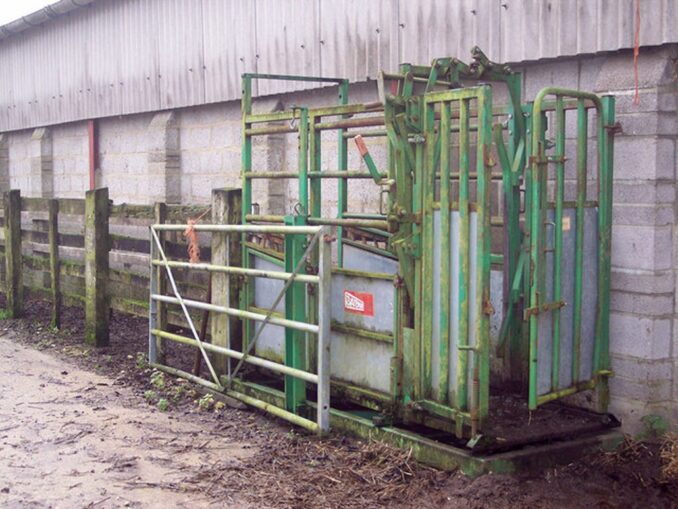
Naturally as teenage boys we sought to misuse the device.
A classmate was tempted to stick his head in the thing upon which he found the handles with which to free himself were far out of his reach. After a quick examination to see whether he’d been castrated or not he was left in situ until the teacher noticed his predicament and freed him.
As you can undoubtedly see we had a wild time there but I learnt an awful lot.
© ArthurDaley 2026