So what exactly is a mock exam?
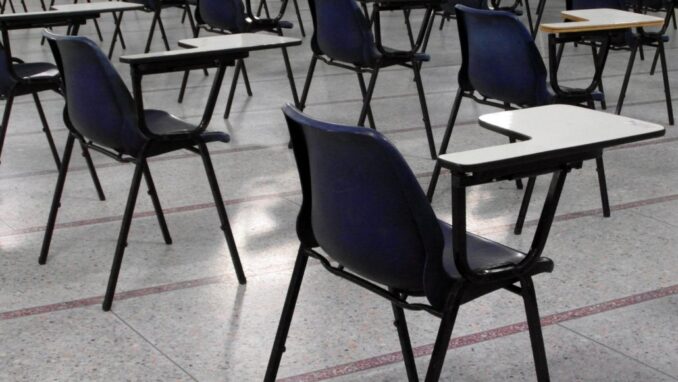
Year 10s generally have their first mock once the GCSEs have finished. Although conditions are exactly the same as GCSEs – again, using JCQ regulations – the exam papers are not set nationally. The papers are set by the department of that particular subject. This is an odd area as many 6th form colleges will issue an offer on the result of the final mock taken in Year 11 but the difficulty of the questions will depend on the school that sets the paper. In order to maintain conformity, some schools work with others by swapping papers and marking them a second time – this form of moderation helps reduce the differences in difficulty of the papers. There have long been calls for the examination boards that issue the GCSE papers to issue mock papers but time, money and bureaucracy mean it probably will never happen.
Once completed, the papers are returned to the subject department for marking. Again, a sample of papers that have been marked will be again marked by different teachers in the same department – more moderation so that one particular marker will be shown up if they are too soft or harsh. This works well generally.
It is not unusual owing to time constraints for some schools to schedule 3 mocks in one day and pity the poor student that has all 3 subjects on that day. It also means the invigilators have about 20 minutes to grab a bite to eat or have a ‘comfort break’ during the entire day. It’s tough on everybody however scheduling is overseen by many, high level staff so that’s how it is.
A member of subject staff is allowed to come in prior to the start of the mock and offer some kind words. Often a member of the Senior Leadership Team will also pop in and give a pep talk. For GCSEs, a pep talk is rarely given, no staff that teach the subject under examination are allowed in the examination room at all.
So far we have looked at the exam types, some of the rules and background of the question papers.
Now, we will look at access arrangements – something that will be entirely new to those that took CSEs and O levels.
Access arrangements are a set of allowances that are offered to some pupils. The SEND (Special Educational Needs and Disabilities) department receive feedback from parents and teachers regarding the behaviour as well as strategies used to help students complete their studies. A defined list of access arrangements is recognised by exam boards and their governing bodies. These are posted without comment:
- Amplification equipment – often for language listening exams
- Braillers – for those with sight deficiencies
- Coloured overlays – some find it difficult to read black text on white papers so these plastic overlays colour the paper making it easier to read, there are around a dozen different colours.
- Optical magnifiers – for those with sight problems, this can also include papers with 30-40 point printing
- Bilingual translation dictionaries – for candidates whose first language is not English, Irish or Welsh. Can not be used in English/Welsh literature, geography, history or RE exams.
- Extra time – for pupils that may need extra time to complete the paper for whatever reason deemed necessary. This is usually an increase of 25%
- Prompter – where candidates have no sense of time or get distracted easily, it is the duty of the invigilator to keep them on track if seen daydreaming, fidgeting, sleeping etc.
- Reading assistant – where candidates have trouble reading, the reading assistant can read text, including the question to the candidate without emphasis on any part.
- Reading pens – electronic pens that are wiped over text which is electronically converted to speech and heard through headphones.
- Word processors – for those that have difficulty writing, the candidate may type their answers and these are printed at the end of the exam and go into the question/answer paper. You’d be surprised how many broken arms occur during exam season! No internet access is possible on these computers.
- Breaks – some candidates are allowed a couple of minutes break during the exam. They are accompanied by an invigilator at all times and the candidate then receives that time back again at the end of the exam.
- Dedicated scribe – where pupils are unable to write, a dedicated scribe is allocated to handwrite the answers on behalf of the candidate. This is now falling in popularity owing to more computers being available.
- Coloured papers – mainly for dyslexic pupils, the exam papers are printed on a range of coloured paper such as blue, buff, yellow and purple.
I have seen a dramatic increase in all the above being issued to candidates over the last 10 years, this is simply an observation, not a judgement.
© The Librarian 2026