“Inflation is always and everywhere a monetary phenomenon.”–Milton Friedman
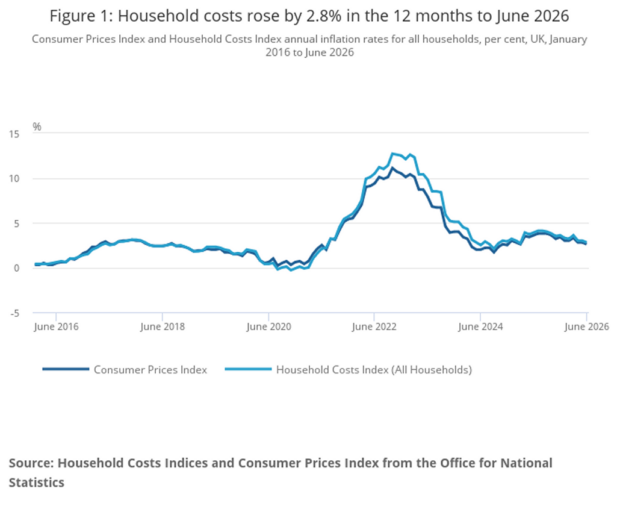
“Inflation” is an increase in the money supply. Higher overall prices are the result of an increase in the money supply. To say that higher prices cause inflation is akin to saying that “higher prices cause higher prices”.
We have before us an excellent example that higher oil prices do not cause inflation. But a disruption of supply of an essential commodity, like oil, will causes a recession. It is estimated that twenty percent of crude oil passes through the Strait of Hormuz and the Bab-el-Mandeb Strait. This supply source has been almost completely disrupted.
Economics 101 teaches us the “supply/demand relationship”. It is intuitive that a reduction in the supply of a good must mean that the market clearing price will rise. Otherwise there will be shortages. Equally intuitive is the understanding that paying more for an essential commodity means less money for less essential commodities. All economics is micro; i.e., if I have to spend more on gasoline, I have less money for other purchases, at least in the short run. Over the long run, I may buy a more fuel-efficient car or move my residence to where travel by car is less necessary, such as moving from the countryside to suburbia. But this is not cost free. Notice that my satisfaction is lower. I do not want a smaller, more fuel-efficient car and I do not want to live in suburbia, but I must adjust somehow. In the short run, something has to give. For example, I may cut back on dining out as often, or I may postpone a trip. The less affluent may have stark choices; i.e., heat or food. My point is that the overall price level need not change, but the mix of goods and services will change and for the worse. Adjusting to a supply disruption does not mean that all is well. Our standard of living drops. One gets fewer goods for the same amount of spending.
Money Expansion Does Not Solve the Main Problem
Pumping more money into the economy does not fix anything, because money is just the means of indirect exchange. We do not want more money per se; we want more of what money will buy. The citizens of the USSR had plenty of money but nothing to buy; thus, the long lines for essentials that were in extremely short supply, which I saw for myself in both Moscow and Leningrad in the early 1970’s. Instead of goods being rationed, so to speak, by their price, goods were rationed to those who could stand in line the longest. The fiction was that essentials were cheap. The reality was that essentials were in drastic short supply.
Printing money does not solve this fundamental problem and will delay necessary adjustments. Better to recognize that the real problem is a supply disruption of huge proportions and let the market adjust as best it can. But let there will be no doubt that supply disruptions of essential commodities like oil will cause a drop in our standard of living.
© Patrick Barron 2026 Website