The phrase “grim up north” lingers in the national imagination and conjures images of soot-stained skylines, struggling towns, and industries long past their prime. Yet this caricature of tired decline obscures another, less frequently told story: one of extraordinary historic wealth, ambition, and industrial power.
My wife and I are on a plutocrats’ tour of the north to examine how the land lies now. We find ourselves in Liverpool (visiting a friend of Mrs AWS), the entrepot for the Industrial Revolution’s raw materials and exported finished goods.
Having been distracted by training horses and racing cars on nearby Southport Sands, in this episode we get down to muck and brass tacks with a tale of genuine plutocracy. But first, why is there a place called Waterloo partway between Liverpool and Southport, and what’s those standy uppy metal things frightening the racehorses and threatening to prang the sports cars?
© Always Worth Saying 2026, Going Postal
An isolated hotel gave its name to a township that grew up around it. Built in 1815 and originally to be the Crosby Sea Bank Hotel, it was renamed after the famous battle of that year.
As time passed, newly built neat terraced streets and marine parades blurred into the expanding Liverpool, and the hotel changed its name again to The Royal Hotel. Not least of this expansion was the Gladstone Dock built in the 1920s and the Royal Seaforth Container Terminal which opened as recently as the 1970s.
Besides racing cars and race horses, aeroplanes have also troubled the sands. In 1910, Henry Melly – a pioneer aviator who learned to fly during his honeymoon – took off from the sands to complete a circuit of Liverpool and Manchester. A feat that won him a prize of £1,000.
These days his Merseyside runway is scattered with what aviation successors might dismiss as ‘foreign object debris’, but which the connoisseur of such things simply calls art.
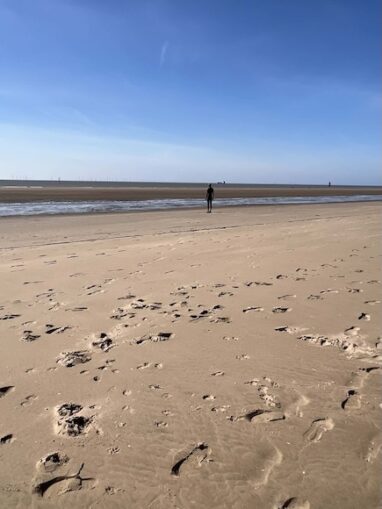
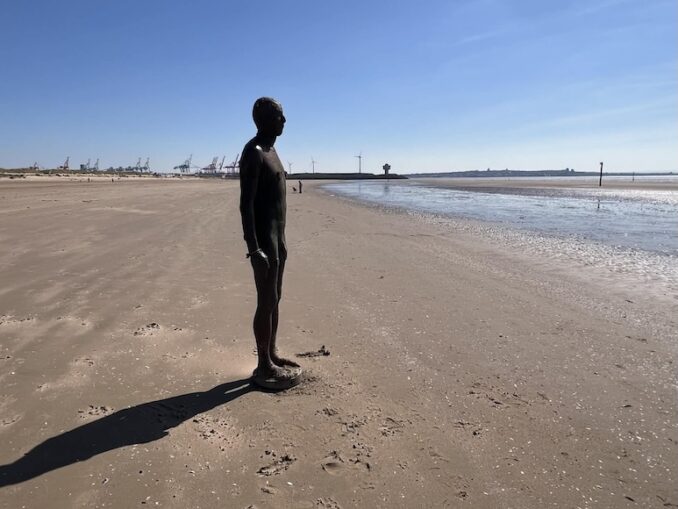
Another Place by Sir Antony Gormley has been a feature of Waterloo and Crosby beaches for just over two decades. Cast in iron and previously exhibited across Europe, these hundred identical figures, six foot six tall and weighing two-thirds of a ton each, have found a permanent home along two miles of Crosby Beach.
Described by the artist as a ‘poetic response to the individual and universal sentiments associated with emigration’, they left this observer strangely unmoved. Perhaps if they were bunched together?
Besides an opportunity to prang a racing car, frighten a horse, bash a wing off a plane, and make a wife giggle, they also, on a not too cold day, provide somewhere to hang one’s beach towel.
© Always Worth Saying 2026, Going Postal
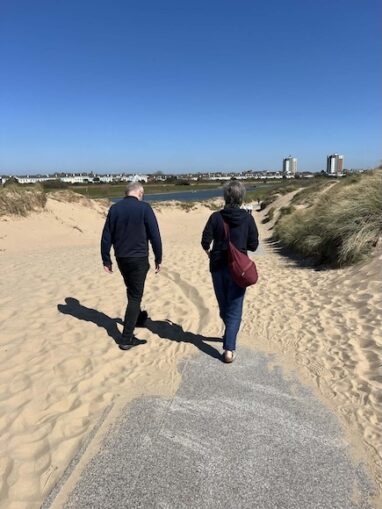
We stride inland again, my wife’s friend and I to f’word. We pass *cough* an easy-to-crib tourist information board and then through dunes towards a boating lake. To the right, the cranes of the container port stand sentinel across a heatwave-blue sky. To the left, my wife’s friend points an outstretched arm to point out a plutocrat’s impressive end-terrace house.
© Always Worth Saying 2026, Going Postal
Beach Lawn is a short, prestigious seafront residential street forming, along with Adelaide Terrace, an early-to-mid 19th-century seafront development of mostly Georgian and Victorian terraced/townhouses (many Grade II listed). Number 13 Beach Lawn was the home of the White Star Line owner Thomas Henry Ismay.
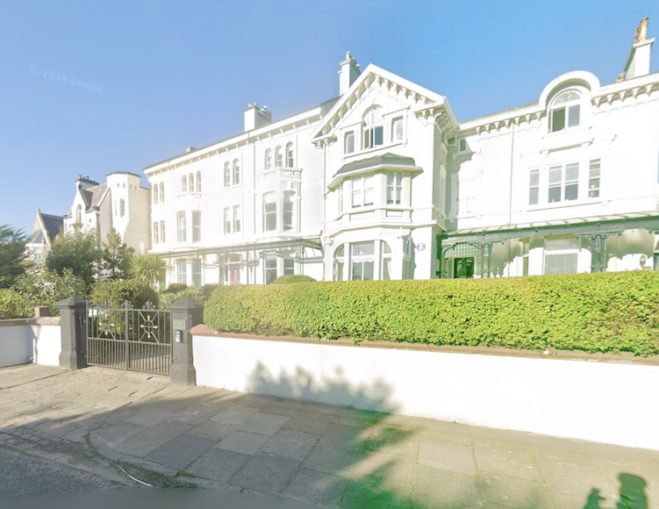
© Google Street View 2026, Google.com
White Star Line began in the 1840s as a Liverpool company running clippers to Australia. Founder John Pilkington (co-founder was Henry Threlfall Wilson) came from the same Lancashire Pilkington family linked to the famous St Helens glass business – which we passed en route to Liverpool and to which a future episode will beckon.
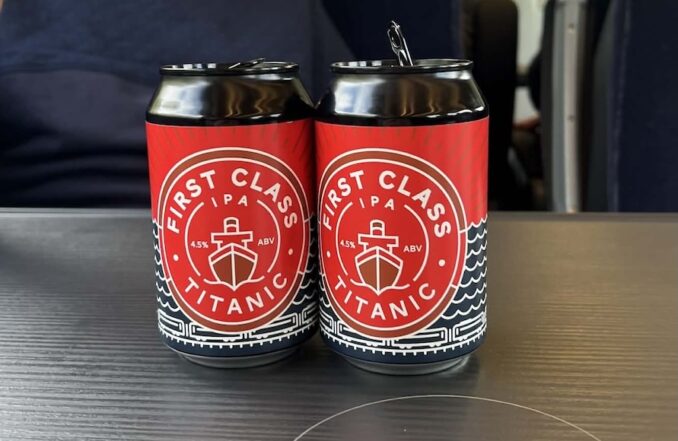
By 1867, White Star was bankrupt. Bought by Thomas Ismay for £1,000, it was he who rebuilt the company into a premier transatlantic steamship line using Harland & Wolff ships, the most famous of which was the ill-fated Titanic, which sank in 1912. Appropriately on our first class rail tour of Northern England, the railway company supplies us with First Class Titanic pale ale.
© Always Worth Saying 2026, Going Postal
By the time of the Titanic, son J. Bruce Ismay, who spent part of his childhood at the Number 13 Beach Lawn property, was chairman of the company and faced fierce public approbation for surviving the Titanic sinking while over 1,500 of his passengers and crew perished.
Subsequently a solitary figure, never recovered from the disaster, Bruce Ismay spent many of his final years in Connemara before dying peacefully in his Mayfair residence aged 74.
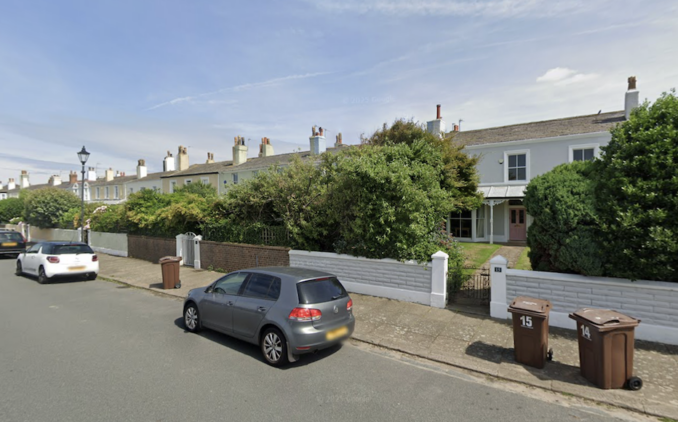
Not so the master of the Titanic, John Edward Smith, who went down with his ship. Known as the ‘millionaire’s captain’ due to wealthy first-class passengers preferring to sail with the experienced seafarer, at one time Smith lived near to the Ismay’s on Marine Crescent.
© Google Street View 2026, Google.com
As for claims to plutocracy, by 1912 Smith was one of the highest-paid merchant captains afloat. Reliable figures put his White Star Line salary at around £1,250 per year, plus a performance bonus of roughly £200 if his ships avoided accidents.
This might equate to roughly £180,000–£200,000 a year in today’s money. It was an excellent professional salary — far above that of most officers or middle-class professionals — but nowhere near the income of industrialists, bankers, or the millionaire passengers he often carried.
When his will was proved after his death, the value of his effects was approximately £3,186. In modern terms, that is a few hundred thousand pounds — a respectable sum reflecting a successful career, a nice house and savings, but not great wealth.
In contrast, original White Star proprietor Thomas Henry Ismay was extremely wealthy by the standards of late Victorian Britain. When he died on 23 November 1899, the probate of his will reported by The Times in March 1900 valued his estate at a cool £1,297,881. In terms of UK consumer price inflation, £1.3 million in 1899 is roughly equivalent to £200–220 million in today’s money.
However, when measured against average earnings or as a share of the economy, the figure is substantially higher — perhaps in the low billions in modern terms. As such, Ismay Sr ranked among the richer industrialists and shipping magnates of his era.
Decades later, White Star merged with Cunard, which is now part of the American-owned Carnival Corporation. Pilkingtons is part of the Japanese corporation Nippon Sheet Glass Group. Everton Football Club, whose ground we passed in last week’s episode, is owned by American billionaire Dan Friedkin.
Gladstone Docks and Seaforth Container terminal have fared differently and are owned by The Peel Group, a British infrastructure and property investment business based in Manchester.
Find out more next time on Plutocrats Tour!
© Always Worth Saying 2026