
The phrase ‘grim up north’ lingers in the national imagination and conjures images of soot-stained skylines, struggling towns, and industries long past their prime. Yet this caricature of tired decline obscures another, less frequently told story: one of extraordinary historic wealth, ambition, and comercial power.
My wife and I are on a plutocrats’ tour thereabouts to examine how the land lies now. We find ourselves in Liverpool (visiting a friend of Mrs AWS), the entrepot for the Industrial Revolution’s raw materials and exported finished goods.
Last time we encountered some serious money in the shape of the Ismays of Beach Lawn, Waterloo, owners of both the White Star Line and an impressive mansion overlooking Liverpool’s Crosby Beach.
Nearby, behind the opinion-dividing Gormley sculptures that decorate the sands in the modern day, stand the cranes of Liverpool docks. Specifically for container handling at the dedicated facilities which front this section of the Mersey and occupy part of Gladstone Dock.

© Always Worth Saying 2026, Going Postal
Puffins will be unsurprised to read that the heyday of the docks is considered – as with many a British high point – to have been in the 1950s. Annual tonnages hovered around the 16-18 million mark.
This era is regarded as the absolute peak in terms of both ship traffic and employment. During the 1950s, with every berth occupied, vessels often queued in the river to enter the locks. Continuous queues of lorries characterised the adjacent Dock Road. The sheer volume of goods moving through the port made for a labour-intensive environment, with thousands of local dockworkers employed to load and unload by hand.
The introduction of containerisation transformed the shipping industry by replacing much of the individual manual handling with standardised containers that could be transferred between ships, trains and trucks. This reduced loading times and labour requirements, reshaped infrastructure, and contributed to the decline of traditional dockside employment while increasing efficiency and cargo capacity.
However, if you think it’s all doom and gloom, you’d be wrong, with tonnage these days now far in excess of the 50s ‘heyday’. How come? With a nod to those about to be replaced by AI, besides containerisation, dock work became less labour-intensive but more efficient due to automation, mechanisation, and improved infrastructure. Added to which is the effect of bulk flows from a smaller number of bigger ships.
Might therein be an opportunity for a modern-day plutocrat? Read on!
Born on 18th March 1942 in Bury, Lancashire, John Whittaker attended the private Prior Park College in Bath before joining the family quarrying and waste disposal business. The quarrying provided aggregates for projects including the M63 motorway, and the quarries, when exhausted, converted to landfill sites for waste disposal.
In the early 70s, Whittaker acquired Peel Mills, a historic cotton business in Bury. The company provided him with a substantial portfolio of industrial and mill properties in a declining industry. Taking the name, the Peel company became the main corporate vehicle for his expanding business, with Whittaker as chairman.
Former cotton mills were renovated and converted into light-industrial units for rental, while new industrial buildings were constructed. By the late 70s, property development accounted for the majority of Peel’s commercial activity.
Moving beyond reusing former mills, they developed new industrial units, retail warehouses and out-of-town retail parks. This marked the emergence of Peel as a property-development business rather than a textile company.
Notable projects include the Trafford Centre mega-mall (later sold for £1.6 billion), built on land acquired when Peel bought the Manchester Ship Canal Company. Likewise, also acquired via the MSC takeover, what was to become MediaCity at Salford Quays – home of the BBC in the north.
In simple terms, the story is: quarrying and waste → cotton mills → industrial property → retail → major regeneration schemes → large-scale property and infrastructure development. John Whittaker’s key achievement was in recognising that the land and buildings associated with declining industrial activities of a previous generation of plutocrats would themselves become valuable property assets.
Having made an obscene amount of money, he became a resident on the Isle of Man and the one-time occupant of the island’s Billown mansion, complete with six double en-suite bedrooms, two self-contained two-bedroom flats, a large ballroom, a swimming pool, a gym and a tennis court.
Not to mention manicured parklands with a private lake, gardens, and a helicopter pad.
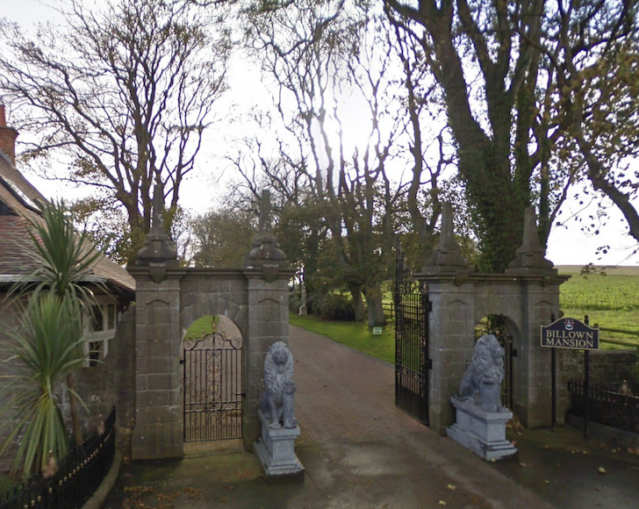
© Google Street View 2026, Google.com
According to Companies House, a director with 493 boardroom appointments, Parliament’s Public Accounts Committee have accused Whittaker of aggressive tax avoidance, noting that Peel’s most profitable arms pay almost zero UK Corporation Tax through using complex structures, despite owning massive (and often state-linked) projects.
Son James attended Ampleforth College, to which his cigar-chomping father dispatched him under instruction to forget about the academic and get in the rugby team. Although as publicity shy as his his father, the 55-year-old has contributed to the Northern Business Leaders podcast, where he elaborated upon his education.
The sport of Rugby teaches life lessons: Team strengths and weaknesses, camaraderie, streetwiseness, how to socialise. James loved school and, following his father’s advice, not only made the 1st XV but kept contemporary Laurence Delalio out of the team, or at least out of the forwards.
After scraping 5 O-levels, he made the sixth form after which scraping through A-levels allowed him a place at Warwick University. After qualifying as a chartered surveyor, he joined the family firm and is now managing director of Peel Waters.
Given the cotton mills are long gone, might there be other opportunities?
Back and forth on our trip to Liverpool, besides spotting the Gormleys at the beach and a statue of Ken Dodd at Lime Street, we also spied from the carriage window rakes of Drax wagons. These are used to transport imported biomass to the ‘green’ power station at Drax, which has been converted from burning coal.
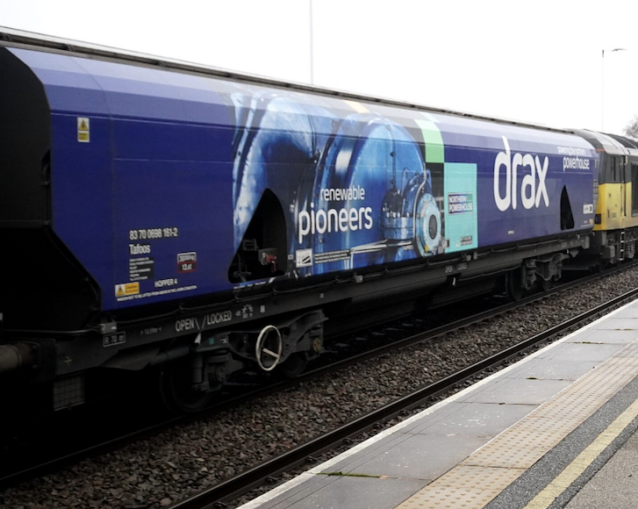
Class 60 heads a load of biomass towards Drax,
kitmasterbloke – Licence CC BY-SA 2.0
Despite now being one of Europe’s biggest CO2 emitters, Drax is labelled as being friendly to the environment and receives all the associated taxpayer-funded subsidies. The biomass (chopped-up trees) comes from America in the form of pellets and is unloaded in Liverpool.
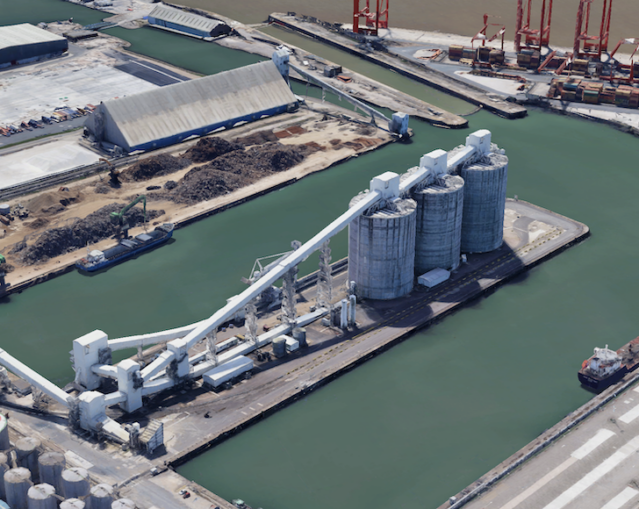
© Google Maps 2026, Google licence
Peel Ports operates a £100 million custom-built biomass import terminal at Gladstone Dock. The dedicated facility handles up to 3 million tonnes of imported wood pellets each year. The terminal is equipped with three massive, purpose-built storage silos and two high-capacity, enclosed Siwertell ship unloaders, which are used to transfer the pellets from bulk carriers.
Once unloaded, the biomass is transferred onto freight trains, with up to 10 trains departing daily from the Port of Liverpool to transport the fuel across the country to Drax at Selby, North Yorkshire.
As part of the supply chain, Peel Ports Logistics acts as the official shipping agent for Drax’s vessels in Liverpool and manages key aspects of the operation, including customs clearances and vessel arrivals.
Worldly Puffins are reminded that all of this is ‘green’, and not a giant grift by chancers taking advantage of the London elite’s carbonphobic psychosis.
Cotton mills to B&Qs has been replaced with demoliting conventional power stations through an offshoot called Peel Natural Resources and Energy. Also visible from the train window for north west plutocrat hunters (for the time being) is the Fiddlers Ferry power station, currently being dismantled by Peel NRE. When cleared, the 800-acre site is to be covered with 860 new homes, development land and a battery energy storage farm.
Which brings us to the crux of the issue: do we all benefit from the activities of the plutocracy, or is it a big opportunist’s grift that we pay for?
© Always Worth Saying 2026