Ernesto sang a beautiful haunting rhumba from his native Brazil, and then Chocote took the guitar to accompany Memé’s singing. Chocote’s big labourer’s fingers were transformed as they danced nimbly around the chords, his other hand strumming and slapping the wooden guitar in a Spanish flamenco rhythm. Memé was larger than life, his face flushed with wine and effort as he sat bolt upright, eyes closed, and he hung on to long high wavering notes, relating tales of their youth, of the family they had left behind in Valencia and crossing the Pyrenees to escape from Franco’s Spain, when there was nothing to eat except potato or orange peelings or even grass, and of their new beginnings in France, of the years since right up until the present day, and he had tears streaming down his face. It was a fitting end to the evening, no one wanted to try and follow a performance like that, and there was hardly a dry eye left among those still gathered around the fire’s embers.
The following morning, we all parted to go our separate ways, but not before Chocote, Memé and Paquili came to me and, in a rare show of affection to a gadjo, an outsider, held me with both hands, giving me an address in Marseille.
“You’re one of us now,’ Chocote said solemnly, piercing me with those deep dark eyes of his. “You are welcome to come and stay and travel with us whenever you want.”
Memé gave me a tiny gold heart, which I attached to my watch. “It’s the heart of the Gypsies,” he said.
“You’ll see me sooner than you think,” I replied, becoming emotional. Then I turned to my trusty old Bedford van, where the others in my group were waiting to begin the long drive home to England.
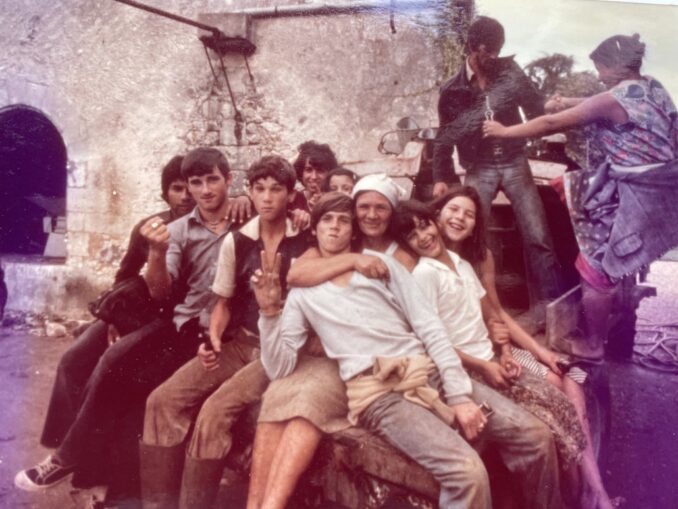
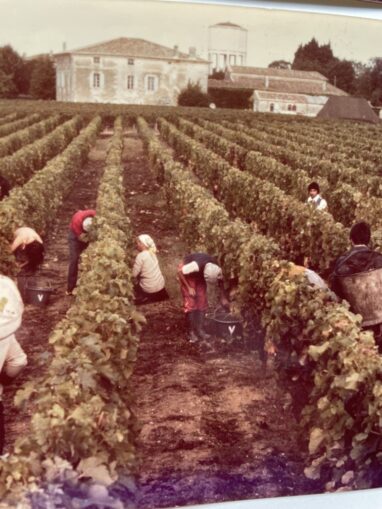
The year was 1978 and it was my second vendange, or grape harvest with this group of Manouche, the French equivalent of our Roma, proper old Gypsies. This time I had arrived in the Gironde bringing the second largest group of pickers after the Gypsies, Ernesto being one of them plus half a dozen other guys and girls from England. I had been fascinated by the Manouche the previous year, their campfires, their songs, their dancing and their language – an old language based on Sanskrit, which I was to learn. The harvest was a happy time, the work was hard but the pay reasonable, plus with the food and a litre of wine a day, it was like a free holiday. But at the end of that first harvest, the Manouche had not been invited to the end of harvest feast, and had vanished at first light, so I had been delighted to meet up with them again. Then on the second day of that second harvest, I discovered that the Manouche, despite being by far the fastest pickers, were being paid well below our rate, so I called a strike. It was the 70s after all, and strikes were all the rage in England, we were, after all, the ‘sick man of Europe.’ The patron took it in his stride to be fair, and within a couple of hours we were all back at work, on equal pay – which led to the affection and the invite to join the Manouche.
Back in London I threw myself into work to raise funds, working 12-hour night shifts as a freelance for the dreaded BBC radio at Broadcasting House. I hated it, but needs must. I was staying in the house of a friend south of the River Thames. There were a few others renting rooms there but I hardly saw anyone. I worked by night, came home and drank a glass of hot milk with a raw egg and a splash of whisky, and slept by day, which meant I spent very little money. By March I was thin and pale and had picked up the sobriquet sick dog from the others in the house, but I had saved a good stash of money and was ready to set off for Marseille.
On the ferry from Dover to Calais, I watched the white cliffs slowly recede, sucking in the sea air and sloughing off those months of night shifts, and thinking about the Manouche and what might await me. I loved their free spirit, the music, the campfires and the closeness, which in a way wasn’t surprising as I’d travelled all my life to all corners of the world, going wherever the army sent my father – Egypt, Singapore, Malaya (as it was then), Nepal and Germany, and then after school I just carried on travelling, picking up work where I could. The constant moving meant I didn’t feel I really belonged anywhere, and with the Manouche I felt that bond of the road.
In the end, I think all nomads, whatever level their nomadic life is lived on, belong to the same netherworld; we’re all running from nowhere to nowhere. We might dress it up as freedom, but the reality is people keep moving because they have no roots, no land to call their own, just the fugitive mentality of outsiders, which might go some way towards explaining how and why I identified with the Manouche.
Once back in France, I avoided the expensive motorways and toll roads, and stuck to the Routes Nationales, heading first towards Rheims, then on to Dijon and Lyon, Valence, and on towards Avignon. Early in the morning on the fifth day, I saw Marseille sprawled out by the sea and descended from the surrounding hills. I had the address that Memé had given me, but each time I stopped to ask for directions, I got curious looks, usually a shrug as well, and was pointed further and further in the direction of the docks. It was there, moving slowly along the coastal road with sea and empty shipping containers and discarded tyres on one side, that on a patch of wasteland on the other side I spotted a large number of Peugeot and Saviem vans and caravans, and a crude hand painted signed saying Welcome to Mirabeau nailed to a post. I had arrived.
I turned in cautiously, scrawny dogs snapping at the van’s wheels and setting up a cacophony of barking and growls, until stones were thrown and they scampered away. Fortunately, Chocote’s kumpania occupied a large area just inside the entrance and they recognised me immediately, surrounding the van and shouting excitedly. I was guided to a spot beside the caravan belonging to Chocote and his wife Oumlo, where I finally emerged to warm embraces.
Chocote was especially welcoming, making me his personal guest and according me full Rom or adult status even though I was unmarried. Oumlo, helped by Pacquili’s wife, tiny, birdlike Ghuno, and the other women laid on a feast that first night, and the guitars came out around the braziers. Everyone was there – Mochi, who we called Pesi Balo meaning fat pig – Paquili, Roupenho, Chiclo, Matzo and his son Pantoon, Narte, and all their families, especially Chocote’s sons Beudjeu, who was to become my best friend, Niglo, Blon and Pepite. The children formed a circle and clapped along to the singing, while I just soaked it up, grinning like an idiot, staring at the stars and knowing that making the journey had been the right move.
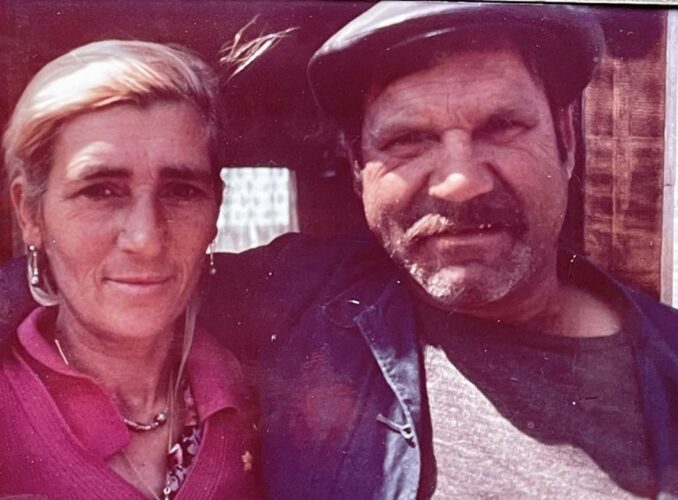
The wasteland was a dump of a campsite though. Chocote’s kumpania numbered about forty people in total, spanning several generations from about eight families. Elsewhere, separated by invisible boundaries, there were Jenische and Sinti from Germany, Yugoslav Romanies, Spanish Gitanos, and other travellers of uncertain origin, about 200 people in total, served by a couple of water pumps by the road. The different groups didn’t mix. Inside the caravans were spotless, but outside it was a rubbish tip, except for the area around Chocote and Oumlo’s caravan which was kept scrupulously clean.
In the end, I stayed with the Manouche for almost three years, and became part of them. From the beginning, Chocote was especially welcoming, treating me almost as one of his own sons. His was the unquestioned head of our group, and his word was law, other Rom, usually heavy smokers, wouldn’t even light up in his presence for fear of showing disrespect. Life at Mirabeau had little to recommend it; it was just somewhere warm and generally dry where the kumpania could pass the winter before the travelling season came around again. The French distrust the Manouche, as Gypsies are distrusted by the Gadje everywhere, but crime wasn’t rife amongst our group, the odd bit of shoplifting, an occasional car theft, but Chocote frowned upon any kind of crime. In Marseille the big problem was the North African gangs who were packed into the huge housing estates to the north of the city, and we stayed away from them.
Most days, Beudjeu, Chocote’s eldest son, and I would set off early, at sunrise, in his Peugeot van to rummage through the local municipal tips for scrap metal, which we sold, and if we were lucky collect boxes of food past their sell-by date by a day or two, still perfectly edible. It was important to be first to hit the dump – first gets all and second gets nothing.
Finally, after weeks of excited anticipation, the annual May pilgrimage to Les Saintes-Maries-de-la-Mer in the Camargue arrived suddenly. We drove off in convoy in a frenzy, and the sight that greeted us at Les Saintes was enough to make the breast of any Manouche swell with pride. Thousands were camped out under the burning sun, guitars putting out the familiar flamenco rhythm on every street corner, fires dotted the landscape as if were some sort of medieval army. Here we were no longer outsiders, here we belonged.
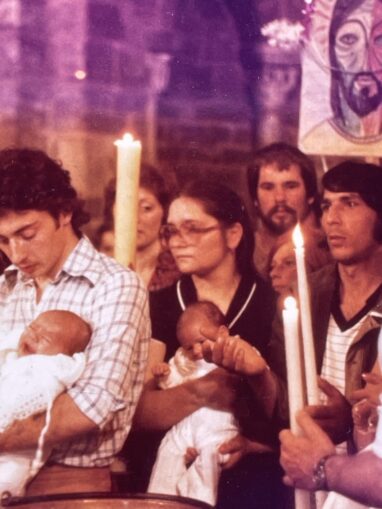
Les Saintes is considered lucky for a baptism by the Manouche, and this time Pacquili was naming his latest son after me. It was held on Saint Sara’s day, Sara Kalou, who is the patron saint of the Manouche, and it was chaotic but fun. Once it was all over, it was time to head north to the Limousin, where we would camp out, wait for the apple harvests, make cane baskets to sell door-to-door, and then eventually descend to the Bordeaux area for the vendange.
The summers were a magic time, leaving behind the arid red landscape around Marseille before eventually entering fertile country with sheep and cattle grazing on lush green grass, cherry and chestnut trees, blackberries and apples and pears all approaching ripeness. Our favourite campsites were riversides, where we could bathe in the cool waters, but they were few and far between. Nearly all municipalities set aside a patch of land where the Manouche could stay for a few days before the police moved them on, although they were usually pretty uninviting. Our main base for the next two or three months, until the vendange, would be the small market town of Le Dorat, where we would rendezvous with family not seen since the last vendange: the horse drawn caravans of Ghuno’s father, Zozo, and his cousin Nano. Le Dorat also boasted a Poste Restante office, which made it a good contact base, and we rarely travelled further than twenty miles from the town, which was about the limit for a day’s travelling for the horse drawn caravans, circling around the area and staying for our allowed two or three days in various official stopping places for nomads.
Zozo had two horses and could travel relatively quickly if he wanted to, but he rarely did. Occasionally I’d join him for a day, while someone else drove my van. After fifty years roving the same small region, Zozo knew every little road and side road that existed. Like most Manouche, he couldn’t read signposts but he didn’t need to, and he always chose the quietest and prettiest routes with few cars, which was just as well because those that we did encounter rarely slowed and often sounded horns to demand we move aside. The horses were unfazed though, like their owners they were used to harassment. We rolled gently through manicured countryside, smoking hand-rolled cigarettes of black tobacco, picking out the different fruit trees, listening to the bees and the rhythm of the horses’ hooves on the tarmac, and sipping from tumblers of rough wine.
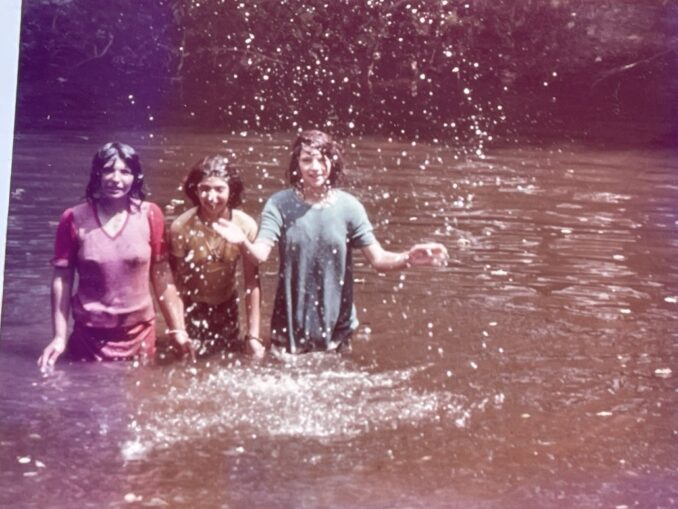
Apart from Zozo and his wife Nana, a wizened old lady who rarely spoke, and myself, there was also their daughter Lachi, a dark-haired and green-eyed woman, and her young son born out of wedlock (a matter of considerable dishonour for the family), and almost a whole farmyard in the back of the caravan: chickens, a cock, a couple of dogs, and a large black crow which liked to spend part of the ride sitting on Zozo’s cap, peering all around. By midday we would search out a place for some lunch, usually bread, cheese and saucisson, while the horses grazed contentedly. “I’ve got my home right here with me,” Zozo would say. “So, there’s really nowhere for me to hurry to.”
Summer wore on and the nigli, the hedgehogs, grew fatter and we took to the fields with dogs. “Give me a choice between a chicken and a fat niglo and I’ll throw away the chicken every time”, Matzo declared as we roasted several hedgehogs over a fire with lashings of salt and pepper. Other times we’d make ovens with bricks in the ground and cover and roast them that way. Hedgehog was certainly a Manouche favourite, with a taste not far from pork but stronger and quite fatty – though the animal rights brigade will be happy to hear that hunting and consuming hedgehogs has since been banned in France.
The old customs were fading, bit by bit. Everyone still spat into the fire in the evening, but no one was sure anymore why they did it, though I guessed it was to ward off evil. Some superstitions were very much alive though, especially those surrounding the Mulo, or Beng, the Devil. Sitting around the campfire at night, we had to be careful to keep spaces between us so that the Mulo could pass through without touching us, and the flames couldn’t be too high, as that would obviously attract the Mulo, but they couldn’t be too low either as that would offer no protection. In campsites where there had been known sightings of the Mulo, most tended to head to their caravans early, and bolt the doors.
The only time life was hard in the countryside was if there was incessant rain, when everything got wet and tempers became frayed, but poor weather was a rarity during the summers. Unbeknownst to us, though, an altogether different kind of storm cloud was brewing back in Marseille.
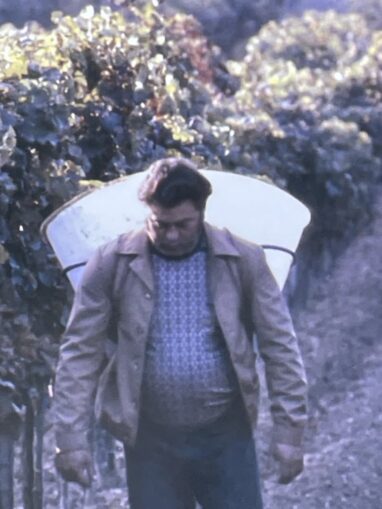
We arrived back in October, and were soon besieged by gaggles of social workers, health inspectors and even anthropologists, poking their noses into our lives and making copious notes, while adjacent to Mirabeau two rows of cheap small houses were being hastily thrown up. The Manouche were coming under severe pressure to give up the nomadic life and become sedentary, and it was suggested that unless they moved into allocated housing their social security payments may be stopped.
I spent many hours with Chocote discussing what the future might hold, and he would become emotional and nostalgic, as if he were carrying a deep sadness. “Sometimes I find myself crying in my sleep,” he said. He was proud of being Manouche, he said they could laugh in the face of adversity and live off their wits, unlike the gadjo, and that it was important to live for the day rather than for some distant point in the future which might never arrive. But he was also resigned to the changes taking place, and gradual erosion of their culture. “Maybe it’ll take another two generations,” he said. “Then we could all be in houses. Maybe we are seeing the last generation of travelling Manouche growing up, but that’s the way it is. The gadjo don’t want us travelling anymore, so what can we do?”
Memé was the first to capitulate, even if he avoided the purpose-built houses in the docks. He had moved with his wife and ten children into a dingy twelve-storey apartment block nearer the city. When we went to visit, the stairwell was dank and reeked of piss, but inside the apartment was pristine and decorated with all the usual knick-knacks you’d find inside the caravans – Madonnas and good luck charms vied with copper fountains, a hunting rifle and shelves of cups and saucers. But pride of place went to an oversized television mounted on the wall, which Memé said was on from morning until late at night. “The gadjo threatened to put me in prison if my children didn’t go to school, so what can I do?’ Memé told us. “I’ll go back on the road when they finish school.”
That evening there was an animated discussion about the merits of bowing to the inevitable and giving up the travelling life. “It’s getting harder to live off the land,” Chocote the pragmatist argued. “It means weaving baskets all day and going door to door for a pittance, fishing or hunting for hedgehogs. Sometimes we don’t even know where the next meal is coming from. In twenty years hardly any of us will be living in caravans.” Paquili stood up. “I travel because I am a true Manouche,” he countered. “If I stay in a house, I get sick. The road is in my blood.” Ghuno’s brother Chiclo backed him up. “I don’t want to live like a peasant,” he said. Chocote also pointed out that by moving into the houses the Manouche would get proper French citizenship and identity cards instead of the nomad papers they currently held, and proper French vehicle number plates instead of the special ones they had denoting them as Manouche, which was why the klistey (the police) stopped them all of the time.
In March Beudjeu and his wife Pesi had a baby daughter who they called Monique, and took me as her kirvo, godfather, which felt like being drawn ever closer into the family.
By Spring, Chocote and Oumlo had moved into one of the houses, and several other families joined them. One row of houses ended up being occupied by Manouche, while the houses on the other side of the road were taken up by Sinti. Chocote parked his caravan by the house and still slept in it, while I slept on the mezzanine along with Blon, Niglo and Pepete. Beudjeu kept his caravan at Mirabeau. It was unbelievably hot because there were no trees offering shade, and the houses created a heat trap. Oumlo looked tired and drawn. “We eat, we clean, we sleep, we get up and we eat again, over and over again,” she said sadly. “I miss the country. I can’t wait for the vendange, to live like a Manouche again.”
“You’re definitely coming then?” I asked.
“We’ll be there; I wouldn’t miss it. Otherwise, what, we just sit here in the sun and bake? The vendange is like a holiday for me, Chocote knows that.”
And go we did, once more, but when we reached our usual vineyard, we found out that we’d been replaced by machines. We eventually found another chateau to work at despite intense competition, but were told by the owner that they too would to go over to machines the following year. When the harvest was over, I realised I wasn’t going back to Marseille, there was nothing for me there. We parted ways, not knowing when we might meet again, and I confess to shedding a few tears.
To be continued.
© text & images Porkpie 2026