
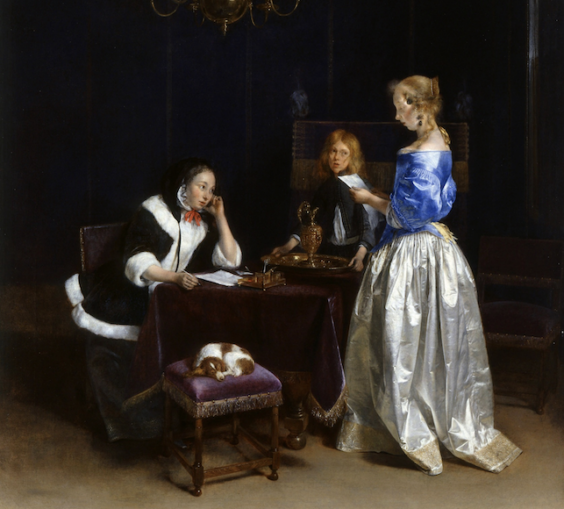
Woman Reading a Letter,
Gerard ter Borch – Public domain
Rules
Pay attention, Puffins! Your last homework entries were excellent — well done. Now it’s time for the next challenge. Before you put pen to paper (or rather fingers to keyboard), here’s a reminder of the rules for the Summer 2026 Competition:
- All qualifying articles to be submitted by the middle of August
- No existing series
- Preferably no AI
- Images are not obligatory, but if included must be attributed and free to publish. The editorial team can find suitable images if you prefer
- Mark your entries Summer 2026
As per last time, Swiss Bob and I will be assessing.
Congratulations to last time’s winners. As an encouragement both to those who didn’t win and to new contributors, the term ‘broad agreement’ used to describe the judging last time was diplomatic. As diplomatic as a room full of French diplomats talking diplomatese at a diplomacy conference.
Beyond the rules of the competition, let’s look at the rules of good writing:
- Be clear
- Be concise
- Remove unnecessary filler words
- Don’t overuse adverbs and adjectives
- Use short rather than long sentences
- Avoid clichés
- Avoid repetition
If you don’t understand what you’ve written, or struggle to read it out loud, the reader will struggle also. Having said that, the Golden Rule which must be obeyed at all times is that these are rules, not chains. Break any or all of them if your writing demands it.
As for subject matter, the three most important people in your submission are: the reader, the reader and the reader. We’re all Puffins, so we know what goes down well. However, a different angle, a view from out of the box, an unexplored coastline, always catches the eye.
Marking
Shall we look at how this judge marks your homework? As a contributor to these pages myself, I take judging very seriously and understand the agonies that writers can go through. Even the thickest of thick-skinned 1970s club comedians would spot the one member of the audience not laughing about their black, Irish, overweight mother-in-law.
From the outset, theres more than one judge, so my perspective is far from being the be-all and end-all. Writing is subjective. Style, quality, choices, interpretation, experiences, culture, emotions and personal preferences create an unpredictable mix.
Therefore, I use a spreadsheet, the one below. I’ve blurred it out because I realise having your work weighed and judged is torture.
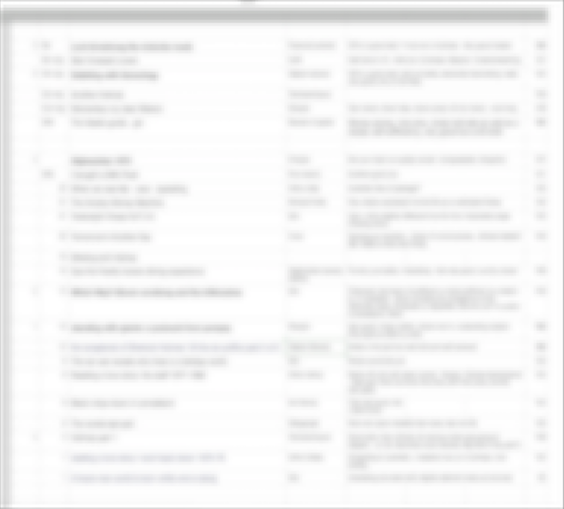
© Always Worth Saying 2026, Going Postal
From left to right, I record the publication date, the title, the author, and a few brief notes I make while reading. I also note the number of likes. We shouldn’t obsess over the Like button, but if a piece attracts appreciation from fellow Puffins, I have to give it another read to see whether I’ve overlooked something.
Once there are enough entries to compare, I rank my favourites first, second and third, highlighting them in bold. Each time a new entry is published, I ask myself, ‘Where does this fit in the order?’ As the list grows, I extend this to a top five. If the article earns a place in the top five, the previous fifth-place entry drops out.
Throughout the competition, I email Swiss Bob from time to time with my current top three, along with two or more other pieces that I think deserve an honourable mention. Last time we received more than twenty entries, every one of them more than good enough to publish.
At the end of the process, I sent my top three and a couple of honourable mentions to Swiss Bob, who used “broad agreement” algorithm to select the winners.
Writing hints
Hints, like rules, are not chains. Do what works for you. Here’s what works for many: Write freely, reread and edit, reread and edit again. If possible, leave a while between sessions so the subconscious can get to work.
Arguably, these things are all written in the subconscious, and the trick is to leave it to simmer, before giving it a chance to emerge.
Write without stopping for 10 to 15 minutes. Keep your fingers moving. Do not delete anything. Ignore typos and grammar. Alow your inner conscious editor to give up control.Then read through and rewrite, rewrite, rewrite, fact-check, and add detail allowing the concious to apply grammar, vocabulary and plot mechanics required through deliberate thought.
Something similar but different is mind mapping. Write your central idea in the middle of the page. Draw lines to the associated ideas that pop up. Expand the headings with sub-headings until you have the structure of article that can be filled out by writing explanitory text under the headings.
Free software is available, I use SimpleMind.
The resulting maps can be straightforward. Here’s a review of the Netflix male violence Adolescence TV series. Ignore my terrible spelling.
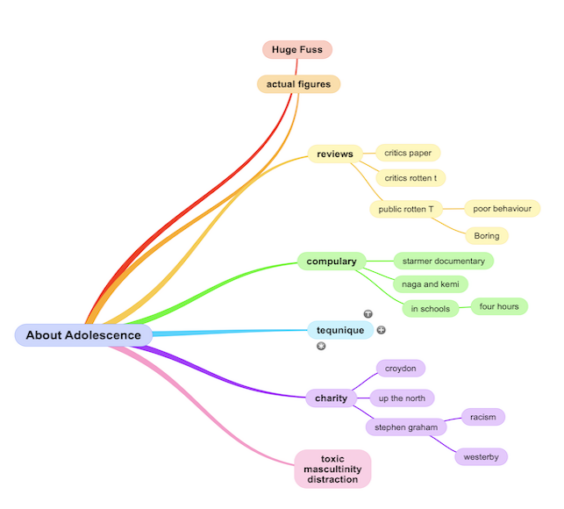
© Always Worth Saying 2026, Going Postal
Or they can be complicated. For instance, trying to make sense of the links between senior military and their foreign sponsors when guests on Question Time’s Ukraine special.
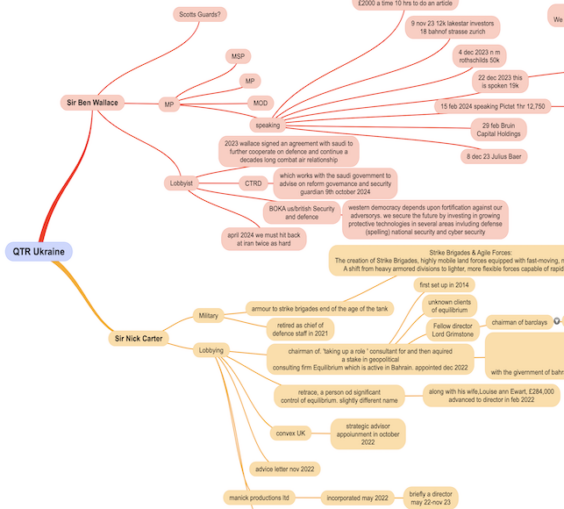
© Always Worth Saying 2026, Going Postal
Remember these are hints that might work for some. Use what works for you.
While I’m doing all of this, I’m also judging my own writing against yours – and finding myself wanting. Not to worry, I will try harder. In the meantime, get scribbling, enter the competition, and good luck.
© Always Worth Saying 2026



#/media/File:Woman_Reading_a_Letter_1660-1662_Gerard_ter_Borch_II.jpg)