
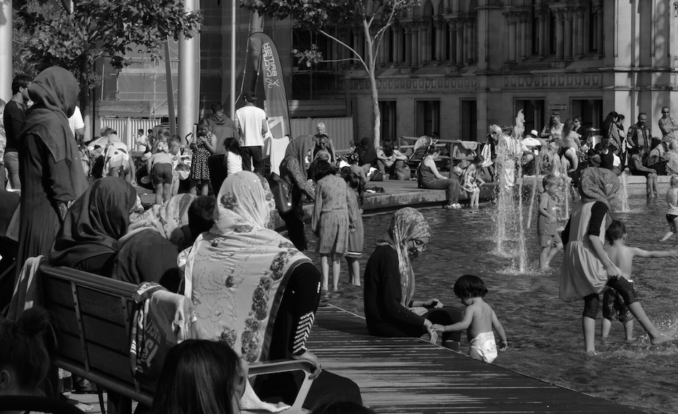
City Park, Bradford,
Habiloid – Licence CC BY-SA 2.0
Before the invention of social media, people in workplaces found ways to share humour, satire, and political commentary through handwritten or copied notes circulating informally among colleagues. Employees might create cartoons or sarcastic messages poking fun at management decisions, office culture, or broader political issues, leaving them on desks, pinning them to notice boards, or passing them discreetly from person to person.
With the spread of photocopying, these notes evolved into duplicated memos, parody announcements, and joke sheets that could spread quickly through an office, functioning much like early “memes.” In more restrictive environments, especially where open criticism was risky, workers sometimes shared anonymous, hand-copied commentary in a style similar to the clandestine distribution in the then Communist Eastern Bloc, allowing political or satirical ideas to circulate under the radar.
Canteens and noticeboards often served as semi-public spaces for mock notices or humorous “open letters,” reinforcing a shared culture. Altogether, these handwritten and copied notes acted as the offline predecessors of today’s viral content, enabling people to build camaraderie, express dissent, and spread ideas using simple tools like pen, paper, and photocopiers.
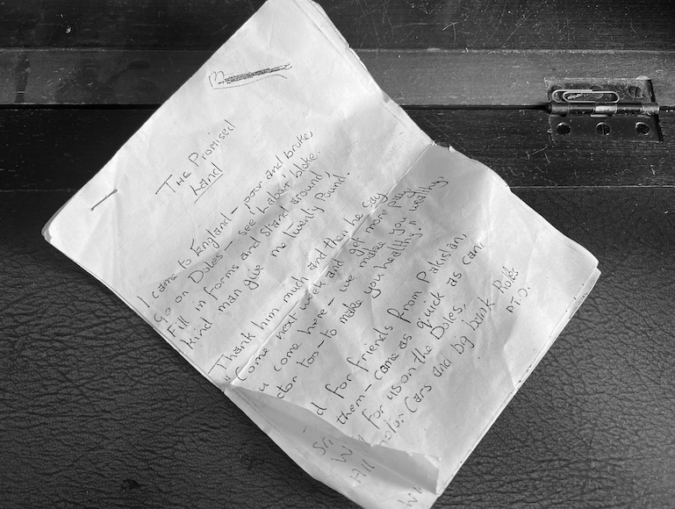
© Always Worth Saying 2026, Going Postal
Matching the following with the comings and goings of my peripatetic childhood, a poem entitled ‘The Promised Land’ must have been passed around my father’s workplace (he was in construction) in England in the early 1970s, a few years after the ‘Rivers of Blood’ speech and a decade after the Rachmann housing scandal.
It was handwritten on lined paper, then photocopied, cut into squares, stapled together and passed around co-workers and their families, with this copy finding a home in an old chez Worth-Saying bureau recently cleared out.
Perhaps worryingly, there’s little need for explanation beyond ‘Labour’ meaning the Labour Exchange/Job centre and National Assistance being a kind of Universal Credit, but which included an obligation upon the authorities to house claimants and their broods.
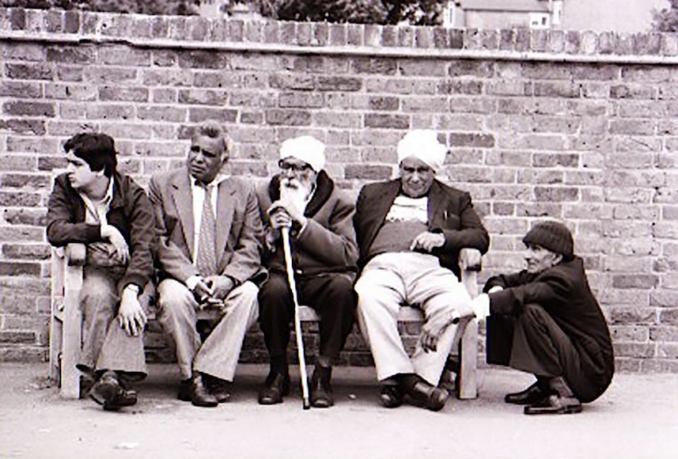
Southall. 1981,
Amarjit Chandan – Licence CC BY-SA 4.0
The Promised Land
By Anon
I came to England – poor and broke,
Go on Doles – see ‘Labour’ bloke,
Fill in forms and stand around,
Kind man give me twenty pound.
Thank him much and then he say,
‘Come next week ands get more pay,
You come here – we make you wealthy,
Doctor too – to make you healthy.’
Send for friends from Pakistan,
Tell them – come as quick as can,
Plenty for us on the Doles,
With motor cars and big bank rolls.
Come with me, we live together,
One bad thing – the bloody weather.
All get nicely settled down,
Find big home in busy town.
Fifteen families living up,
Twice as many living down.
All pay me nice big rent,
More in garden live in tent.
Soon we send for wife and kids,
Kind man give us lots of quids.
Twelve months later buy a Rolls,
Still go ‘Labour’ – draw more Doles.
Wife get glasses, teeth and pills,
All are free, we get no bills.
White man pay out all the year –
Keepin National Assistance here.
Bless all white man, big and small
For paying tax to keep us all.
We think England damn good place,
Too damn good for white man race.
If white man no like Coloured man
Plenty room in Pakistan.
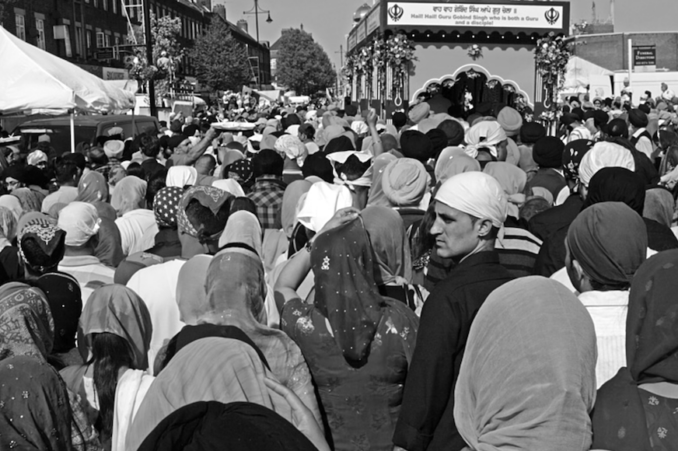
Vaisakhi crowds, Southall,
Hugh Chevallier – Licence CC BY-SA 2.0
Prophetic? Prejudiced? Rendered obsolete or more relevant during the last half-century? What do you think?
© Always Worth Saying 2026