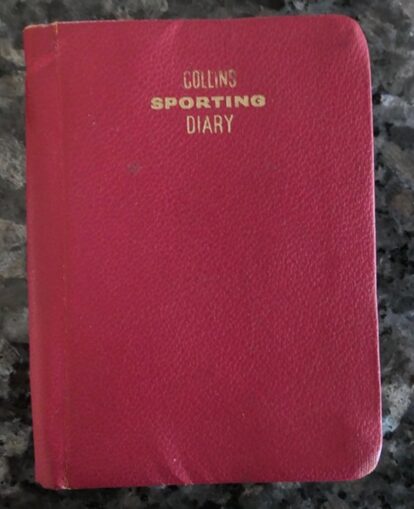
I have an old Collins Sporting Diary from 1971. Quite why I have kept it, I don’t know.
In amongst the entries about how bossy my sister was, that I’d asked Chi-Chi to go to the pictures (we went to see ‘Konga’ apparently) and how I was going to ‘smash Patterson’, is an entry, January 4th, ‘Leg went. Keep banging when straightening and it doesn’t hurt so much’.
My right knee used to lock once in a while, was painful, but used to click out. Just one of those things for a sports mad young boy.
I had just turned 11 so I really have had issues with the knee my whole life.
When I was 15, I was playing football in adult Sunday league. In one match I was on the receiving end of a particularly crunching tackle and my knee locked solid, bent at 90 degrees.
Off I went to hospital, the knee supported, as I remember, by being tied up with some bloke’s jockstrap.
In casualty they straightened my leg by just pressing it flat, which was rather uncomfortable, made an appointment for an X-ray and sent me on my way with a pair of crutches.
I had about half a pint of dye injected into my knee and the X ray showed no bone damage. After pulling me around a bit they diagnosed a torn lateral cartilage and possible medial damage also.
I could feel the fluid sloshing about in my knee as I walked for about a week,which was rather odd.
I was told to basically wait for it to heal and get on with it.
So I got on with it, but after six months of hobbling and no real sport I’d had enough so they decided to operate. I was 16.
They operated on me at The Nuffield Orthopaedic Hospital in Oxford. I still remember the surgeon’s name, Mr Kenworthy.
Back then cartilage operations were a little different from today’s. The whole of my lateral cartilage was removed and bits of the torn medial.
None of this ‘out and home the same day’ modern stuff. I was in for nearly a week. My mates brought me in school homework, and my parents brought me in a porn mag, which somehow seemed the wrong way around.
There must have been some mixed wards back then as I remember a lady in the bed next to mine had had her toes straightened and had little corks covering up the metal rods that came out from the ends of her toes. She wailed a lot.
When I left hospital there was lots of rehab. As I’d been hobbling for so long I had a lot of muscle wastage but after a while I was basically back to normal playing decent sport, County hockey and Minor County cricket. Life was peachy.
I had been told that I should avoid some sports such as skiing and that at some stage in the future I would get some osteoarthritis.
I tore my right knee ligaments skiing a few years later which didn’t help the stability of the knee, and snapping my achilles wasn’t improving things, but basically until my early 40’s I could do whatever I wanted without thinking about the knee.
Then slowly I started to notice things. Cycling out of the saddle up hill, leg presses and squats, kicking a football all started becoming a little uncomfortable. I could feel my bones rubbing together, something called crepitus. When I ran, my knee would swell up quite alarmingly so I stopped running about 15 years ago.
I worked around everything. The way I knelt down and got up, the way I climbed ladders and bobbed under fences. Sitting down in the pub became normal.
About 15 months ago I was cutting a tree down and it all went a bit pear shaped. I hadn’t properly scoped out my escape route and went down tripping over a bramble. This badly twisted my ‘good’ left knee. Three months later I was kneeling doing some work and as I got up my left knee locked.
Off to the GP and the hospital for an MRI and the diagnosis was, of course, a torn cartilage in the left knee. Treatment was to just leave it and see what happened.
By compensating for my right knee, the left was taking too much punishment.
I’d always known that I would need an operation on my right knee and had thought that I could get to 70 before it became crucial, but my knee was deteriorating quite rapidly now.
I could walk Wilf, our border collie, for a three mile walk one day and then for no reason the knee would give me grief and I would be struggling after half a mile the next. There was no rhyme nor reason.
When the pain occasionally woke me up in the night and I sometimes had to push with my arms to get out of a car, I knew I had to see someone.
My GP was fantastic and arranged for an X-ray within days. I then had an appointment booked with an orthopaedic consultant at the end of November at a local private hospital which does NHS work.
This was all within a couple of weeks or so.
The consultant I saw was a very nice Egyptian chap, who lists one of his hobbies as flying his light aircraft, which I thought was a nice touch. We had a fairly brief chat and it was decided that a knee replacement would be an acceptable treatment. The waiting list was 3 to 6 months and as I was an NHS patient and seen him for the consultation, he would be the one to do it.
So then the research started.
I started looking at the orthopaedic consultants working at the hospital and a friend started researching their outcome statistics. She had both her knees replaced a couple of years ago so was full of information.
There is plenty of information out there but The National Joint Registry has most of what you would need.
I started reading about knee replacements, watching videos etc and deciding what to do.
One chap working at the hospital stood out for me.
Whereas the first chap I saw seemed to do 50/50 knee and hip replacements, the one I was looking at was just a ‘knee’ man. Excellent outcomes, and had treated professional sportspeople that I had heard of.
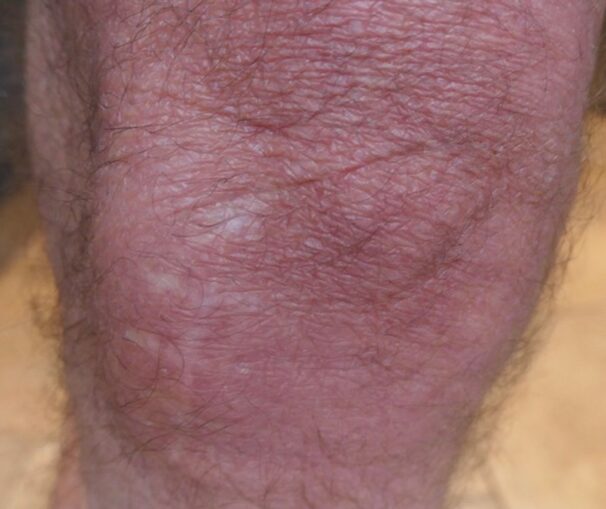
There is a knee replacement which is done with the aid of a robot called a MAKO replacement and he had done pretty much more than anybody else of these in the country. The only thing is that this would not be on the NHS.
I booked a consultation with him.
I rang for an appointment on the Tuesday and saw him the following Monday.
I have Grade 4 osteoarthritis in the knee, some limited movement and fairly weak ligaments, though not as bad as I feared.
My options.
1. Do nothing and live with it with the aid of painkillers. This wasn’t an option for me as I don’t like taking any medicines and the pain can come out of nowhere.
2. Steroid injections into the knee. This seemed to me like just treating the symptoms rather than the problem itself, so this option was discarded.
3. Partial knee replacement. This was a viable option though not the best. It is less traumatic, but should it need replacing in the future if the ‘good’ part of the knee deteriorates, then it becomes more complicated.
4. Total knee replacement, (TKR). With a 15-20 year working life span this should see me out and I’d rather have better use of my knee now and worry about any consequences should they arise in the future.
So we decided on the TKR and went through the MAKO system.
Basically with this system you have a CT scan of the knee and then during surgery small arrays are screwed to your thighbone and shin that the robot communicates with. The surgeon lines up the angles of your leg and then cuts and saws away. The robot stops the surgeon cutting outside the parameters set by the computer, leading to more accurate cuts and a better aligned knee. Also less trauma and faster healing.
Well that’s the theory.
My friend with the two replacements had her operations and been home on the same day.
I mentioned to my consultant that I needed to be out the same day so my friend would not rip it out of me for being a bit of a poof.
He had a good laugh and, of course, they will keep me in for two nights as I’m going private. He was quite open about how people are sent home too early on the NHS to save money, and that should he or any of his colleagues need surgery there is no way they would go home on the day of the op.
They gave me a quote and that’s what I’m having.
The operation could have done it before Christmas had I’d wanted it done that quickly but I was too busy.
So within a couple of weeks of the consultation rather than possibly 6 months on the NHS. And from what I hear, 6 months would have been good.
I had my pre-op last week.
I’m never ill so I only ever go to the GP with sport injuries that need seeing. Once, many years ago I had a nurse check my BP before a different op and it was very high.
I naturally have low BP, so know that for some reason I have ‘whitecoat hypertension’.
At the pre-op you have questionnaires to fill out, bloods taken, an ECG and BP taken.
The nurse attached me to the BP monitor and when it read 181/101, I thought she was going to call a crash team. Two subsequent readings were lower but still over the operation threshold of 160/90.
I had my instructions to take my BP at home, three times, three minutes apart, three times a day for three days and record the lowest reading for each day.
So I’m back down to my usual 118/ 70 and the operation will be going ahead on the 26th January.
So if you know you have ‘whitecoat hypertension’, take readings before your pre-op assessment and it would save a lot of hassle.
I should be awake during my operation with just a spinal block, so will be able to hear my knee being cut off and hopefully be able to watch some of what is going on.
I will report back after the event.
© text & images Pete Plug 2026