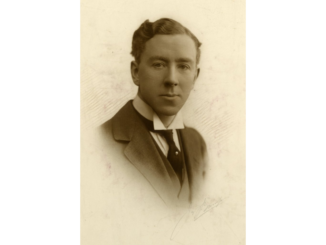
Jack Common was an engine driver’s son from Heaton who went from being on the dole in Newcastle to becoming the editor’s chair of a London literary magazine. He was also a lifelong friend of George Orwell. He wrote one of the funniest books ever written about a Tyneside childhood, which promptly flopped, and he once gave Orwell some very sensible advice about getting arrested (more on that later).
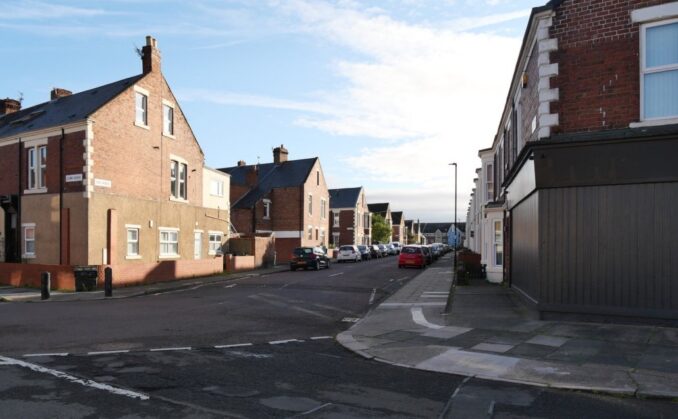
Third Avenue seen from Second Avenue, Heaton, Newcastle by habiloid, CC BY-SA 2.0, via Wikimedia Commons
Third Avenue
Jack Common was born on 15 August 1903 in the upstairs flat at 44 Third Avenue, Heaton, which has a plaque on it these days.
[Editorial Tangent… I happen to be from Heaton and grew up literally three streets away from where this photo was taken, so this is a particularly personal article for me.]
He tells the story himself in Kiddar’s Luck, his novel about his own childhood (Kiddar being Geordie for a kid, and Common in all but name), which starts, very thoroughly, nine months before he was born, with him complaining about where he ended up:
“What do you think I picked on, me and my genes, that is? Missing lush Sussex, the Surrey soft spots, affluent Mayfair and gold-filled Golder’s Green, fat Norfolk rectories… I came upon the frost-rimed roofs of a working-class suburb in Newcastle-upon-Tyne, and in the back-bedroom of an upstairs flat in a street parallel with the railway line… I chose my future parents.”
[Editorial Tangent… He is referring to what is now the East Coast Main Line, which runs alongside the Heaton avenues towards Chillingham Road.]
When he did finally arrive, in the small hours of “one hot August Saturday” (and yes, 15 August 1903 was a Saturday), his father “said it was all a fuss about nothing”, which I imagine went down really well with his mother.
Chillingham Road School
School was Chillingham Road, which as far as he could see was training working-class kids like him “for boredom”. Reading was taught by the whole class chanting “Kuh, Aah, Tuh spells Cat”, which worked a treat until the teacher tried a new word on a boy called Freddy, who stood up and gave the answer generations of Geordie kids have given since: “Please, teacher, Ah divn’t knaa.”
Out of school he ran with a corner gang, the Sons of the Battle-axe, and every so often the Avenues went to war with the Chapman Street gang from over the railway bridge. These wars had rules: once the parents came out it was “not fair” to carry on against an enemy with “half the fight knocked out of him by having to listen to his mother’s shouts.”
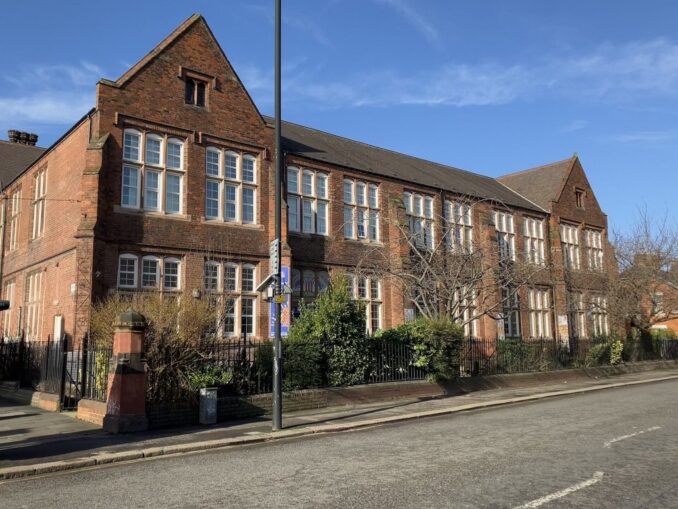
Chillingham Road Primary School by Anthony Foster, CC BY-SA 2.0, via Wikimedia Commons
A drunken solicitor and the dole
He left school at fourteen and, in his own words, “became confidential clerk to a drunken solicitor”. This ended with him being sacked “as a scapegoat” and three years on the dole, which he was surprisingly cheerful about (“the idleness was invaluable”), with much of it spent arguing politics with Newcastle’s socialists at the Royal Arcade.
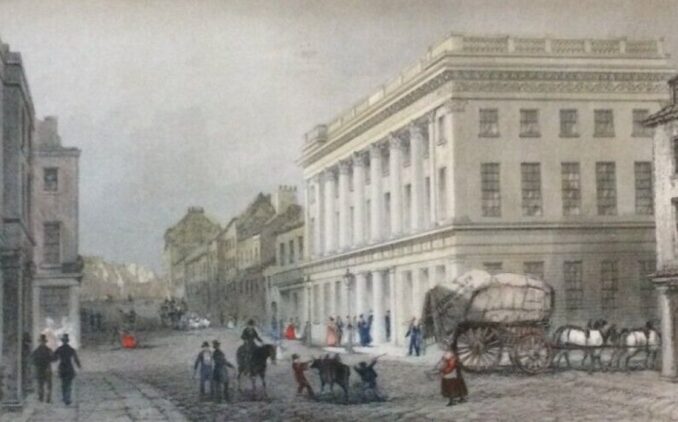
Thomas Allom, Public domain, via Wikimedia Commons
In 1928, against his father’s wishes, he went to London, got a job as a mechanic and was soon “thrown out for practising an ingenious method of simplifying the job”.
The Adelphi
Then, for once, his luck turned. An essay of his caught the eye of John Middleton Murry, founder of a literary magazine called The Adelphi, who took him on in 1930, and by 1936 he was running it as acting editor.
One of its regular writers was a tall old Etonian called Eric Blair, better known as George Orwell. Common was expecting a rebel, a tramp even, and Orwell certainly looked the part until he stood up to shake hands: “Manners showed through. A sheep in wolf’s clothing, I thought”. They got on anyway.
Which brings me to the arrest advice I promised you. Orwell wanted to be locked up over Christmas so he could write about prison from the inside, and his master plan was to light a bonfire in Trafalgar Square. Common’s advice was to “take to theft; a bonfire simply suggests something undergraduate-like”.
In the end Orwell went for neither and got drunk instead. In December 1931 he was arrested as “Edward Burton”, drunk and incapable, and the court let him off his six-shilling fine for the time he had already spent in the cells, which rather spoiled the plan.
Don Quixote on a bike
In 1936 Orwell rented The Stores, a cottage and one-time village shop at Wallington in Hertfordshire, eleven miles from Common, and wrote asking how to reopen the shop. Common, who had not long packed in a sweet-and-tobacco shop of his own, invited him over for a meal instead and walked up the hill to watch him arrive.
Up came “a tall man on a tall bike”, the bike being “an ancient Triumph that could have belonged to his father”, and “This Don Quixote weaved and wandered this side, that side, defeating windmills of gravity”.
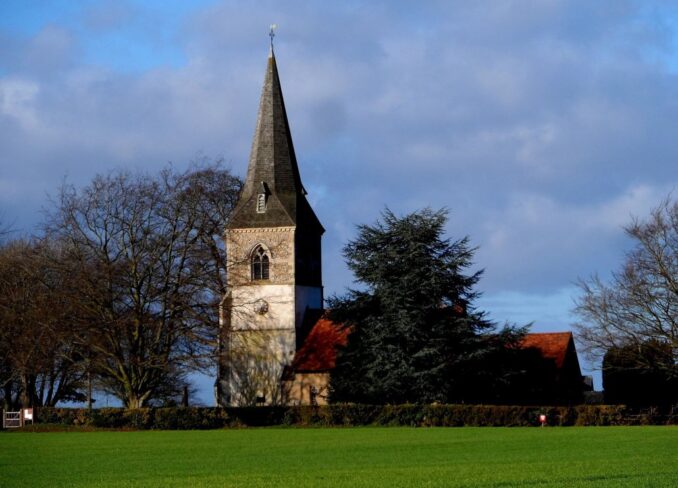
All Saints’ church, Datchworth by Bikeboy, CC BY-SA 2.0, via Wikimedia Commons
Minding the goats
In September 1938 Orwell, whose lungs were bad, went to Morocco for the winter and left Common and his family in charge of The Stores, hens, goats and all. One of the goats, Muriel, later turns up in Animal Farm under her own name, so for one winter a Heaton man was looking after a future literary star (the goat, that is). Orwell, meanwhile, wrote from Marrakech in his usual sunny mood: “I don’t know whether or not you will be fitting on your gas mask by the time this gets to you, but things look pretty bad.”
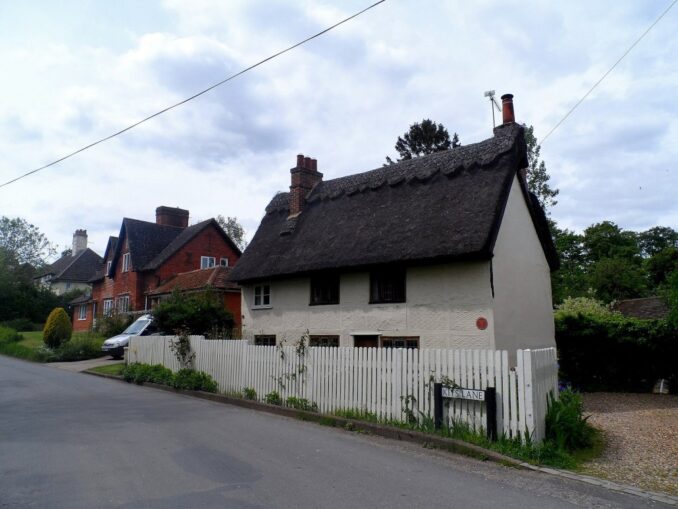
George Orwell’s cottage, Wallington by Bikeboy, CC BY-SA 2.0, via Wikimedia Commons
Kiddar’s Luck (mostly bad)
Kiddar’s Luck finally came out in 1951 and takes Kiddar up to fourteen, including his letter applying for his first job, which I’ve put in full because it’s brilliant:
“With reference to your advertisement in today’s North Mail, I beg to apply for the post. I am fourteen years of age, strong, healthy, bright, punctual, clean and willing. My parents are working-class, my environment is working-class, and with your kind assistance I feel qualified to become working-class myself.”
The writer Sid Chaplin (no relation) called Common “the nearest anybody ever got to Charlie Chaplin in print”. The book flopped all the same.
Marx’s forehead
Somewhere in the 1950s, in between the usual odd jobs, evictions and lack of money, he also lent his forehead to Karl Marx. As you do. According to the introductions to later collections of his essays, the sculptor Laurence Bradshaw used Common’s brow as the model for the giant bronze head on Marx’s tomb in Highgate Cemetery, unveiled in 1956. So if you are ever in Highgate, the forehead on Karl Marx is, apparently, from Heaton.
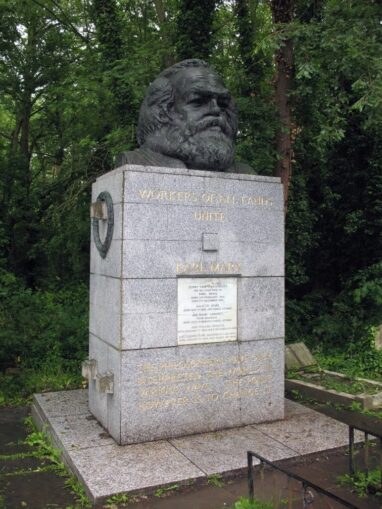
Karl Marx tomb, Highgate cemetery by Phillip Perry, CC BY-SA 2.0, via Wikimedia Commons
Too much about chickens
In 1962, skint as usual, Common sold some of his Orwell letters to a London bookseller, Anthony Rota, who was quite sniffy about them: “From our point of view the trouble is that he writes too much about chickens and not enough about his work.” Considering where Orwell’s farmyard ended up, I think Rota may have missed the point.
Jack Common died in Newport Pagnell on 20 January 1968, aged 64, and then, typically, things started happening once he wasn’t around to enjoy them: his papers went to Newcastle University and a film, Common’s Luck, came out in 1974, and Bloodaxe reissued Kiddar’s Luck in 1990.
So, to summarise: Orwell got a statue outside the BBC and his own adjective, whilst Common got a plaque on Third Avenue and, so the story goes, Karl Marx’s forehead. As Common himself put it, “it is high time the luck of the Kiddars turned.”
As a final note, there were not public images available of Common for this article, but you can see the man himself at this very informative site dedicated to him: Jack Common
© Paranoid Android 2026