
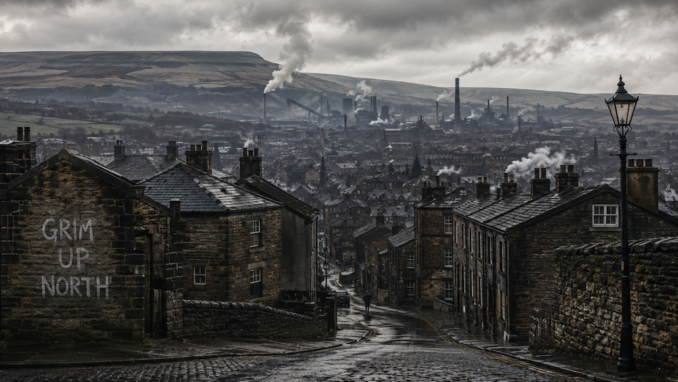
Image generated using ChatGTP AI
For generations, the phrase “grim up north” has lingered in the national imagination — conjuring images of soot-stained skylines, struggling towns, and industries long past their prime. It is a shorthand that flattens the region into a single narrative of tired decline. Yet this caricature obscures another, less frequently told story: one of extraordinary wealth, ambition, and industrial power.
From the great textile magnates of Lancashire to the steel barons of Yorkshire and the shipbuilding dynasties of Tyneside, the North of England has been home to figures whose fortunes rivalled — and often surpassed — those of their southern counterparts. These were not marginal players in Britain’s economic history, but central architects of its industrial rise, shaping global trade networks and amassing vast personal empires in the process.
To understand the North solely through the lens of hardship is to overlook the legacy of these wealthy industrialists — men (and occasionally women) who transformed raw materials into riches and regional enterprise into international influence. Their stories complicate the cliché, revealing a North that historically not just endured, but dominated.
Which begs the question – what happened to this giant money-making machine and all the wealth it created? Shall we investigate and, in doing so, partake in a plutocrat’s Cook’s tour thereabouts? I think we should. Should Mrs AWS accompany? Of course. And might we, in accordance with the subject matter, force ourselves to travel by first-class carriage with its accompanying fine dining? Mais bien sûr.
© Always Worth Saying 2026, Going Postal
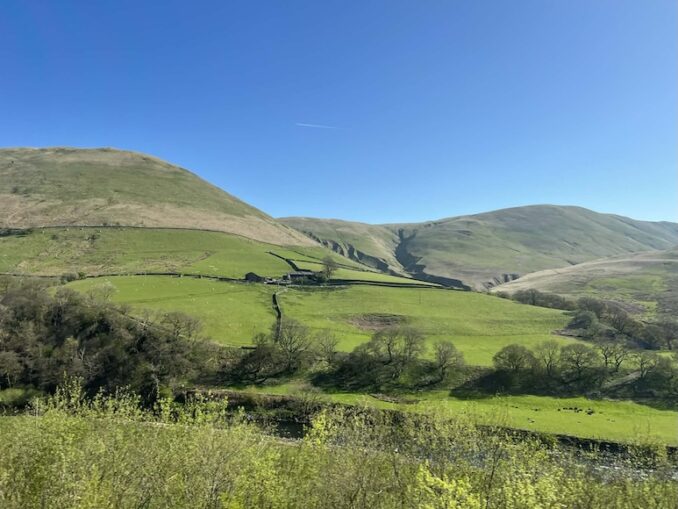
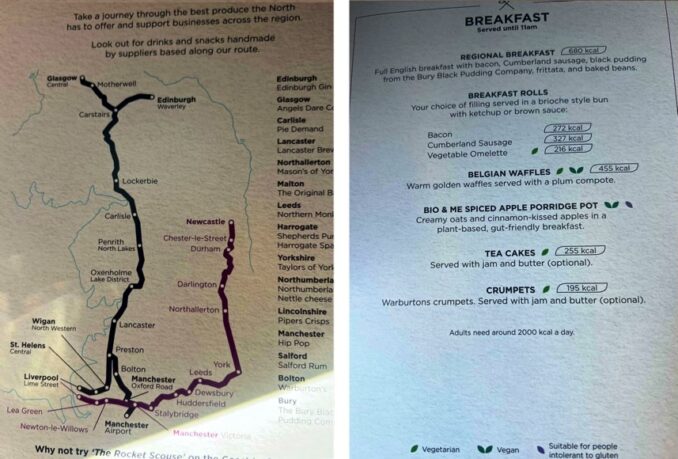
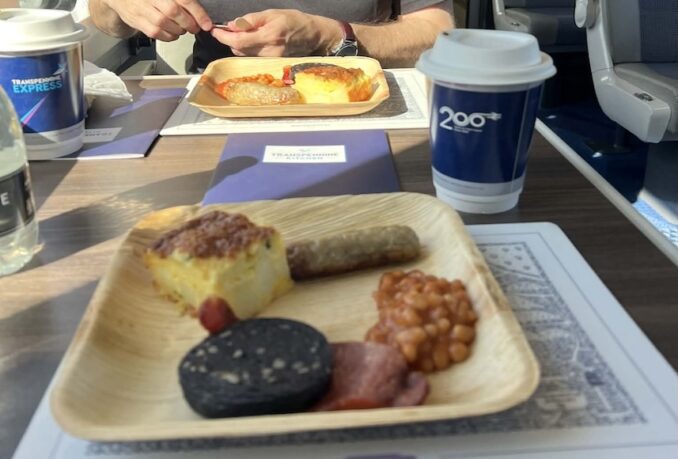
Thundering south – for your humble investigators live so far north we almost fall off the edge of the world – Mrs AWS and I finish our breakfast while enjoying the vista afforded while traversing Carlisle Bridge over the River Lune at Lancaster. Named for the Lancaster to Carlisle Railway, which struck north from here in the 1840s, we note the tide is out. Mud flats appear before modern flats, which recently replaced numerous decrepit riverside industrial buildings and warehousing. On a hillside inland, the unmissable Ashton Memorial watches over the city.
© Always Worth Saying 2026, Going Postal
© Always Worth Saying 2026, Going Postal
The Ashton Memorial stands prominently in Williamson Park above Lancaster, a striking symbol of Edwardian ambition and civic pride. Built between 1907 and 1909 by the wealthy industrialist Lord Ashton in memory of his second wife, Jessy, the monument rises around 150 feet and dominates the surrounding landscape. Designed by architect John Belcher in an ornate Baroque style, its white Portland stone and copper dome have earned it the nickname “the Taj Mahal of the North.” Today, it serves as both a viewing point and event space, offering panoramic views across Morecambe Bay and the Lakeland fells.
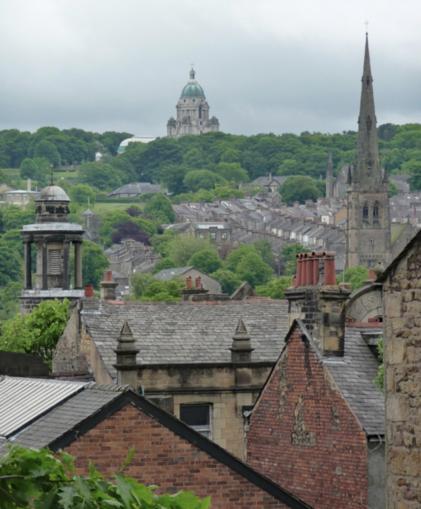
View of Ashton Memorial, Williamson Park, Lancaster,
Stephen Richards – Licence CC BY-SA 2.0
James Williamson was one of Lancaster’s most prominent industrialists and a key figure in Britain’s linoleum boom. Rising from modest beginnings, he built an empire that made his firm, the Lancaster Linoleum Company, the largest linoleum manufacturer in the world by the early 20th century. His factories employed thousands and exported flooring across the globe, transforming Lancaster into an industrial powerhouse. Besides the iconic memorial, Ashton used his immense wealth for philanthropy and for funding parks and buildings.
In 1895, he was elevated to the peerage as Baron Ashton of Ashton in the county of Lancaster. The Ashton in question being Ashton Hall estate, situated on the estuary of the Lune, three miles from Lancaster, which had been purchased by Williamson in 1884. It included nine grazing farms, 130 acres of deer park and a mansion formerly the residence of the Duke of Hamilton.
What happened to the money? It went into land.
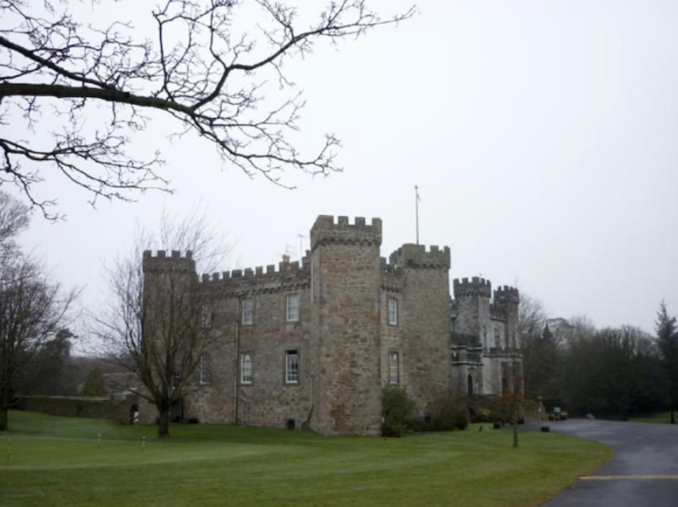
Ashton Hall, south tower,
Karl and Ali – Licence CC BY-SA 2.0
Also in 1884, Williamson was appointed High Sheriff of the County Palatine of Lancaster. Two years later, he became a local Liberal MP, serving in that role until his elevation to the peerage. However, all was not well in the Lino King’s kingdom. An ominous notice appeared in the Liverpool Evening Gazette of the 22nd November 1911.
‘The Lancaster Trades and Labour Council have passed a resolution assuring Lord Ashton of their personal and corporate respect for him as a public benefactor, expressing their appreciation of him as a fair and honourable employer, and their deep regret that his name was so unwisely introduced into the municipal election.’
As with the dreaded board of directors’ vote of confidence in the football manager, Lancastrian reassurances hinted at the exact opposite. A fortnight before, Aston had issued an ultimatum to his workers stating ‘the present state of things is intolerable’. The issue was that wages were not advanced due to industrial action elsewhere, including railway and other local strikes. Lord Ashton thundered,
‘In future, when trade is bad, we shall only keep men who we regard as friendly and loyal to their employer…It is with sorrow much greater than we can express that we are compelled to give this notice, but the present state of things is so intolerable that we are determined to put an end to it no matter at what cost.’
Newspaper coverage noted that two years previously, Ashton had complained of personal attacks by strangers in connection with a Labour candidate running for ‘municipal honours.’ What was happening to the North’s money-making machine? It was being wrecked by Labour and the unions.
Soured by fierce political disputes and media criticism, and feeling unappreciated by the local public, Ashton abruptly halted his philanthropy and retreated to Lancaster’s Ryelands House, living as a virtual recluse for nearly two decades.
When he died in 1930 at the age of 88, he left behind one of the largest estates in British history, valued at £10.5 million. However, because he had no male heir, his title died with him and the peerage became extinct. Furthermore, death duties reduced the estate passed on to his daughters, the Hon. Eleanor and the Hon. Maud. Elenor was to marry the Hon. William Peel, 1st Earl Peel, a Conservative MP and grandson of former prime minister and founder of the Metropolitan Police, Sir Robert Peel.
Big land owners, the present 3rd Earl Peel, William, first marriage was to one of the Timpsons – another northern manufacturing family. His second is to Charlotte Soames, a granddaughter of Winston Churchill.
Meanwhile, Williamson’s Lune Mills, once the world’s largest linoleum factory, ceased production in 1999 following decades of industrial decline, corporate takeovers, and competition from cheaper flooring materials. The extensive site, which once employed 25% of Lancaster’s population, was subsequently demolished and redeveloped for rabbit hutch-style three-story homes and student accommodation between 2000 and 2018.
It is this development Mrs AWS and myself tut tut about as we roll into Lancaster Castle station and finish our at-seat cooked breakfast. The Lancaster skyline, however, through the Ashton Memorial, Williamson Park, and the Town Hall, still reminds us of Williamson as does his former home, Ryelands House, which still stands but has faced a difficult modern history, recently being boarded up by the council to protect it from vandalism.
Therefore, in this case, what can myself and Mrs AWS conclude of the northern money-making machine and the wealth it created?
- Put into land rather than reinvested in manufacturing
- Vanity projects
- Taxed to death
- Wrecked by the Labour Party and trade unions
- Assimilated via marriage into the London-leaning aristocracy
Will we have better luck as we glide, fed and watered, further south towards the Lancashire mill towns proper? No, but on the way we will uncover a wealth-sapping economic reality more sinister than deer parks, the tax man, unions and aristos. One that to this day dare not speak its name – except on the pages of Going-Postal!
To be continued…
© Always Worth Saying 2026


_-_geograph.org.uk_-_5161096.jpg)
