
While hanging out on the GP night shift the other morning, someone asked the following question, rather out-of-the-blue:
“Never, is it your good self who plays in a popular beat combo?”
I replied: “No mate. I’ve dabbled with bands for fun over the years, but the last time was over 30 years ago. I’m acquainted with several performing musicians and music industry people however.”
“Oh well, you’ll know more than I do, then. I want to start learning the guitar completely from scratch. Asked a family member but he wasn’t much help.
I want to get something to start me off to see how serious I am. How much should I spend, do you think?”
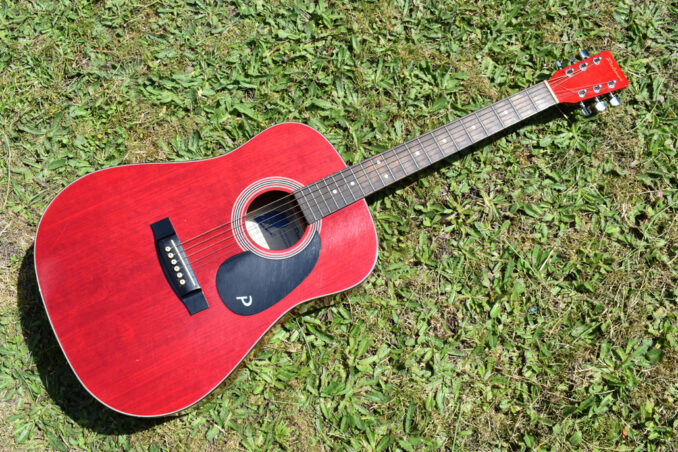
Being the sort of person who believes we are put on the planet to do good, and to help our brothers and sisters on life’s long journey (if we can), I knew that playing music really is where it’s at, so began thinking about useful pointers, and even about creating my own version of the famous guitar tutor book by Bert Weedon that launched a thousand careers: Play in a Day Guide To Modern Guitar Playing.
I promised some sort of response later in the day, because I was on the smartphone at that particular moment, and typing anything more than a few words on their miniature keyboards is a total pain.
He continued: “Well yes, I’m hoping to be able to strum along within mere weeks. My cousin said “it depends what you want to play”. Honestly at this point, I’d be happy with Mull of Kintyre.”
Keen to help, and probably letting myself in for trouble a little further down the track, I replied: “With my method, I guarantee* you’ll soon be playing”. (* Please read the Terms and Conditions).
Disclaimer
This brief guitar article in two parts is not intended to be anything other than a bit of fun, and is simply an opportunity to offer a few quick tips and pointers to budding guitarists. Part One discusses acquiring a guitar, while Part Two looks at learning to play it.
My tips may be useful, or they may not. I fully expect a torrent of suggestions and criticism to appear in the comments, mostly posted by GP’s top musos – I know we have several here.
I should also point out that my expertise is really limited to 4 string guitars, rather than the 6 or 12-string types. I’m actually a bass player myself, because I drew the short straw at school, and as everybody knows, the bass is a very different beast to a normal 6 string rhythm or lead guitar.
Furthermore, I’m not any sort of teacher at all, but let’s start at the very beginning, and assume you are full of enthusiasm, and keen, maybe even desperate, to learn to play guitar. Ask yourself the following, difficult question:
Do You Think You Actually Have Any Musical Ability?
The sad fact is, some people just don’t have any innate musical ability – whatsoever, so I suggest you take the following three tests which may reveal whether you do, or don’t.
Firstly: do you have a good sense of rhythm? Can you tap a foot, or clap in time to any music you listen to? You may think you can, and will almost certainly be totally convinced you can – even if you can’t.
We’ve all been in an audience at some time, and been staggered to notice people completely unable to keep the beat, clapping chaotically, and blissfully unaware they are doing anything wrong.
You will need an independent opinion on your musical timekeeping, so set up a test with a few friends, play some music on some sort of device, then tap, or clap along, and ask for marks out of ten.
Secondly, consider whether or not you have an ear for a bad note. Would you notice a bum note if you heard one?
If you can’t spot one, or someone hearing you humming or singing makes a comment that you are tone-deaf, I would respectfully suggest that a career in music, or even just playing music for fun, is not for you.
Thirdly, and finally, consider whether you are, or were, a good dancer?
Although it seems a bit silly, this test is aimed at seeing if you can lay something over a rhythm – in this case a few dance steps, keeping faithfully to the rhythm, so you are effectively doing two things at once – like playing a tune over a regular beat.
This is where counting, and mathematics come into the picture. If you make a mistake on one beat, can you recover and continue on the right beat?
Imagine you are dancing a waltz, and counting “1-2-3, 1-2-3” in your head. Can you do it?
You probably already know if you can dance, or not, but if necessary, play The Blue Danube on your device, and get a friend to observe your performance.
An independent assessment of all three factors is worth having, because although your music and dancing may seem fine to you, others may be of a different opinion.
A music teacher I used to know was pretty ruthless when it came to accepting pupils, and while some teachers might take the money, and go through the motions week after week with a hopeless case, she always assessed aspiring pupils carefully, and would simply refuse to teach them if they didn’t have what it takes – often upsetting potential pupils, their families, and her school as well.
Types of Guitar
There are several types of guitar, and they can be broadly separated into two camps: Acoustic Guitars, and Electric Guitars, each of which have several variations.
Usually strung with metal strings, some variations, like Classical guitars, use nylon or gut strings. Also, Classical guitars have wider and flatter necks than ‘ordinary’ steel-string acoustic or electric guitars. This means it’s helpful to have agile, and long fingers if you want to play these wider-necked instruments.
My advice would be to buy a modestly-priced, standard, six-string, acoustic guitar to start your musical journey – and your guitar collection, but there is one scenario in which an electric might be preferable.
That’s when loud practising might annoy the wife, or, if your house has thin walls, you could end up annoying the neighbours as well. An electric guitar makes virtually no sound when played ‘unplugged’. More about this in part 2.
Acquiring Your Guitar
OK, you’ve passed the initial assessment, and may have a future in the music business, so you now need an instrument and a few accessories.
In an ideal world, somebody would lend you a guitar to help you climb onto the first rung of the ladder to international superstar status. This would give you the chance to try things out for a few weeks or months, and decide whether there’s any hope for you – or not, or whether you even like playing the guitar.
If nobody can be persuaded to lend you one, or offers to give you one, and you are keen to own your own guitar from the get go, I would advise against splashing out £25k on one of Eric Clapton’s Fender Stratocasters at auction, unless you’ve just won the lottery.
Top quality musical instruments are normally quite good long-term investments, so there is always that, but I’d aim a bit lower than an ex-instrument of some global guitar superstar, because you’ll be paying a big premium for the name.
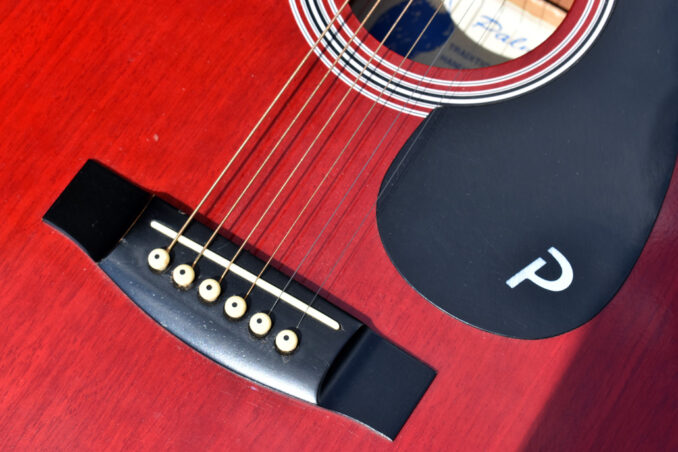
So my advice would be to get something pretty cheap to see how you get on – but when I say cheap, it must be playable too.
Someone might be advertising a guitar for sale in a local paper, or on the internet, and if you decide to take a look at it, you’ll have an opportunity to meet a guitar owner, have a chat, and maybe even plonk a few strings – and all in private, which will enable you to avoid any kind of public embarrassment.
Then there are the auctions. The following auction houses have regular sales of musical instruments, although most of the items for sale will be ‘above beginner standard’, and will be priced accordingly:
1818 Auctioneers (Cumbria)
Gardiner Houlgate (Wiltshire)
Mallams Auctioneers (Oxford)
Omega Auctions (Merseyside)
Some reasonably priced guitars should be available at the above auctions, but if you decide to go down the auction route, I would suggest you are better off going to a general sale at a nearby local auction house, where, sooner or later, you will undoubtedly come across a suitable guitar at a reasonable price. But you may have to wait, which you may not want to do, and then three will come along at once, and you won’t know which one to choose.
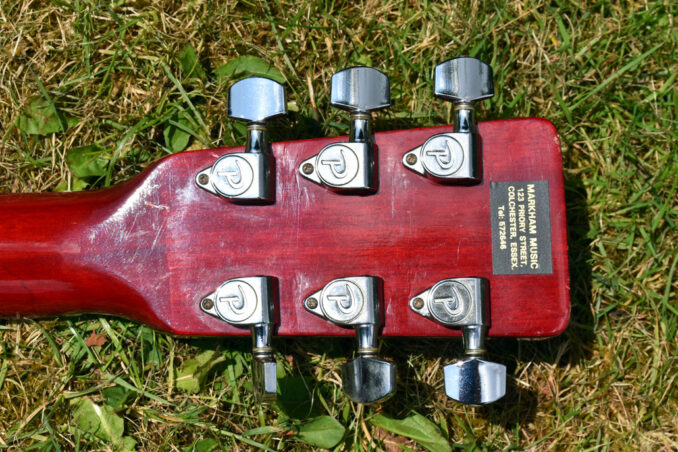
Your final option would be to go to a music shop to buy your instrument – however music shops can be a trifle intimidating for newcomers, and I can almost certainly guarantee you’ll be terrified when you play a few notes to try a guitar, because everybody in the shop will turn round and stare at you with a look of near-horror on their faces.
Buying new at retail price would set you back anything from about £100 for a basic, acceptable acoustic guitar, while if you are aiming for a top-end instrument, you’ll be paying anything from £1k to several thousand for one of the best, such as a Gibson acoustic. (Other manufacturers are available).
Checking a Guitar Before Purchase
And what do you need to consider when choosing a guitar? Well it will have to look totally cool of course, and the bare minimum condition factors you must check out are the ‘neck’ and the ‘action’.
These two checks are essential when buying a cheap guitar privately, or at auction (unless the auctioneer has provided a comprehensive condition report), but shouldn’t be necessary in a music shop. They probably wouldn’t go down too well in a shop if you tried them – but I always do. Discretely.
So hold the guitar at the top of the neck, supporting the body of the instrument with your other hand, and bring it up to eye level, as if you’re firing a rifle, with the top of the neck and the tuning pegs furthest away from you.
Look down the length of the neck, and if it’s not almost perfectly flat, and shows signs of bowing upwards at the tuning peg end, put it down gently, and move on to the next guitar.
Checking the ‘action’ involves assessing the size of the gap between the strings and the fretboard. The gap tends to get slightly smaller the nearer you get to the tuning peg end, or the headstock, to use the correct term.
The gap size is important, because if the strings are too close to the fretboard, and to the metal frets or fret wires, you could end up with buzzing noises when playing, while if the strings are too far from the fretboard, it will be difficult to press down on them when playing notes or chords, and any notes played successfully may be a bit out of true.
A quick look over the instrument for scratches, for signs of separation of the body parts, or splits in joints, and any obvious repairs, is also advisable.
And finally, play a few notes, strum a chord, or ask the vendor to play something so you can get an idea of what the guitar sounds like.
Accessories and Accoutrements
When you’ve purchased your guitar, whether acoustic, or electric, don’t forget to get a case, or at least a soft cover, a strap, if required, and a few plectrums. You use these to strike, or, if playing more sensitively, to caress the strings. Plectra come in various shapes, sizes and thicknesses. My suggestion is not to choose any which are too large or too thick.
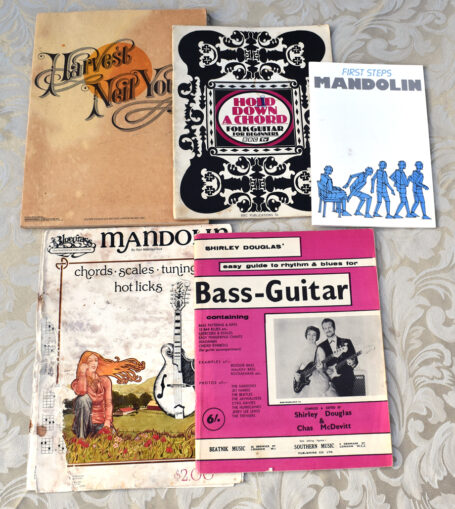
And finally, don’t be proud – buy yourself a ‘learn the guitar’ book. You can’t do it all on your own. The various squiggles, musical notes, and diagrams may seem like double dutch at first, but there will be some good information in there, and the contents may even be organised as a series of lessons, taking you forward, step by step.
© 2026 NeverUpToTheJob.