
The quote ‘I see no ships’ is attributed to Admiral John Jervis during the Battle of Cape St Vincent in 1797. Before giving Johnny Spaniard a black eye off the Algarve, legend has it that, when asked by one of his officers about the position of the enemy fleet (27 Spanish ships of the line to Jervis’s 15), he reportedly replied, ‘I see no ships’, emphasising calm command under pressure and his focus on the broader tactical situation rather than immediate appearances.
Cited in naval history as an example of decisive leadership and strategic vision, the same could be said two and a quarter centuries later, but, worryingly, of our own fleet — and in panicked reality rather than calm command.
Perhaps appropriately, on the Friday 13 February edition of Question Time Review, we had an opportunity to sidetrack into something more interesting than pejorative remarks about troughers, expenses thieves, and the whoopers and purple-haired clapping seals who take them seriously.
Panellist Luke Pollard was not only the Labour MP for Plymouth Sutton and Devonport but also Minister of State for Defence Readiness and Industry, and the son of a submariner. Disappearing down the rabbit hole (forward hatch?), I had an opportunity to inform Puffins that the landlubbers at QT Review HQ have been scanning the horizon through rolled-up newspapers.
We’d concluded that of the Navy’s eleven submarines (four Vanguard class, which carry the nuclear deterrent, and seven Astute class attack submarines), only two were available. One hiding in the depths on a Trident missile patrol and one, HMS Anson, off to Australia as a demonstrator for the proposed UK–US–Australia future submarine project.
In other words, as a naval confrontation involving two US carrier groups threatens to erupt in the Gulf and Starmer commits to sending our carrier strike force to the Arctic, there is no British submarine available.
On paper, the Royal Navy appears to be a competent medium-sized force consisting of:
- 2 Queen Elizabeth class aircraft carriers
- 6 Type 45 destroyers
- 7 Type 23 frigates
- 8 River class offshore patrol vessels
- 7 Astute class nuclear attack submarines
- 4 Vanguard class deterrent submarines
In addition, there is the Royal Fleet Auxiliary (merchant ships that supply the Navy with logistic capacity, fuel, and stores), as well as mine warfare and survey branches. However, in reality, as with the two submarines out of eleven, little is available.
I am indebted to Britsky, who compiled an easy-to-understand snapshot of the recent state of UK naval assets which is doing the rounds on social media and X. I will summarise below while reminding this is a recent snap shot, likely to change.
Aircraft carriers
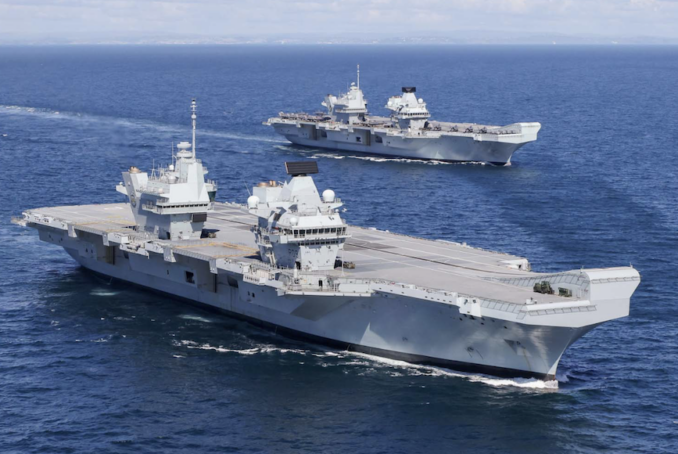
Elizabeth Class aircraft carrier,
Petty Officer Photographer Jay Allen – Licence CC BY-SA 2.0
One in refit for the past year and three months; one in maintenance.
Active: 0
Destroyers
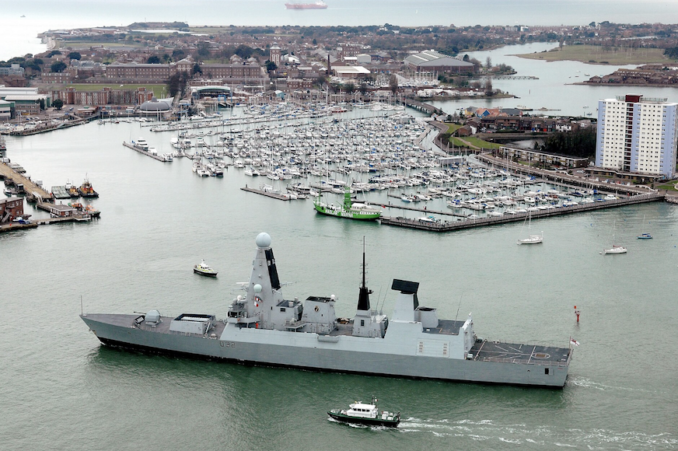
HMS Daring leaves Portsmouth harbour,
LA(Phot) Ian Simpson – Public domain
Three in refit, one in maintenance, two active. Since Britsky compiled his summary, HMS Daring has come out of refit and is back with a Royal Navy crew on board, but it will take several months of shakedown and sea trials before she is fully operational. Incidentally, the refit lasted eight years. The other two currently in refit have been there for one year and seven months, and two years and seven months, respectively.
Active: 2
The problem has been the Power Improvement Project, as the initial engines and power generation installed were not up to the job. The vessels are also being fitted with the new Sea Ceptor anti-aircraft/anti-missile missile system.
Ordered in 2000, HMS Daring entered service in 2010 and has spent much of the subsequent sixteen years in refit.
Frigates
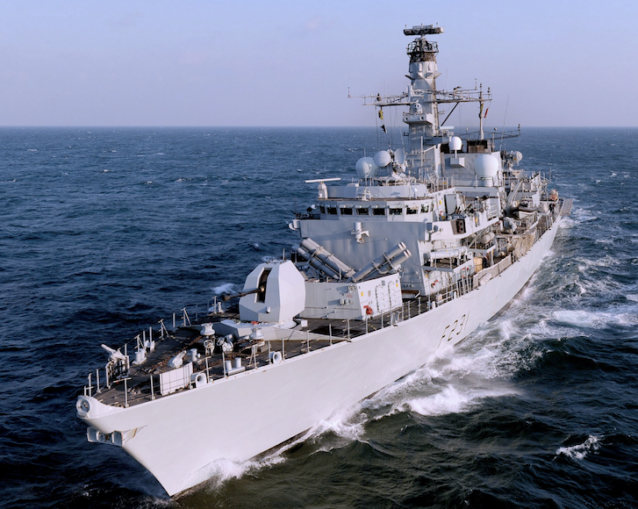
Royal Navy Type 23 frigate HMS Argyll,
LA(Phot) Caz Davies – Public domain
One retiring; two in refit and maintenance (for four months and one year and nine months, respectively), one on trials for a month, one on TAPS (which I assume means Towed Array Patrol Ship, hunting for escorting submarines).
Active: 3
The problem is that the Type 23s were built with a hull life of eighteen years, with many now withdrawn and others still in service well beyond the original design expectation. With Norway now committed to purchasing the replacement Type 26, the worry is that some of the early builds will go to the Royal Norwegian Navy, causing further problems for the Royal Navy. Replacement Type 31 frigates are also under construction with first of class HMS Venturer possibly being commissioned next year.
Attack submarines
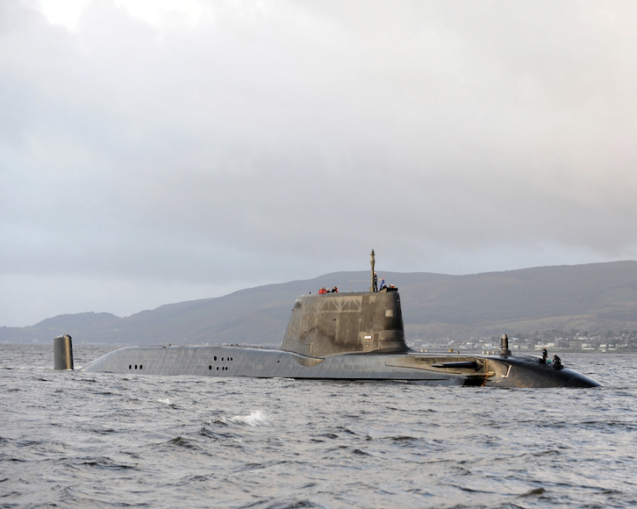
Royal Navy submarine HMS Astute,
WO(Phot) Ian Arthur – Public domain
Here we can add some flesh to what we have already spotted through our rolled-up newspapers. Astute and Audacious are in a Depot Modernisation Period at Devonport, for eight months and three years respectively. HMS Ambush has been laid up on the Clyde for the last three and a half years.
HMS Artful is also on the Clyde, ‘regenerating towards readiness’, and has been for the last two years and nine months. HMS Agamemnon is newly commissioned to the fleet and is partway through what is expected to be 18 months of trials. HMS Achilles is under construction at Barrow-in-Furness.
Active: 1 — HMS Anson, visiting Australia.
First of the class, HMS Astute was laid down in Barrow in 2001, so it has taken 26 years to build six submarines, only one of which is active.
Ballistic missile submarines
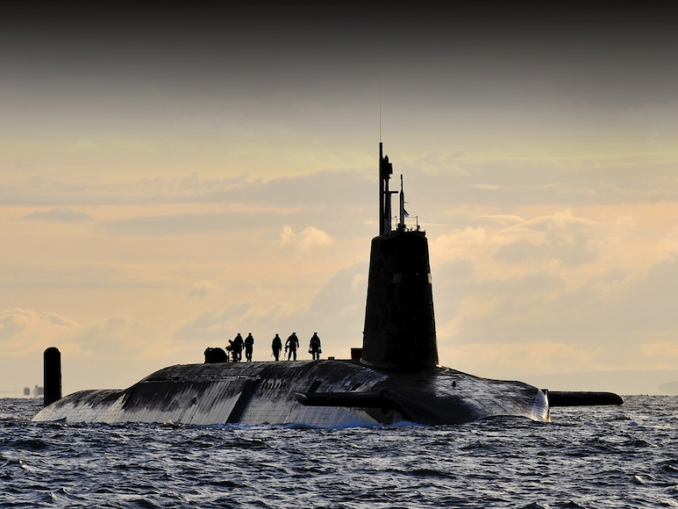
Nuclear submarine HMS Vanguard,
CPOA(Phot) Tam McDonald – Public domain
With the Navy being cagey about the deterrent, we shall turn to the Temp, who states that two boats are in major refit and extended overhaul. The other two are available, with one active on patrol at any one time. What is in the public domain, is that these patrols are now six months long.
Active: 1
The problem? Delays to the new Dreadnought class submarines being built at Barrow-in-Furness. The Vanguard fleet, launched in the 1990s, requires ‘prolonged maintenance’ due to intense usage and age, with some components set to be 44 years old by the time they are replaced.
A knock-on effect is that scarce maintenance facilities are not available for the Astute class, hence the backlog in refit and maintenance and the corresponding lack of availability.
The solution? An extra submarine dock. According to the Helensburgh Advertiser, within whose catchment sits HMNB Clyde at Faslane, the Chief of Defence Nuclear, Madeline McTernan (yes, it’s girl), recently visited the base alongside the First Sea Lord, General Sir Gwyn Jenkins, regarding a ‘new engineering space’.
‘Submarine maintenance throughput needs to drastically improve,’ Sir Gwyn informed the press. Various computer graphics are available showing both projected floating docks and refurbished existing facilities which have lain dormant for decades.
However, it must be pointed out that such projects would take years to complete, cost a fortune, and, upon completion, might be difficult to staff given the specialised nature of the work and the long-running decline of British shipbuilding.
The real solution would be for the US, UK, Australia and perhaps others (Japan? South Korea?) to use the same class of attack submarine and to be able to use one another’s construction and maintenance facilities interchangeably. However, with no such vessel in sight and with Achilles still under construction, that scenario is several decades in the future.
Incidentally, the diminutive Ms McTernan appeared at the dockside in trainers and a puffer jacket, which did not go unnoticed by the matelots.
Offshore patrol vessels
The River class is more of a success story. There are eight vessels: three active in UK waters, one deployed to the Atlantic, one in the Falklands, and one in Australia undergoing Fleet Operational Sea Training (FOST). Another is under maintenance in Singapore, and the eighth likewise in Portsmouth. However, these are small, lightly armed vessels presently expected to improvise roles performed by frigates.
Active: 5
Mine warfare
Two in Portsmouth, one in the Gulf (now returning), and four laid up, under refit, or being repaired.
Active: 3
According to Wikipedia, there are 32,000 active personnel in the Royal Navy and an annual budget of £16 billion. At the time of Britsky’s snapshot, for that £16 billion a year, the taxpayer had the use of seven “ships-of-the-line”-sized vessels: two submarines, two destroyers, and three frigates.
Always a little top-heavy, the Navy manages 41 Admirals — Vice-admirals and Rear-admirals — between the seven of them. Likely more gold braid and ceremonial swords per ship than cooks’ aprons and whisks!
As for the Royal Fleet Auxiliary, things are so bad that they are going on strike. The maritime union, National Union of Rail, Maritime and Transport Workers (RMT), has rejected a 4.5% pay offer for seafarers, describing it as wholly inadequate and failing to address years of below-inflation awards, minimum-wage concerns, and a growing retention crisis across the service
The ships:
Tide class (replenishment)
One alongside taking a breather after being part of the Carrier Strike Group that visited the Far East; one laid up at Birkenhead for one year and eight months; one on FOST.
Active: 1
Fort class (replenishment)
One laid up at Birkenhead for the last 19 months.
Active: 0
Bay class (logistics)
Three, all inactive: one in Gibraltar, two in Falmouth.
Active: 0
Conclusion
A “frigate gap”, failing cut-price destroyer propulsion, limited submarine maintenance capacity, and a Cinderella RFA have created yawning gaps in surface and undersea capability. Budgetary constraints, as the carriers and the deterrent suck the lifeblood out of the service, have led to ill-judged shortcuts and delays in long-term procurement.
The Navy therefore faces significant challenges, with fleet numbers much lower than required — despite vast expense to the taxpayer.
© Always Worth Saying 2026


