
© Google Maps 2026, Google licence
1867 & After the War
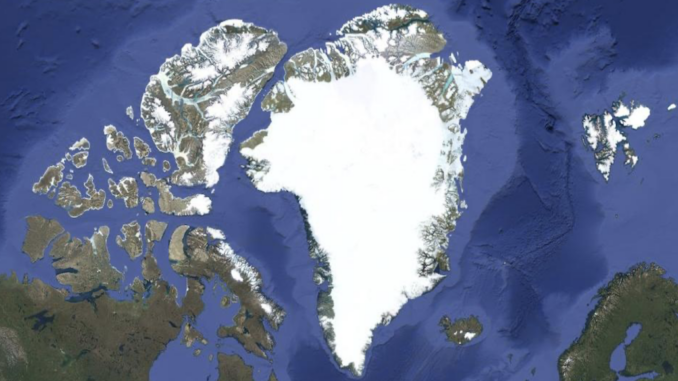
The United States has made several historic attempts to buy Greenland, reflecting its long-standing strategic interest in the world’s largest island. Greenland is an autonomous territory within the Kingdom of Denmark, and its location between North America and Europe has made it geopolitically important for centuries.
The first serious American proposal came in 1867, the same year the U.S. purchased Alaska. Secretary of State William H. Seward, who negotiated the Alaska deal, also explored the idea of acquiring Greenland and Iceland from Denmark. At the time, U.S. leaders were interested in expanding American influence in the Arctic and securing trade routes and natural resources. Although studies were conducted, the plan was never formally pursued, and Denmark retained control.
During World War II, Greenland’s strategic value increased dramatically. After Nazi Germany occupied Denmark in 1940, the United States assumed responsibility for Greenland’s defence to prevent German forces from using it as a base. American military installations were built, strengthening U.S. influence on the island. In 1946, the United States formally offered Denmark $100 million in gold to purchase Greenland, citing its importance for national defence during the early Cold War. Denmark firmly rejected the offer but later allowed the U.S. to maintain military bases, including Thule Air Base.
Interest resurfaced in the 21st century as technological advances, often greenwashed as climate change, opened new Arctic shipping routes and made Greenland’s mineral resources more accessible. In 2019, President Donald Trump publicly expressed interest in purchasing Greenland, calling it a strategic real estate deal. Denmark and Greenland’s leaders quickly dismissed the idea, emphasising that Greenland was not for sale. The proposal caused diplomatic tension but also highlighted Greenland’s growing global importance.
Although the United States has never succeeded in buying Greenland, these repeated attempts reveal consistent American concerns about security, trade, and influence in the Arctic. Today, the U.S. continues to engage with Greenland through diplomacy, investment, and defence cooperation with, additionally following recent successful U.S. operation in Venezuela, territorial acquisition is back on the agenda.
1917
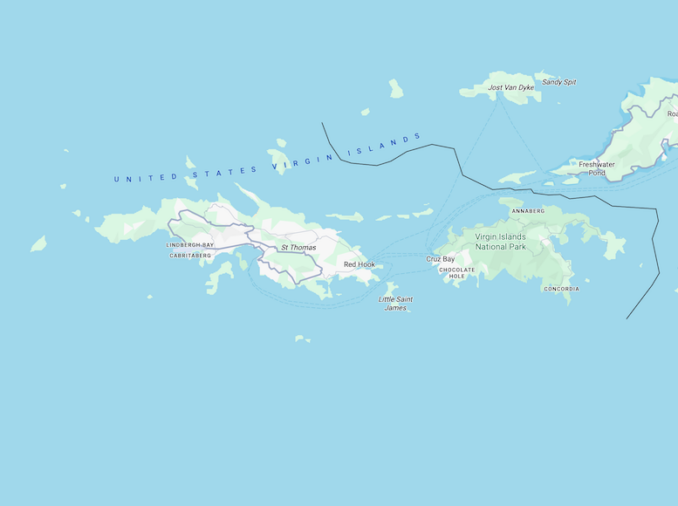
A transfer of territory from Denmark to the United States would not be unprecedented. The American purchase of the Danish West Indies was a strategic territorial acquisition that took place in 1917, during a time of global conflict and shifting power. The Danish West Indies, located in the Caribbean, consisted primarily of the islands of St Thomas, St John, and St Croix. Today, these islands are known as the U.S. Virgin Islands.
Denmark became involved there through seventeenth-century Caribbean colonisation, establishing trading companies that settled St Thomas in 1672, later St John and St Croix, using enslaved African labour to produce sugar, turning the islands into profitable colonies under the Danish crown.
The United States had shown interest in the islands since the mid-19th century because of their valuable harbours and strategic location along major Caribbean shipping routes.
St Thomas, in particular, had one of the finest natural harbours in the region, making the islands attractive for naval and commercial purposes. Denmark, meanwhile, found the colonies increasingly expensive to maintain, especially after the decline of the sugar economy and the abolition of slavery in 1848.
© Google Maps 2026, Google licence
Negotiations intensified during World War I. The United States feared that Germany might seize the islands if Denmark, a neutral country, were pressured or invaded. To prevent a potential threat to the Panama Canal and U.S. naval security, the U.S. government moved quickly to secure control of the territory. In 1916, the two nations reached an agreement.
Under the treaty, the United States agreed to pay Denmark $25 million in gold in exchange for sovereignty over the islands. The transfer was completed on March 31, 1917. The local population was not given a vote on the sale at the time, though they later became U.S. citizens in 1927.
The purchase strengthened American influence in the Caribbean and enhanced national security during wartime. Over time, the islands transitioned from a naval outpost to a civilian territory with a tourism-based economy. The acquisition of the Danish West Indies remains a significant example of American expansion driven by strategic and geopolitical concerns rather than large-scale settlement.
And yes, Epstein Island—formally known as Little Saint James—was once part of those Danish West Indies. The island is located near St Thomas in the Caribbean and was governed by Denmark as part of its colonial possessions from the late seventeenth century until the early twentieth century. During this period, Little Saint James was not a separate political entity but part of the broader St Thomas island group within the Danish West Indies.
Jeffrey Epstein did not acquire Little Saint James until 1998, more than eighty years after the United States assumed control of the territory. His purchase was a private real estate transaction and had no connection to Denmark or the original transfer of the islands to the United States. The island remained subject to U.S. territorial law and governance throughout his ownership.
Closer to home…
During the Second World War, the United States acquired temporary control over certain British territories through a unique arrangement driven by strategic military needs. One of the most significant examples was the “Destroyers for Bases” agreement between the United States and the United Kingdom in 1940.
At the time, Britain was under severe threat from Nazi Germany, and the war in Europe placed enormous pressure on its resources. The United States, while not yet formally in the war, sought ways to support Britain and also secure strategic locations for its own military defence.
Under the agreement, the United States received the right to establish military bases on several British colonial territories in the Atlantic and Caribbean. In exchange, the U.S. provided Britain with 50 ageing naval destroyers, which were urgently needed to protect convoys from German U-boats. The territories where the U.S. was granted base rights included Bermuda, Newfoundland, the Bahamas, Jamaica, Trinidad and Tobago, Antigua, St Lucia, and British Guiana.
These were not outright transfers of sovereignty; Britain retained formal control, but the U.S. gained operational control for the duration of the war, allowing it to station troops, build airfields, and use ports for naval operations.
The bases were crucial for the U.S. as well, particularly for protecting shipping lanes in the Atlantic and preparing for potential involvement in the war. They also allowed the United States to project military power in the Western Hemisphere and safeguard the Panama Canal, a vital strategic asset. Many of these bases remained active after the war, although some were later closed or returned to British control.
While the territories were not permanently ceded, the agreement strengthened U.S.-British ties, helped secure the Atlantic during World War II, and highlighted the importance of Caribbean and Atlantic islands in global military strategy. It also set a precedent for U.S. military presence on foreign soil in times of geopolitical necessity.
Perhaps a better model for the present-day relationship between Greenland and the United States than a Trump invasion?
© Always Worth Saying 2026