
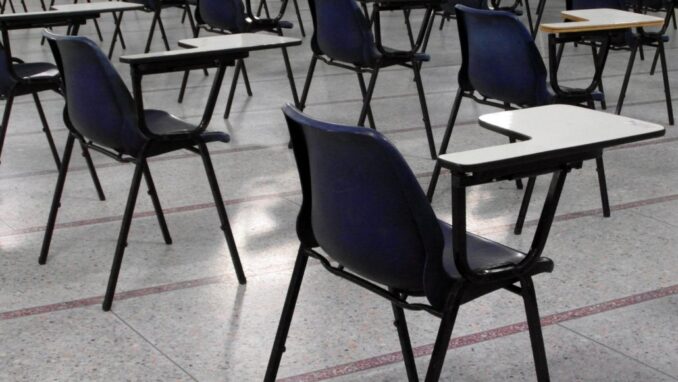
What happens on the day of a GCSE?
Each candidate is issued a candidate number, posters of seating layouts with candidate numbers are pinned up along the corridor to the exam hall so pupils are meant to know where they are sitting prior to walking into the hall.
Bags are usually left outside in wire cages, candidates must enter in absolute silence, no grinning or communication of any form with other candidates. They sit and receive instruction from the Examinations officer or lead invigilator.
A delegated attendance officer then checks each candidate to ensure that their face matches that on the candidate card and their name is ticked off the register – a register is still a legal necessity even during exams. Once all administration has been completed, the exam is started.
Pupils are allowed toilet breaks though these are more common during mocks than GCSEs. Pupils with medical needs get this time back however those that need to go, often through boredom, do not.
Some pupils have an increase in anxiety during the GCSE final exams. It’s not unusual for candidates to vomit outside and inside the exam hall, have a medical episode or just shake and be in floods of tears throughout. Other candidates will fill in their details on the paper, put it to one side and sleep through the entire exam and yes, some have to be woken up as they are snoring.
Most schools give a warning of 5 or 10 minutes remaining of the exam and at this point, some candidates will speed up and others will take this as a sign to slow down.
Papers are collected at the end of the exam however if there are some candidates in the same hall that have extra time, the invigilators must be as quiet as possible so as not to disturb them.
Papers are then collated by tier (foundation, higher etc.) and then in ascending order of candidate number – God help any paper being out of place as the exam boards do not take kindly to this.
Later, papers are finally locked away safely with the exam log, list of access arrangements and any seating plan then sent back to the exam board.
The hall is then set up for the next exam, does it need calculators, pairs of compasses, tracing paper and laying out cards of access arrangements for each pupil that requires them? This can be a lengthy task however, the papers for the next exam remain firmly behind a locked door and are only set out just before the candidates enter the room.
To ensure rules are being adhered to correctly, each school acting as an examination centre will be inspected during an exam by an examinations inspector and sometimes, more than once. Questions will be asked on protocol, evidence requested of administration activities and overall order of the hall/room being taken in to account. This can not be messed up and is a nervous time for all concerned.
How are the papers marked? There is a black box around each question/answer section on a page. Candidates are told not to write outside this under any circumstances as whatever is within this box is scanned electronically and sent to those marking. They will receive hundreds of scans of one question to mark thereby helping conformity in the quality and scoring of marking. Those marking receive pennies for each question marked, it is quite a grim task for little reward.
So why do this? The pay for invigilating is around minimum wage and is very occasional. There is a massive amount of responsibility for staff, should something go wrong, an explanation would have to be given to the exam board and an all new paper sat at a later time which would delay those pupils’ results being available. The bonus to this is watching a candidate that could be in a complete mess at the start of the season, complete their exams with confidence and pride after some calming words, humility and encouragement from an invigilator. You do your very best to help them do their very best.
Throughout senior school, teachers impress upon pupils the need to work hard for exams – more often than not as a way to control their behaviour however for many, this just increases their anxiety far beyond what it would have otherwise been.
If you are at a loose end for some of the year and want to help the next generation make the most of themselves, it might be worth looking in to. Schools and Colleges are always advertising for invigilators so why not try?
© The Librarian 2026