
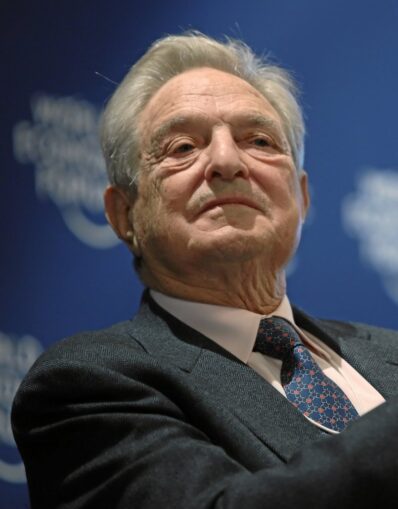
But what if the audacious wager on the British pound had spectacularly misfired? The $10 billion borrowed to fuel the bet would have demanded repayment, a burden falling squarely on Soros’s shoulders. Yet he dismissed the risk with the cool assurance of a seasoned gambler. The wager, he explained, was “asymmetrical”—a high-reward, low-risk proposition. Had the pound remained tethered to the European Monetary System, Soros would have faced only the borrowing costs plus a potential 2 percent appreciation, a mere $200 million on a $10 billion stake—hardly a dent in his calculus. Two years later, in 1994, a misstep in betting on the yen-dollar exchange rate cost him $600 million in a single day. Soros shrugged it off as “fluctuations,” a familiar ebb in the market’s tide, noting that his firm had closed every year in profit save one. “Speculators don’t always win,” he conceded, a nod to the precarious tightrope he walked.
This perspective owes much to the philosophy of Karl Popper, whose doctrine of fallibilism profoundly shaped Soros. Popper held that absolute truth and complete knowledge are unattainable, condemning humanity to the possibility of error. Certainty is a mirage; the only constant is change, and the only certainty is fallibility. One may grasp truth but never fully know it, rendering the spectre of mistake ever-present. For Soros, this insight fostered a relentless self-scrutiny, a willingness to revise judgments with a fluidity that set him apart. He attributes his fascination with survival to his youth amid the crucible of World War II, where testing boundaries without courting annihilation became a guiding principle. “I like to probe the limits,” he has said, “without risking my life.”
Soros found particular allure in states of disequilibrium, where conventional rules falter—a concept he tied to the political upheavals of his early years. Unlike the immutable laws of natural science, which economists often mistakenly apply to markets, Soros discerned patterns that permitted prediction. His theory of reflexivity, refined during Eastern Europe’s revolutionary upheavals in the late 1980s, posits that near-equilibrium conditions align human perception with reality. But in times of extreme disruption—political turmoil or economic upheaval—perception and reality diverge sharply, creating chaos where unique dynamics prevail. He distinguished two types of dis-equilibrium : the rigid imbalance of totalitarian regimes, which impose ideological facades at odds with truth, and the dynamic imbalance of rapid change, where human understanding lags behind events, as seen in the Soviet Union’s collapse. On financial markets, these ruptures manifest as boom-bust cycles, triggered under specific conditions. “When they occur,” Soros observed, “the world ticks differently, following a distinct pattern.”
This realization sharpened his focus. Dis-equilibrium became his domain, a terrain he navigated with the eagerness of a hound scenting prey. “I’ve made fortunes in markets that were out of joint,” he confessed, recalling encounters with the dislocations of Nazism and Communism. Soros emerged as a strategist of instability, thriving where others faltered. His candid admission—“my mouth waters” at the prospect of such chaos—carries an unsettling echo, evoking a figure who not only endures crises but profits from them, a lesson honed in his formative years. Soros’s playbook extended beyond Black Wednesday. He is widely credited with precipitating the Asian financial crisis of 1997-98, toppling emerging markets, scooping up assets at fire-sale prices, and reaping colossal gains. These speculative salvos left countless victims—economies de-stabilized, livelihoods obliterated—while global ripples underscored the peril of such power concentrated in a single hand. The pound wager, devilishly brilliant, stands as a stark emblem of one man’s capacity to reshape nations.
When pressed on whether guilt gnaws at him, Soros remains unruffled. “Why should it?” he retorts. He insists he has adhered to the law—a claim somewhat tarnished by his insider trading conviction. His defense is as consistent as it is provocative: his successes merely expose flaws in the system, weaknesses that speculators exploit as a matter of course. “If you see an opportunity, you take it,” he argues, framing his actions as a diagnostic of systemic frailties, akin to a rigorous audit that paves the way for reform. This, he contends, drives progress—an evolutionary struggle where the fittest prevail, a nod to Social Darwinism.
Consideration for the vulnerable, so often the collateral damage of these transactions, finds little place in his rhetoric. The weak are exposed, he suggests, but the innocent who suffer remain a footnote. Soros casts speculation as a crucible for improvement, a relentless test that strengthens the system for all. Yet this vision, rooted in survivalist logic, sidesteps the human toll. “Who better to critique the system,” he asks, “than those who thrive within it?” His $23 billion fortune, as noted by Daniel Eckert in a 2013 Die Welt article, seems to affirm his logic, Popper notwithstanding. Eckert, no admirer, describes Soros as a “secretly revered ‘investor legend,’” whose global fame stems from “a series of daring speculations that fortuitously succeeded,” making him the planet’s 25th-richest individual. Unlike Warren Buffett, whose wealth derives from building enterprises, Soros’s fortune rests on “virtuosic financial acrobatics.” Eckert’s skepticism, rare among mainstream voices that often lionize the “star investor” and “philanthropist,” hints at a deeper unease. To attribute Soros’s triumphs solely to luck, however, is to underestimate the calculated brilliance that has defined his ascent—a brilliance that, for better or worse, reshapes the world in its wake.
To be continued
© DJM 2026


