For generations, the phrase “grim up north” has lingered in the national imagination — conjuring images of soot-stained skylines, struggling towns, and industries long past their prime. It is a shorthand that flattens the region into a single narrative of tired decline. Yet this caricature obscures another, less frequently told story: one of extraordinary historic wealth, ambition, and industrial power.
My wife and I are on a plutocrats’ tour of the north to examine what went wrong. Having investigated the linoleum and cotton barons of East Lancashire and West Yorkshire, we find ourselves in the port of Liverpool, the entrepot for the Industrial Revolution’s raw materials and exported finished goods.
Appropriately, we arrive in the soccer-mad city while the World Wendyball Invitation Shield is being held in the colonies that provided the cotton and tobacco. Might there be a relevant historic Wendyball plutocrat’s story to tell?
En route, we struggled to find one. It being the ‘people’s game’, the round ball clubs in the likes of Preston and Wigan found their origins with the butcher, baker and candlestick maker, with the churches, workshops and existing sports clubs. Will we have better luck this time around? Yes, we will, but first, in a roundabout way, we have to get to Everton FC’s new stadium.
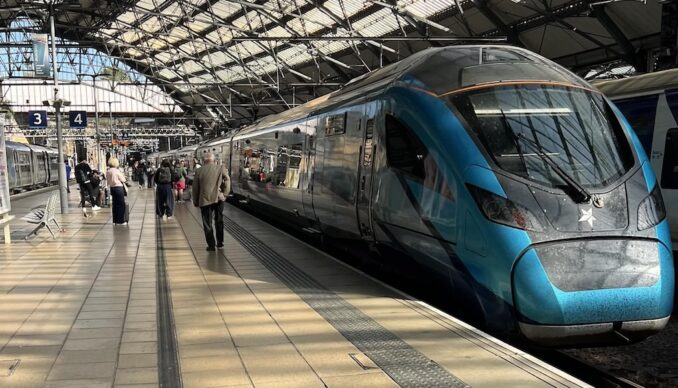
Besides an outsized statue of Ken Dodd, Liverpool Lime Street station contains the Class 397 Trans Pennine Express from Glasgow, from which my wife and I have just alighted. In a sign of changed industrial times, these were built on the continent by the Spanish multinational CAF.
© Always Worth Saying 2026, Going Postal
Although there was much fuss made recently over the 200th anniversary of the Stockton to Darlington railway – not least on these pages – the world’s first inter-city line was the Liverpool and Manchester Railway, opened in 1830. This is remembered as the first inter-urban railway designed from the outset to transport passengers as well as goods.
Opened on the 15th September of that year, the Liverpool terminus sat at Crown Street in the Edge Hill area of the Mersey port, long since demolished. The Manchester end terminated at Liverpool Road station, which survives as part of Manchester’s Science and Industry Museum.
Rather than being funded by a plutocrat, the investment required for the line was raised through a share issue, with the Liverpool and Manchester Railway Company raising capital by selling shares to private investors. The initial target was around £400,000 (in 1820s values), issued in £100 shares.
The investors were primarily merchants, businessmen, and industrialists from Liverpool and Manchester who stood to benefit from the faster and cheaper transport of goods – especially cotton and textiles. There were initially about 308 shareholders holding 4,233 shares. The actual construction cost came in at around £280,000, roughly £86 million in today’s money.
It paid an average annual dividend of 9.5% over the 15 years of its independent existence (1830–1845). This was an exceptionally strong return for the era, added to which the share prices rose dramatically.
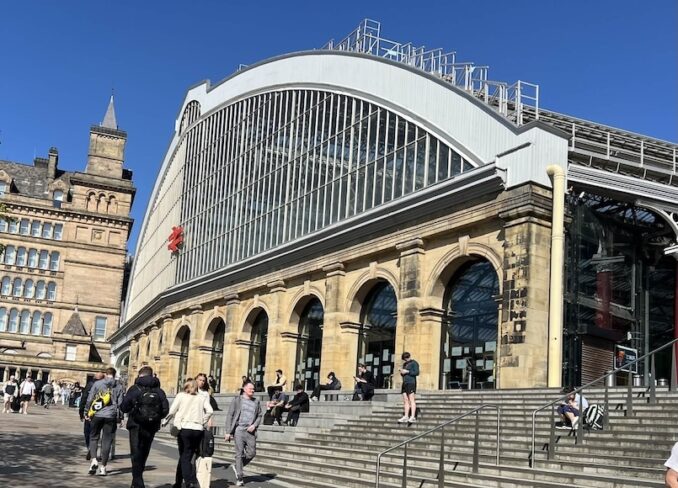
Today’s Lime Street station was built by the Liverpool and Manchester Railway to replace the original, less convenient terminus. The station was officially opened to the public in August 1836, though some construction work continued into 1837. As such, it is regarded as the oldest still-operating grand terminus mainline station in the world with tunnels and cuttings from Edge Hill bringing the railway much closer to Liverpool city centre and greatly improving accessibility.
The 16th August edition of the Liverpool Standard And General Commercial Advertiser reported:
‘This splendid terminus of the Liverpool end of the Liverpool and Manchester railway was opened yesterday. The whole of Lime Street and the Hay Market were crowded throughout the day, witnessing the arrivals of the trains of passengers.
‘This will prove a great convenience to travellers on the line from its centrical situation, and obviates the alternative, which before was obliged to be submitted to either paying an extra tax in coach hire or walking a mile and a half uphill, before the old station in Crown Street could be reached.’
And doesn’t it look well on a sunny day nearly two hundred years later:
© Always Worth Saying 2026, Going Postal
Incidentally, I hope I’m not boring you! At least Puffins can doomscroll elsewhere. Poor Mrs AWS has to sit in her seat, or wander the streets, listening to this all day.
Those two centuries ago, Liverpool was a booming Georgian maritime hub, transitioning through the Industrial Revolution. Its wealth was heavily tied to global trade, not least in cotton, tobacco, coal, sugar, and slaves. The bustling waterfront was crowded with sailing ships and rapidly expanding grand docks and new railway lines.
In this decade, the city was undergoing massive changes. The world’s first commercial enclosed wet dock had opened in the previous century, but by 1826, the original Old Dock was closed as the port expanded rapidly north and south along the River Mersey.
The city’s population swelled to around 150,000. While merchants and traders built opulent Georgian properties in areas like Rodney Street, working-class dockers and sailors faced severe overcrowding and poor living conditions near the waterfront.
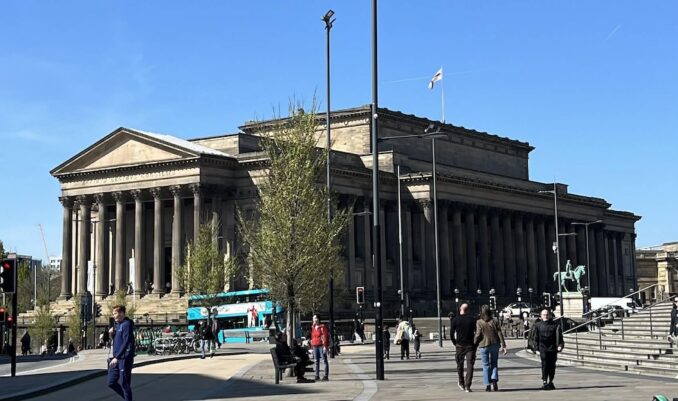
However, the first impressive public building we note upon leaving Lime Street is St George’s Hall, built between 1841 and 1854.
© Always Worth Saying 2026, Going Postal
Our rendezvous is not with a concert but with one of Mrs AWS’s friends who lives locally and is our host for the day. She walks us from Lime Street to Liverpool Central for another train. Can you tell where we’re going yet?
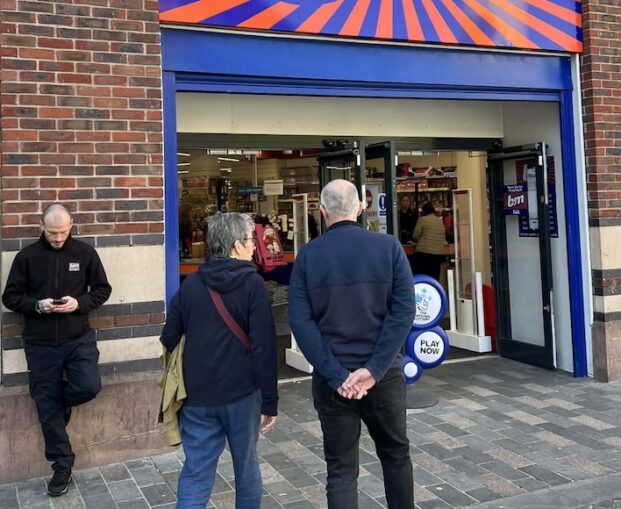
But first, she gets dragged around value variety – one feels one has to show face. If the Pope had a day trip to Liverpool, he’d have to pop into the cathedral wouldn’t he.
© Always Worth Saying 2026, Going Postal
Liverpool Central Low Level underground station opened on 11 January 1892, at the city end of the Mersey Railway’s route via the Mersey Railway Tunnel from Birkenhead. The high-level platforms which went to Manchester Central are no more. As recently as 1977, tunnelling connected with the route to Southport, thus forming the Northern Line of the current Mersey rail system.
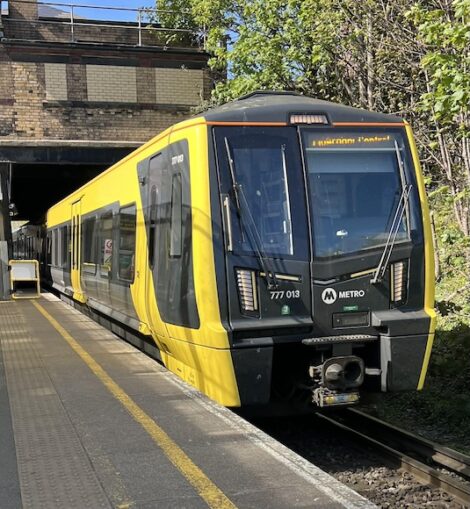
Every 15 minutes, Class 777 multiple units run to the Lancashire resort. Again, these are not British-built, but were manufactured by Sadler in Switzerland and Poland. They replaced classes 507 and 508, constructed in York in the late 1970s.
© Always Worth Saying 2026, Going Postal
And very smart they are too; new, roomy, big windows, easy to get on and off. My wife’s friend travels for free as a local pensioner. Mrs AWS and I travelled out and back for £6 – which I thought was reasonable. Keeping this in mind and being aware of the locale, I exercise another one of my obsessions by whispering to my better half, ‘Is this socialism?’
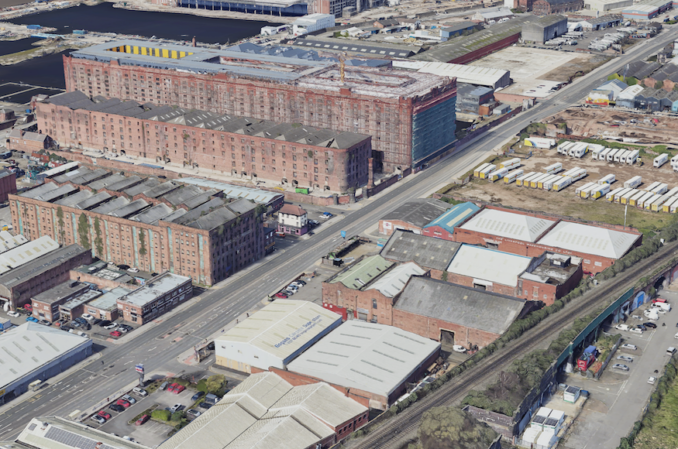
Meanwhile, we pass two important buildings. One of which we managed to capture and the other we somehow managed to miss despite it being the biggest brick-built warehouse in the world. Not to worry, Google Maps to the rescue.
© Google Maps 2026, Google licence
The Stanley Dock Tobacco Warehouse is a Grade II listed building and the world’s largest brick warehouse. With a one-time net floor area of 1.6 million square feet, it is adjacent to the Stanley Dock and stands 125 feet high. The 14-storey building spans across 36 acres, and its construction used 27 million bricks, 30,000 panes of glass and 8,000 tons of steel.
Next door was Bramley-Moore Dock, a historic 19th-century coal-loading facility. Opened in 1848, it was named after dock committee chairman John Bramley-Moore. Today, the infilled dock site is the location of Everton F.C.’s 52,888-capacity ground, the Hill Dickinson Stadium.
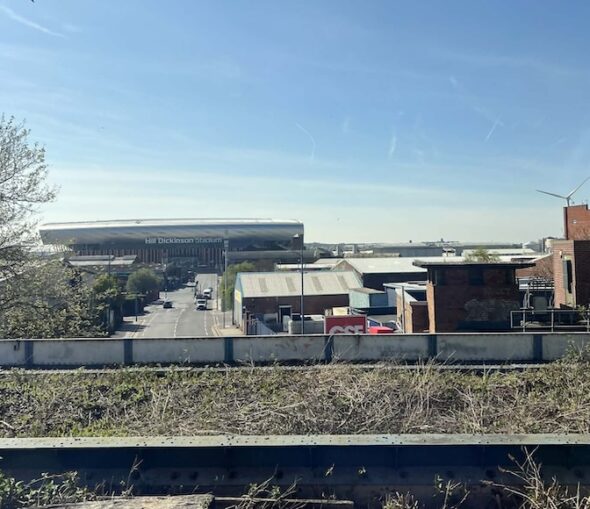
© Always Worth Saying 2026, Going Postal
Which brings us fewer degrees of separation to our historic Wendyball plutocrat, but not the present-day owners of the red or blue sides of Liverpool. Find out who next time on Plutocrat’s Tour!
© Always Worth Saying 2026