
The Defence Investment Plan
Something jumps from the page (number 21 to be exact) of the recently published, much-delayed and much-anticipated Defence Investment Plan (DIP). It is the sheer cost of what the wallahs at the Ministry of Defence call the ‘Defence Nuclear Element’ or DNE.
A four-year plan starting next year, by 2031 £63.6 billion will have been spent on DNE. This is a spending commitment topped only by ‘People and Veterans’ – which one assumes to mean wages and pensions – at £78.5 billion. Meanwhile, ‘Air’ receives £27 billion and ‘Land’, £19 .2 billion. Why so? And is this money being wisely spent, or is the nuclear element of DIP little more than an atomic HS2 draining the financial lifeforce from other areas of the MOD?
The evolution of the nuclear deterrant
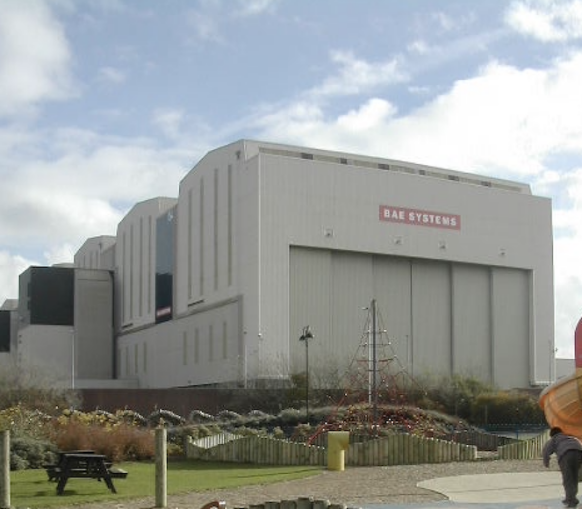
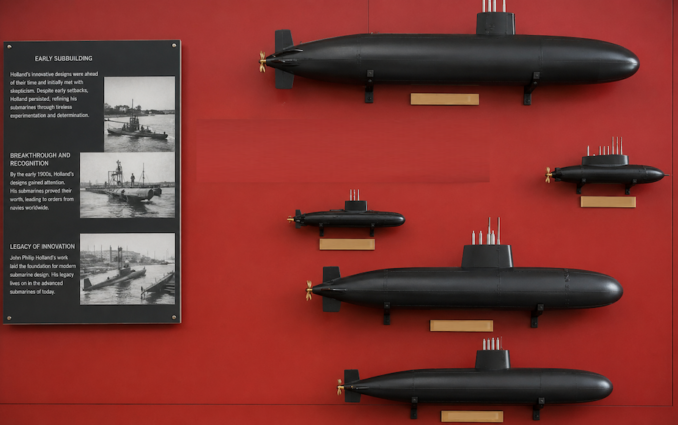
Currently building at Barrow-in-Furness in Cumbria are the four Dreadnought-class ballistic missile submarines (SSBNs), which will carry the UK nuclear deterrent from the 2030s to the 2060s. These are replacements for the current Vanguard class of submarines, which succeeded the first British missile boats – the Resolution class of the 1960s.
© Always Worth Saying 2026, Going Postal
Prior to Resolution, the nuclear deterrent was carried by the RAF in V-Bombers, but advances in Soviet anti-aircraft missiles and fighters, and their first strike missile capability, rendered the RAF’s Vulcans, Valients and Victors obsolete.
The Resolution class consisted of HMSs Resolution, Repulse, Renown and Revenge. Tipping the scales at 8,400 tons submerged, they had a crew of 143 and carried the American Polaris missile. Their 1990s replacements, Vanguard, Victorious, Vigilant and Vengeance, displaced 15,900 tons, and carried the bigger American Trident missile topped by British thermonuclear warheads.
The Polaris A3 missile was approximately 9.9 metres long and 1.37 metres in diameter. By comparison, the Trident II D5 is about 13.4 metres long and 2.11 metres in diameter. This makes the Trident missile around 35 per cent longer, over 50 per cent wider, and several times greater in volume. Each missile therefore requires a much larger launch tube, stronger supporting structure, and more internal space, so the missile compartment occupies a greater proportion of the submarine.
Vanguard and Trident
Trident introduced a much greater capability. Its larger size allows it to carry a greater payload and travel much further. Polaris had a range of roughly 4,600 kilometres, whereas Trident can reach more than 12,000 kilometres depending on payload and trajectory. This allowed submarines to remain farther from potential threats while still holding targets at risk.
Trident also brought a major improvement in accuracy. Its advanced guidance system allows warheads to be delivered with much greater precision than Polaris, increasing effectiveness while requiring fewer warheads to achieve the same military effect. The missile can carry multiple independently targeted re-entry vehicles, allowing several warheads to be aimed at separate targets, whereas Polaris carried a less flexible, smaller number of warheads.
However, Trident required a substantially larger and more advanced submarine to carry it. Trident’s greater length and diameter meant larger missile tubes, a wider pressure hull, and a redesigned missile compartment. This contributed directly to the larger size of the Vanguard class compared with the Resolution class. The Resolution class had a beam of just over 10 metres, whereas the Vanguard class is nearly 13 metres wide.
This increase in hull diameter creates a very large increase in internal volume, allowing room not only for the larger missiles but also for more machinery, equipment, stores, and improved accommodation. This reflected three decades of advances in submarine design, propulsion, stealth, electronics, and habitability, besides the adoption of the larger missile.
© Always Worth Saying 2026, Going Postal
The Vanguard class was also designed to be quieter than its predecessor. It incorporated raft-mounted machinery, extensive vibration isolation, improved propulsor technology, advanced acoustic insulation, and much larger sonar systems. Although these features increased both the size and weight of the submarine, they improved its ability to remain undetected, which is the primary requirement of a ballistic missile submarine.
Propulsion also became more capable. While both classes used pressurised water reactors, the Vanguard class employs a more powerful reactor installation, providing higher sustained performance, greater electrical generation capacity, and quieter operation. The larger propulsion plant and its supporting systems occupy more space within the pressure hull.
Crew accommodation and onboard facilities also improved considerably. The Resolution class reflected the standards of the 1960s, whereas the Vanguard class was designed for long deterrent patrols with better living conditions, larger food storage areas, improved medical facilities, more spacious control and operations rooms, and additional space for maintenance and logistics.
Finally, advances in electronics transformed submarine design between the 1960s and the 1990s. Modern sonar arrays, combat management systems, communications equipment, navigation systems, and electronic warfare equipment require more space, cooling, and electrical power than those fitted to the Resolution class.
Dreadnought
Similarly with Vanguard’s replacement, Dreadnought, with similar missiles, at 17,200 tons it still is bigger than its predecessor. With advances in submarine warfare continuing apace, cost and building timescale have escalated too.
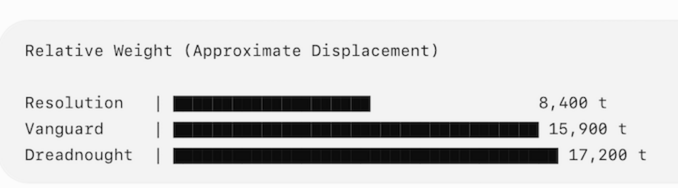
Image generated using ChatGTP AI
The higher cost is not mainly due to size, but to the increasing complexity of modern nuclear submarines and the advanced technologies they incorporate. Dreadnought has been designed to remain in service into the 2060s. It includes a new generation of stealth features, quieter propulsion, more sophisticated sonar, improved sensors, and far more powerful computing and communications systems. Achieving even small improvements in underwater stealth has become increasingly expensive as anti-submarine detection technology has advanced.
A major change is the introduction of the Rolls-Royce PWR3 nuclear reactor. Designed to operate throughout the submarine’s service life without refuelling, it offers improved safety, reliability, and efficiency. However, developing and integrating a completely new reactor has added significantly to programme costs and timescale.
Modern safety standards are also much more demanding than when the Vanguard class was designed. Nuclear regulation, quality assurance, environmental protection, and testing requirements have all increased, adding time and expense to the design and construction process.
Another important factor is that the United Kingdom builds very few ballistic missile submarines. With four boats in the class, the costs of design, specialist facilities and highly skilled engineers that is needed to maintain the national capability of building nuclear submarines is spread across a very small production run.
Finally, the published programme cost includes much more than the submarines themselves. It also covers the design of the new class, investment in shipyard facilities, development of new technologies, testing, and supporting infrastructure.
As a result, while the Dreadnought class is only slightly larger than the Vanguard class, it is significantly more capable – and expensive. Its higher cost reflects advances in stealth, propulsion, computing, safety, and the infrastructure required to build and support one of the world’s most sophisticated military systems.
What impact has this had on submarine inflation? An eyewatering one. As can be seen in the graphic below, the cost of the submarine part of Dreadnought could touch £41 billion, compared to an inflation-adjusted £8 billion cost of Resolution.
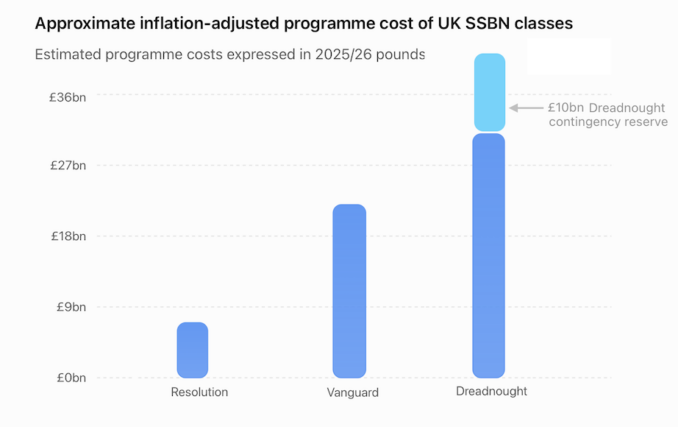
Image generated using ChatGTP AI
Timescale
As for timescale, besides Barrow-in-Furness, submarines were also built at Camell Laird in Birkenhead in the 1960s – allowing four to be worked on at once. All four Polaris boats were ordered in May 1963 and laid down between February 1964 and May 1965. The first was commissioned in October 1967 and the final in December 1969.
In other words, five years and ten months separated the first laying down and the entire class being commissioned. Thus, six years and seven months after being ordered. With the Vanguard class, the time span between the first being laid down and all being commissioned was (Sept 1986 – November 1999), 13 years and two months.
With Dreadnought, the first steel was cut in October 2016, with the first delivery expected in the ‘early 2030s’. The first steel was cut on the last of class, King George IV, in September 2025, suggesting the whole class will be commissioned in the early 2040s, a whopping two and a half decades after the first cutting of steel.
If this sounds improbable, Puffins are reminded that the Astute class fleet submarine (ie nuclear powered but not nuclear armed) will have taken 28 years between HMS Astute being laid down (Jan 2001) and the seventh and final boat of the class, HMS Achilles, being commissioned, assuming it hits a ‘projected 2028/early 2029′ commissioning date.
Puffins are also reminded that a couple of years pass between commissioning and being active in the fleet, and that at the moment, for a variety of reasons catalogued elsewhere, none of the Astute class is at sea.
Warheads and missiles
Astonishingly, the above £31-£41 billion in Dreadnought costs doesn’t include the related Trident missile renewal, new infrastructure projects at the Atomic Weapons Establishment, and new nuclear fuel production facilities at Rolls-Royce. A matter we will address in the next edition of Wet HS2.
© Always Worth Saying 2026


