A troubled grooming enquiry threatens to collapse, or at least be diminished in its authority, before it’s even started.
The stalling enquiry
On Tuesday, 21 October 2025, Jess Phillips appeared in the House of Commons to respond to an urgent question about the government’s handling of the statutory inquiry into group-based exploitation. A phrase diluted from Muslim rape gangs to rape gangs to grooming gangs to child sexual exploitation – further obscured to CSE. As the language change suggests, alarm bells are ringing regarding the focus and scope of the investigation.
Two survivor representatives resigned from the inquiry’s oversight panel, raising concerns about the independence and integrity of the process. These resignations triggered a wave of criticism from opposition MPs, who accused the government of undermining the inquiry and failing to centre the voices of the rape gang victims.
Compromised Jess Phillips
In response, Phillips struck a firm and defensive tone to the point of becoming near-hysterical during her Commons statement. She rejected the claim that the inquiry must be chaired by a judge and emphasised that the terms of reference would be subject to public consultation. The chosen chair would have full authority to leave no stone unturned within those parameters.
However, Jess Phillips’ constituency in Birmingham Yardley has a large Muslim population, with Jess’s majority being only 693. In the 2024 general election, a pro-Palestine Workers Party candidate finished second, with the incumbent’s share of the vote falling by 26%. Also, the Parliamentary Under-Secretary of State for Safeguarding and Violence Against Women and Girls once referred to hundreds of women in Cologne being assaulted by immigrants during New Year celebrations in Cologne as if heckling on a Saturday night out in Birmingham’s Broad Street.
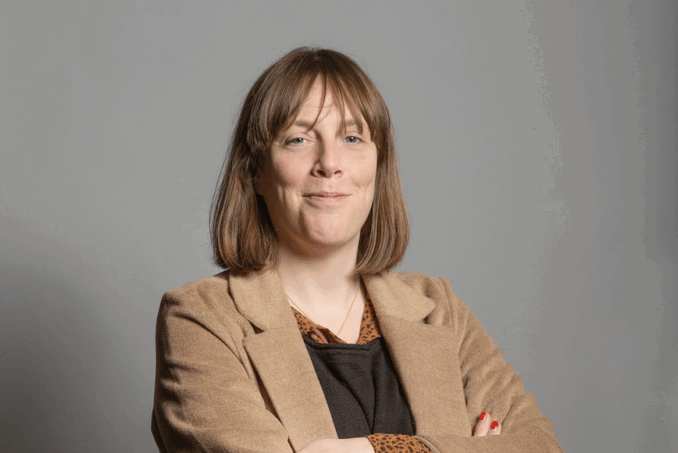
Official portrait of Jess Phillips MP,
David Woolfall – Licence CC BY-SA 3.0
Whether to pander to Muslims in her constituency or to promote a particular type of globalist agenda to ease herself into quangoland after leaving the House, Philips’ position is compromised. Back in the Commons, Phillips acknowledged the recent resignations from the oversight panel and admitted that the process was at a critical stage.
She defended the government’s commitment, reiterating that it would fund the inquiry and implement its recommendations. She also expressed a willingness to meet with survivors to hear their concerns. When challenged further by opposition MPs, who implied a cover-up or administrative failure — Phillips pushed back, appearing to disrespect and call into question the honesty of the resigning panellists.
She accused some critics of bad faith, suggesting that politics and insensitivity to the complexity of the issue motivated their attacks. At one point, she said she “only knows the victims” and highlighted her own long history of campaigning for survivor justice to bolster her credibility. Her refusal to accept some demands — such as the appointment of a judge as chair — led some observers to argue that she was being evasive and defensive. It also led to a wall of negative comments in both mainstream and social media.
The ignored victims
As for those departing panellists, their public resignation letters raised serious concerns about the inquiry’s internal culture and direction. Survivors described a “toxic, fearful environment” where they felt silenced and excluded, citing a lack of transparency, secretive decision-making, and being left out of key discussions.
They criticised the use of condescending and controlling language by officials and expressed alarm that individuals being considered to chair the inquiry had ties to institutions like the police and social services. These being bodies which failed them in the past and thus created a conflict of interest.
A central concern was the potential broadening of the inquiry’s remit beyond group-based grooming, which they felt would dilute its focus and risk overlooking the specific patterns of abuse they endured. Survivors also raised concerns about being manipulated or undermined through the handling of their participation. One letter stated, “What is happening now feels like a cover-up of a cover-up,” reflecting deep mistrust in how the inquiry was being managed.
A girl stands in a dimly lit hallway,
Eric Ward – Unsplash licence
The three reginations came from Fiona Goddard, followed by Ellie-Ann Reynolds, both of whom shared their reasons for stepping down, citing the toxic environment and a lack of trust in the process. A third victim, known by the pseudonym Elizabeth, also resigned, voicing similar concerns. All three expressed serious doubts about the inquiry’s transparency, survivor involvement, and leadership choices, prompting growing public and political scrutiny of the inquiry’s credibility.
Puffins are familiar with Ellie-Anne Reynolds from the Barrow-in-Furness scandal that can be read about in a prievious G-P piece here. [link to justice for Ellie update]. One of the salient points of her case is that she was victimised by the same rape gang as Ellie Williams. Some of those men were prosecuted while, astonishingly, Ellie Williams was in jail for ‘lying’ about the abuse. ‘Elizabeth’ is thought to be a survivor of the Rotherham cases, a G-P summary of which can be found here.
An organised street gang in Bradford victimised the third survivor, Fiona Goddard, while she lived in a children’s home. In her resignation letter, Fiona wrote, “The most concerning development of this inquiry has been the identities of the two perspective chairs.”
“One has a background in policing and the other, a social worker. These two services being those that contributed most to the cover-up of the national mass rape and trafficking of children. This is a disturbing conflict of interest, and I fear the lack of trust in services from years of failings and corruption will have a negative impact in survivor engagement with this inquiry.”
The empty chair
The two possible enquiry chairpersons at the time of the Phillips’ statement were Jim Gamble and Annie Hudson. Subsequently, Hudson, a senior social‑work professional (and former Director of Children’s Services in local government and chair of the Child Safeguarding Practice Review Panel), ruled herself out of the role. That left Jim Gamble as the only known candidate left to lead the enquiry.
A former Royal Military Policeman and RUC officer, Gamble rose to be head of the Belfast region Special Branch before taking on prominent roles focused on child exploitation and internet crime. The 65-year-old was the founding chief executive of the Child Exploitation and Online Protection Centre (CEOP) from its establishment in April 2006.
However, in 2010 he resigned from CEOP in protest at the new government’s plans as Mr Cameron’s incoming Conservatives merged CEOP with the Serious Organised Crime Agency to form the National Crime Agency. Although May and Cameron have their detractors, the phenomenon of Asian Muslim group‑based child sexual exploitation received a much higher official profile in the early 2010s at the beginning of their watch.
Subsequent enquiries and a published report showed that between 1997 and 2013, some 1,400 children were sexually exploited in Rotherham by Muslim men. In response, investigations in towns such as Rochdale and others raised public concern sufficiently to prompt reluctant MPs into further action. June 2025 saw the present but stalling nationwide operation announced as a statutory national inquiry into grooming gangs (and institutional failures), at the end a stop-start approach at first meant as local council-led enquiries.
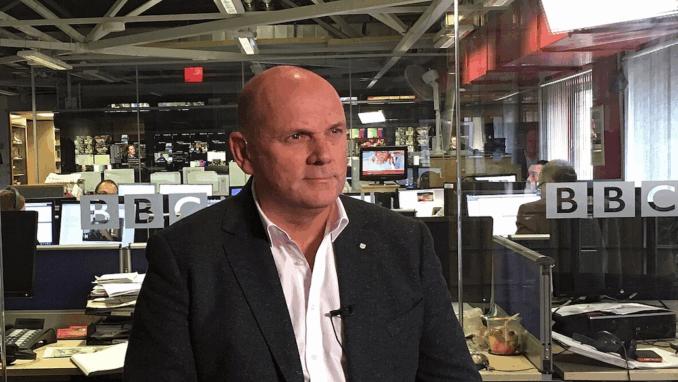
Jim Gamble being interviewed at the BBC,
Hannahpaul42 – Licence CC BY-SA 4.0
In the intervening decade and a half, Gamble became a member of the Labour Party and even spoke at a fringe meeting at the party’s annual conference in Brighton. During the Corbyn leadership election, he voted for Yvette Cooper. Fast forward just over a decade, and Yvette Cooper was the Home Secretary at the time of the announcement the new inquiry.
Given the sclerotic pace against Muslim rape pre-2010, a police service that failed victims and his closeness to the Labour Party, this observer considers Gamble would have been an unwise choice. Not that it matters, by Wednesday of last week, mainstream media was reporting him excusing himself from the role, citing ‘point scoring’ and a ‘highly charged and toxic environment’. On the same day, a fourth survivor, Jessica left the panel, followed by Carly 24 hours later.
The toxic influnece of NWG
A much lower mainstream media profile has been given to the survivors panel the girls have been resigning from. It’s hosted by the National Working Group (NWG), an independent charity dependent on government grants. According to its own publicity,
‘NWG is a charitable organisation formed as a UK network of over 14,500 practitioners who disseminate our information down through their services, to professionals working on the issue of child exploitation (CE) and trafficking within the UK.’
Furthermore,
‘Our network covers voluntary and statutory services and private companies working in this field. We offer support, guidance and raise the profile, provide updates, training, share national developments, influence the development of national and local policy informed by practice.’
In other words, a kind of government sanctioned and funded Common Purpose Thought Police trying to frame or dilute Muslim rape to a profile more convenient for the Starmer administration. Rather than mention victims and perpetrators, the emphasis is on process and strategy:
‘Our team brings extensive expertise in reviewing governance, structures, and frontline practice to support both single agencies and multi-agency partnerships. We deliver strategic insight and independent scrutiny through commissioned reviews and case audits that lead to smarter, more cohesive delivery across your services.’
The panel was supposed to give victims a central role in the inquiry, including helping to set its parameters. But pressure was placed upon panellists to move the focus away from the Asian and Muslim aspects of their victimhood.
NWG is chaired by Sheila Taylor MBE, who has been with the organisation since 2011. Before then she was at Safe And Sound Derby for six years. Looking through the biographies of other key people, they consist of low-level administrators and long-serving desk types from the police force, social services and local government. Those being the very people who have let down the victims of Muslim gang rape for many decades.
Now without a chair and with half the advisory panel resigned, it is difficult to be optimistic about the clumsy and misleadingly titled ‘ National inquiry into group-based child sexual exploitation and abuse’. This now looks like an establishment attempt to dilute the seriousness of the matter and kick racial and religious factors well down the street.
Puffins are reminded to Baroness Jay’s never-ending enquiry, which, the chair complains (to a silent elite), has thus far made 20 recommendations, only two of which have been implemented. To speed the process and avoid duplication of effort, this author suggests a judicial-led investigation, chaired by an overseas judge, focusing upon the unspeakable connection between grooming gangs, serving police officers and senior local Labour Party members.
I don’t hold out much hope.
Decades ago
Jim Gamble’s COEPS was set up in 2006 when Jack Straw was Home Secretary. It was Straw who waited until there was no political consequence to himself, having already decided to stand down at the election in 2015, to speak out on the issue. The MP for Muslim-dominated Blackburn, the town now has an ‘independent’ Islamist Member of Parliament called Adnan Hussain. Even then, Straw couched his comments on mass Asian rape in his constituency in terms of teenagers ‘fizzing and popping with testosterone.’
As for the success in keeping Derby safe and sound, it was following a court case there during Ms Tailor’s watch in 2011 that Mr Straw commented. Teens Mohammed Liaqat, 28, and Abid Saddique, 27, were jailed for the rape and sexual abuse of several girls in Derby aged between 12 and 18. As Jack Straw spoke out, so did Ann Cryer, a former Labour MP for Keighley. According to a BBC report at the time of the convictions, Cryer had been aware of the problem in her constituency since 2003 after being approached by several mothers of daughters being groomed for sex by Pakistanis.
Rather than go to the police, Cryer said she, ‘tried to intercede with the community by asking a councillor to speak to Muslim elders, but they said it was not their affair.’ Again, according to Mrs Cryer, ‘Instead of drawing it to a conclusion then, it’s drifted on, so it seems now every year we’re getting more cases of very young, sometimes 12-year-old girls being abused by these gangs of men. I wish it would stop, I wish it would go away.’
After another two decades of drift, not much has changed. As further evidence of an establishment clique in London determined to dilute, distract and kick the issue down the road, Ann ‘wish it would go away’ Cryer, is Chancellor of the Exchequer Rachael Reeves’ mother-in-law.
© Always Worth Saying 2025