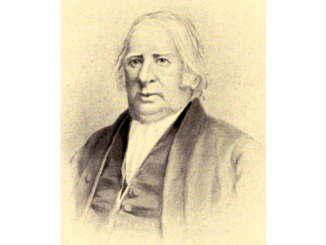
In 1826 a Stockton chemist scraped a dirty stirring stick across a rough hearth and invented the friction match. He sold fire by the tin for a shilling, refused to patent the idea and told the world to help itself. Which it did.
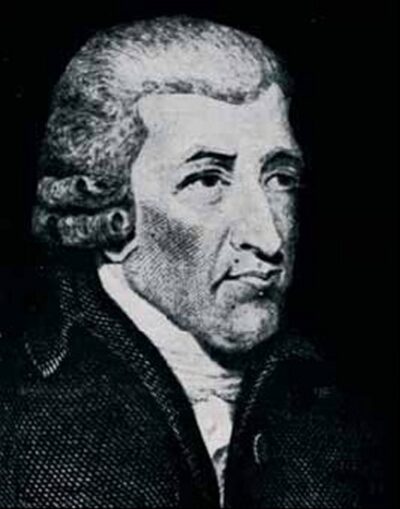
http://www.muzeum2.filumenista.pl/?nr=14&str=20, Public domain, via Wikimedia Commons
The Stockton Encyclopedia
Walker was born on 29 May 1781 at 104 High Street, Stockton, the son of a grocer and wine merchant. At fifteen he was apprenticed to Watson Alcock, the principal surgeon in the town, but he could not stomach the surgery of the 1790s, which meant fast, brutal operations on fully conscious patients. He walked away from medicine, retrained with wholesale druggists in Durham and York, and in 1819, aged thirty-eight, opened his own “chymist and druggist” shop at 59 High Street, almost opposite the shop where he had been born.
Behind his own counter he became one of those small-town polymaths the old market towns used to produce by the dozen. People called him the Stockton Encyclopedia. He knew the local botany, minerals and history, and would talk about any of it to anyone who wandered in for a tincture.
The accident at the hearth
Seven years later in 1826, whilst trying to formulate a better percussion cap* for the gun trade, Walker was stirring a pot of firing compound with a wooden splint. A blob of the paste had dried hard on the end, and he scraped it off against the rough stone of the hearth.
The stick caught fire.
He had stumbled into fire on demand, a dream that many across Europe had been chasing for decades. However, he did not run into the street shouting about it. He went back to the bench, began coating splints on purpose, and turned a piece of luck into something he could sell over the counter.
(* A percussion cap is the ignition device that replaced the flintlock on guns, invented around 1820 and in wide use by the time Walker was mixing his compounds.)
What he actually created
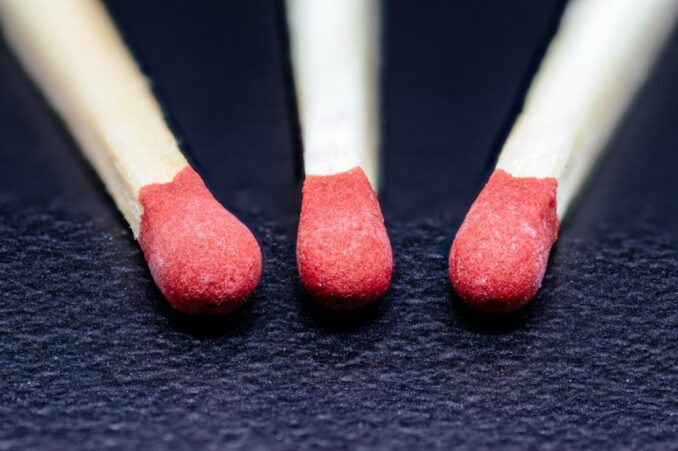
Walker had tipped his splints with a paste of antimony sulphide and potassium chlorate, bound with gum arabic, over a first coat of sulphur so the flame would travel down from the head into the wood. Each tin held three-inch splints and a folded strip of sandpaper: pinch the head inside the fold, pull, and you had fire in your hand in a second. Before that, raising a flame meant flint, steel, tinder and a good deal of patience.
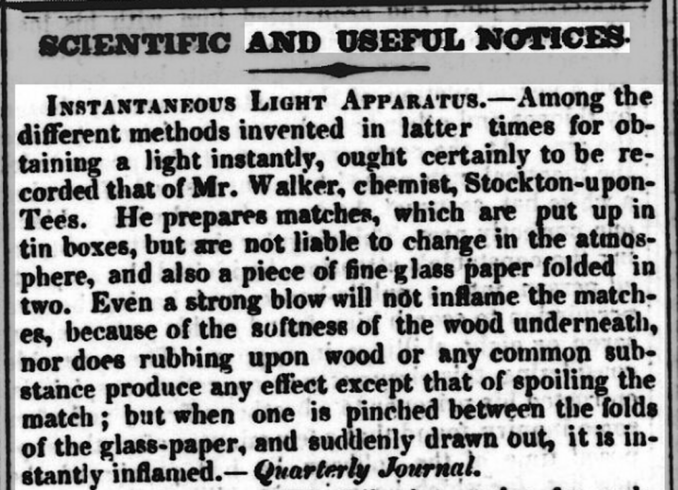
See page for author, Public domain, via Wikimedia Commons
He entered the first sale in his ledger under the gloriously over-engineered name Sulphurata Hyperoxygenata Frict., which his customers mercifully shortened to friction lights. They contained no white phosphorus, which was the stuff that gave match factory workers the horror known as phossy jaw. Walker’s matches spat sparks, but they never poisoned anyone for a living.
The ledger survives, so the whole thing can be dated. Entry number 30, dated 7 April 1827: one hundred friction lights for a shilling, plus twopence for the tin, sold to a Stockton solicitor named Mr Hixon. By October 1829 the book showed some 250 sales, and the early customers included the Stockton and Darlington Railway, which had more use than most for a reliable flame.
[Editorial note – I lied to you when I said I was done with the railway series]
“Let them have it”
Walker’s friction lights worked, and word travelled faster than Stephenson’s Rocket [I promise to stop with the railway references now]. Michael Faraday, no less, publicised them in his London lectures, and he and others reportedly pressed Walker to take out a patent.
He would not do it. His answer has come down to us almost word for word: “I doubt not it will be a benefit to the public, so let them have it.”
He had invented something every household on earth would one day want, and decided it was too useful to belong to any one person. You can call that naive. You can also call it one of the more decent things anyone has done with a fortune they chose not to make.
The men who cashed in
The market did not share Walker’s scruples.
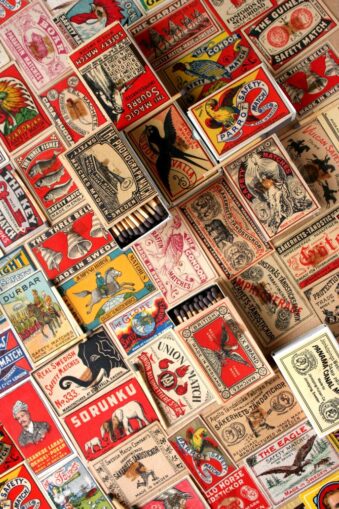
In 1829 a London man named Samuel Jones began selling his own near-identical version under the brand Lucifers. The name stuck so hard that people were still calling matches lucifers generations later. Jones built a business out of it. Walker built nothing, having given the idea away for free.
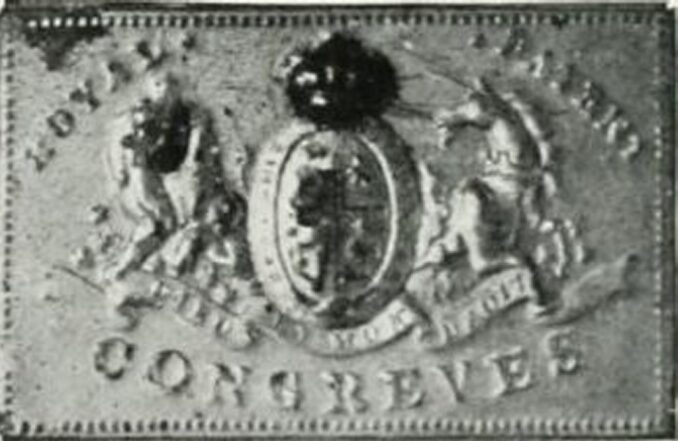
Anonymous, Public domain, via Wikimedia Commons
In 1830 a French chemistry student named Charles Sauria swapped the antimony sulphide for white phosphorus, which struck quieter and cleaner, whilst slowly destroying the jaws of the people who made it. Others piled in, drove the price down and turned a back-room curiosity into a global industry. By the early 1830s Walker had stopped making matches, and a Yorkshireman named Isaac Holden was claiming he had got there first.
Takkk, CC BY-SA 3.0, via Wikimedia Commons
The long forgetting
Walker sold the business in 1858 and died on 1 May 1859, aged 77. He was buried at St Mary’s in nearby Norton. By then matches were everywhere, a global trade worth a fortune, and almost nobody connected them with a chemist from Stockton.
Subhrajyoti07, CC BY-SA 4.0, via Wikimedia Commons
It took decades to dig him back out from obscurity. A Stockton researcher named Joseph Parrott spent the 1890s lecturing on Walker and campaigning for a monument. The town got round to a statue in 1977, a mere hundred and fifty years after that first shilling changed hands. His ledger and some of his original friction lights are now at Preston Park Museum, which also has a replica of his shop.
[Editorial Note: there is, fittingly for a man this overlooked, no verified image of him. Two photographs said to show John Walker survive, and they are quite obviously two different people. The portrait at the top of this article is the one everybody uses, so I just went with that one….]
So, to conclude, a man invents something the entire planet ends up using, refuses to profit from it on principle, gets outsold by sharper operators, and is then nearly forgotten by the town that should have spent two centuries shouting about him.
Next time you strike a match, spare a thought for the chemist who worked out how to put fire in your pocket and charged the world nothing for it.
The match caught on. His name did not.
© Paranoid Android 2026