
After leaving the Manouche, I stayed in London for about a year, putting some money together, and surprised myself by getting married to a Colombian lady. While in London, Beudjeu and I still wrote to each other every two or three months (he was one of the few Manouche who could read and write), simple letters to say ‘we are well,’ and ‘how is everyone?’ Our first son was born before that year was out, and we went to live in South America, and our second son was born in Bogotá a couple of years after the firstborn. Then we moved to Switzerland. Then Germany. Then the Gulf. And finally, Nigeria.
Before leaving Switzerland after the company I was working for went bankrupt, we decided to pay the Manouche a visit, but it wasn’t a particularly happy one. Chocote had banished Beudjeu and his family for six months to a field some ten miles from Marseille after he had confessed to having an affair. Beudjeu didn’t argue about his punishment; he’d brought shame on his father and family. After spending one night with Chocote in his house, we went to find Beudjeu and Pesi, and stayed a couple of nights in the field, sleeping crammed up in the back of our Renault Espace – all four of us. Beudjeu was downcast.
“I was stupid,” he said, shaking his head and scuffing at the ground. “Who will look up to me now?”
“Time heals everything,” I told him. “And I have an idea: let us take Monique on a small holiday so you can spend time with Pesi on your own.”
“A holiday?” he said, looking at me questioningly. The Manouche weren’t really familiar with the idea of holidays.
“Yes, we can go to the Camargue and rent a boat for a week. I don’t have any work so there’s no rush for us. And we’ll look after her. It’ll be an experience.”
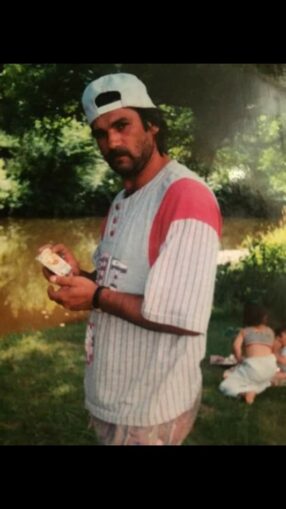
Monique was beside herself with excitement, and the next day she wore her best clothes, a blue denim smock with a red pullover, and packed a small bag, and we set off. We spent the following week drifting lazily across the waters of the Camargue, and stopped for two nights in the lovely town of Arles where we wandered the streets, young Monique agog, staring in the shop windows. Twice we ate in a restaurant, steaks for the children, moules frites for myself and the missus.
On other evenings we simply pulled in and moored by canal banks and cooked ourselves a simple meal. It was beautiful countryside, a wetland paradise full of pink flamingos and wild white horses, and our sons accepted Monique easily in the way that children do. On a boat everyone has to pull their weight; maybe that’s what makes it so relaxing, the constant activity as we passed through locks juxtaposed with the complete peace of the surroundings.
“We ate in a restaurant!” Monique announced breathlessly when we returned to the field outside of Marseille a week later.
“You did?”
“Yes, there was a tablecloth and real napkins and we used knives and forks.”
“And what did you eat there?” Beaujeu asked, laughing, but Pesi looked a bit doubtful. The Manouche never at in restaurants.
“Steak frites of course, and then ice cream, two helpings; it was delicious!”
While we’d been away, Beudjeu had been to see Chocote and begged him to let them return to Mirabeau, and his father had finally relented, saying he could come back in another week.
“You’ll behave yourself this time” I asked
“Of course; he won’t give me another chance if I mess up again. He’s a softie at heart, but he can be tough when he needs to be.”
Being the son of the head of the kumpania meant that Beudjeu was under especially scrutiny.
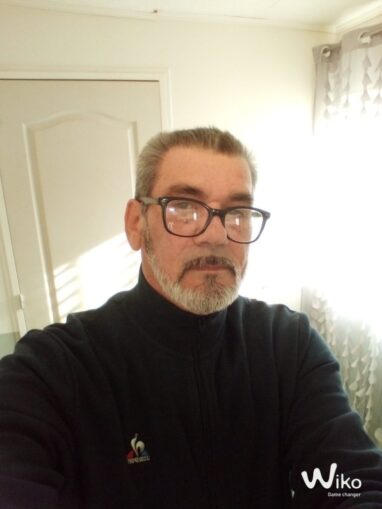
We stayed another night with them in the field. It felt very alone under the stars, a small fire burning the only light visible, and I could see that Pesi still hadn’t quite forgiven Beudjeu. The following morning, we rose early and, after coffee and more tearful farewells, headed north back towards England again.
Miraculously, I picked up another job in Switzerland, this time in Lugano in the Italian-speaking south of the country, and again it allowed me to pay regular visits to the Manouche. Although the welcomes were as warm as ever, there was a deep sadness about the little rows of houses by then. Chocote and Oumlo were growing old, and Paquili and the others weren’t happy with the enforced sedentary life. “we’re just second-class citizens,” Beudjeu shrugged. “We’re still Manouche, but we don’t really travel anymore; there’s nowhere to go and no work except the dumps.
I also felt more of an outsider; I was clean-shaven and wore clean clothes and had a nice car, and I felt they could sense that I was no longer really a traveller and had embraced the gadjo way of life. But on the plus side young Monique was growing fast and was healthy and full of life, and I was still her kirvo, and always brought plenty of food and wine for the kumpania when I went down. Koki and Pantoon still brought out their guitars, and, as always, we sat out long into the night around braziers (open fires were forbidden on the housing estate) listening to music and reminiscing about the old days.
It wasn’t long before the Lugano job also came to an end, and we again moved back to London, then to Frankfurt, back to London again, until I was made redundant – I’ve no idea why, but looking back it seems to have been the beginnings of DEI, given that I was replaced by a Sri Lankan woman with very little experience. But Lady Luck was smiling down because out of nowhere I landed a dream job in the Gulf, big salary, free house, free car, and no tax. It lasted just over five years, but just when I thought it was all over another lucrative offer came along – this time in Nigeria. I spent the next five years in Lagos, though this time the family didn’t come with me – the boys were grown up and had jobs and the missus preferred to stay near them in London, while I flew back every month as part of my package. Until there came a day when I’d just had enough, and decided to pack it all in.
Retirement is something many people dream of, but after so many years working I found it difficult to adapt without any structure to my days. For a year I did nothing except read incessantly, play the occasional game of golf, go to the gym, drink too much, and get depressed. During one of those interminably dark London winter days when the sky seems about two inches above your head and the rain looks like it will never stop, I decided to finally try to sort through the thousands of photographs we’d amassed over the years, and it wasn’t long before I stumbled across my old pictures of the Manouche. It had now been a full twenty-seven years since I’d last seen them, but looking at those old photographs I realised I’d rarely been happier than during my days with them. I wondered what had happened to them all – when we’d been together there had been no internet, no mobile phones, they hadn’t even had landlines in those little houses. An idea began to form in my head – I knew I had to go back to Marseille and try to track down the Manouche again. At least Marseille in the winter seemed the obvious place to start – if I left it until summer, they could be out on the road and impossible to find.
I didn’t have a van anymore, but I did have a beautiful old black and pearl-white Triumph Bonneville T100 motorbike sitting in the garage, the last twin-carb model they made before introducing fuel injection technology. With its pea shooter exhausts, it sounded like a real motorbike from the sixties, but without the ubiquitous oil leaks of Triumphs from that era. I’d barely used it for more than two years, mainly because we’d acquired a small dog and I couldn’t train him to sit on the bike.
The Triumph was given a full service, had the tank flushed of gunk, cleaned the carburettors and was ready to go. I finally set off on 27th February 2019, after a week of unseasonably warm weather – but then the Gods love to laugh at us and perhaps I should have known better. Sure enough, I was the only biker on the Dover to Calais ferry. “How come?” I asked one of the deckhands who was helping me lash the bike securely in place. “Because you’re the only one stupid enough to go biking at this time of the year!” he laughed. Prophetic words.
The first drops of rain were falling as I rode off the ferry in Calais, and within a hundred miles it was lashing down and I was soon soaked to the skin and being buffeted by huge trucks from Lithuanian, Poland, the Netherlands and Romania. Every time I passed one the wind was snatched away and I swayed across my lane and felt vulnerable.
Northern France is a bleak and dreary landscape with few trees to break the wind. I passed signposts announcing Picardy, the Marne, Verdun, the Ardennes, names that evoked battlefields from Agincourt to the World Wars, and I thought if those poor young soldiers could survive the mud and gore of those places, then my lot wasn’t so bad in comparison, and I kept going, hoping to reach Lyon on the first day. The Triumph also needed regular fuel stops, it had a fairly small tank and no fuel indicator, it’s maximum reach on a full tank was about 120 or 130 miles, but I always stopped well in advance of that to top up.
Then at one stop for petrol, when I went to restart the bike, the alarm went off and wouldn’t stop, I couldn’t turn it off with the key fob as usual, which meant I couldn’t start the engine either, everything was interlinked. An attendant emerged from the petrol station’s shop and told me the nearby telephone mast was interfering with the alarm system. “Happens all the time,” he said. “Especially with Harleys.” He helped me push the bike a couple of hundred yards behind some trees which he said would block the telephone mast’s signals, and sure enough the bike fired up again.
The same thing happened at the next stop and I called roadside assistance – fortunately I was covered by insurance. The rescue truck took me to a garage a couple of miles off the motorway, where the head mechanic fiddled around and said ‘ooh la-la’ a few times, and the bike started again. “I know what it is,” said the mechanic. “Don’t tell me; it’s the phone masts?” “Ah oui, c’est ça, exactement! It happens a lot, especially to Harleys, but it’s the first time I’ve seen it with a Triumph.” I was starting to hate France this time.
I finally pulled off the road in the dark on the northern outskirts of Lyon. I’d had enough of riding in the wet and a sign from a cheap motel was winking at me. I slept the sleep of the dead, aided by a pizza and a bottle of red wine, and the next day set off again boosted by a couple of double espressos, and mercifully the rain began to ease and then cleared altogether as I left the city. Marseille was now just a couple of hundred miles away, and I stayed off the motorways with their phone masts, motoring past Valence, then Orange and finally Avignon. It was still early afternoon so I decided to push on for the last sixty-odd miles to Marseille. At last, I crested a rise and saw the city sprawled out below and descended past bleak housing estates covered in graffiti, until I reached the centre.
I knew I had to head to the docks, so followed the coast road until I saw a sign for L’Estaque, which vaguely rang a bell. But I could see no sign of the rows of little houses that the Manouche had been put in. I stopped at a petrol station and asked about the Manouche. “Yes, there are still Gypsies near here, you’ve gone past them, the attendant told me. “Go back and at the third roundabout turn left and come back and, and you’ll see them on the right-hand side.
On the first pass I missed them again and was soon back at the petrol station, so I tried once more. The giveaway was a wrecked white Renault van by the roadside; next to it I realised there was a narrow entrance to the few remaining resettlement houses, along with a variety of vans and caravans. The place was hardly recognisable, the red houses that had once stood in neat rows were now bleached white and crumbling, and I rode in cautiously and stopped by a group of men drinking beer. “Are you Manouche?” I asked.
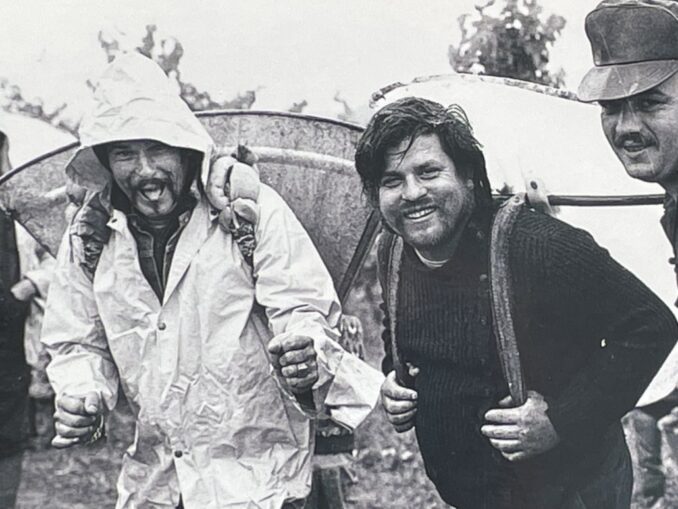
“We are, what do you want?” one of them replied. They were all red-eyed but didn’t seem aggressive, just puzzled. I told them I used to live there and showed them photos of Chocote and Oumlo, Beudjeu, Blon, Paquili, Koki and Pantoon. “Pantoon is here! Up the hill,” the same man said. “But the others are all gone.”
That didn’t sound great, but Pantoon would be a start, and they gave me directions to another resettlement estate about a mile away. This time I stopped by a group of youths, several of them on mopeds, and the smell of marijuana was noticeable. Again, I produced the photographs which were passed around excitedly, and a young girl reached over to cut my engine. I wasn’t feeling so confident or comfortable anymore, until an old lady drew close. “Chocote was my relative,” she said. “I remember you.”
“And Memé was my grandfather,” said a youth in dark glasses astride a moped, who said his name was ‘Josef.’ He offered to show me the way to Pantoon’s caravan, a battered old thing with flat tyres and windows held together with sticking tape and with loud music playing inside. Josef banged on the door and the music was cut, and a small sunburned man with a bald pate came outside. Gone were the long black locks and cheeky grin of the Pantoon of the past, but he was instantly recognisable by his stance.
“You don’t remember me, do you?” I asked.
“No, who are you?”
“Nadjo, I used to live with Chocote and Oumlo and we worked the vendanges together.” (‘Nadjo’ is not my real name obvs, but it’s what they used to call me).
“Nadjo? Is it really you? Yes, it is, I can see that now, I remember, we still talk about you!” And he came forwards and embraced me, kissing both cheeks.
We shared some saucission and red wine as we talked about the past, and I asked him about the others. Chocote, Oumo and Mochi had all passed away, as had young Pepite who was taken by cancer. But the others, Beudjeu, Blon, Niglo, Koki and Paquili had all moved close to Limoges, a good 400 miles away. Ghuno was also with them, I guessed she must have been almost eighty years old already. “We can call them,” Pantoon said, producing a mobile phone. The call went to voicemail, but half an hour later Beudjeu called back, almost too excited to speak. “It’s really you?” he asked. “You have to come and see us, we’re near Limoges, we have a house here, it’s much better than Marseille, everyone will be waiting for you!” I told him that I was exhausted and with the foul weather it was a step too far this time, but promised to come to him soon – but this time with my car.
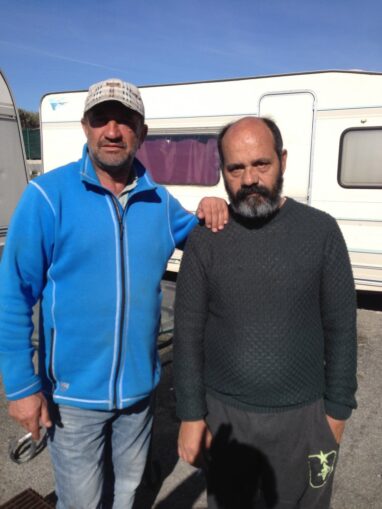
I stayed another night in Marseille, then rode back to Calais. The second day again brought torrential rain, and again the bike was playing up every time I stopped at a motorway service station, until I just left the engine idling while filling up. But when I reached the ferry terminal in the early evening and cut the engine, it wouldn’t restart – and I couldn’t see any masts. A tramp came up and asked for a cigarette, and I gave him the rest of my sodden packet of tobacco. “What’s the problem,” he asked, and I told him. “Give me your keys,” he said. “Have you got a screwdriver or something?” I handed one over and he quickly took the fob apart, then held a lighter under the batteries for a few minutes. All of a sudden, the fob sprang back into life, and he reassembled it and handed the keys back to me. “There was water inside,” he told me with a shrug. “Fuck!” I exclaimed. All that gibberish about phone masts had been just that. Gibberish. Thanks to the tramp I just made the last ferry out.
Two weeks later, I set off again, this time in the car. Beudjeu had been barraging me with messages urging me to visit and see my kirvo Monique, who was now married with three children of her own. They were living close to Le Dorat, our old stamping ground. I took the ferry from Newhaven to Dieppe, a longer crossing but one which would save me a lot of driving in France, and in the afternoon of the second day met Beudjeu in the municipal car park of a town called Belloc, about thirty or forty miles north of Limoges. We embraced and kissed each other’s cheeks, and then just stared at each other. With his grey beard, paunch and owl-like glasses he looked nothing like the lean Beudjeu of old, even if he still had a full head of hair, but then I guess none of us looked like we used to. Once we’d got over the reunion, I followed him down winding lanes through woods until we reached a smallholding with a bungalow and a couple of caravans in the yard, one of which was for me.
As soon as I’d unpacked, Beudjeu said we had to go and see Blon and Niglo who lived not far away, but before we left, he gave me a knife with a bone handle engraved with a motif of a hedgehog and a horse-drawn varda, or caravan. “That’s so you can eat,” he said with a smile.
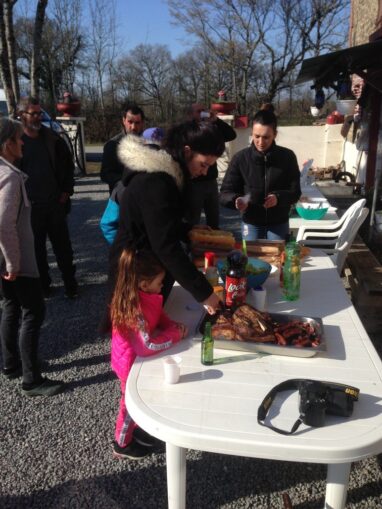
We drove off but after a couple of miles stopped when Beudjeu saw Niglo’s car outside of a house. A large group of Manouche were there cooking over a huge fire; Niglo and Blon were there, along with Nanoon, Ringo and Jean-Luis who had been children the last time I had been with them, but they remembered me, and again we embraced and laughed and the years disappeared.
They tested me on my Manouche. “Say ‘wine’” Niglo grinned at me.
“Mol,” I said.
“Look!”
“Dik!
“Drink.”
“Pi.”
“Hand.”
“Maast.”
“Bravo! You are still Manouche.” Blon clapped me on the back.
We stayed for a couple of hours, sawing off pieces of meat with our knives and drinking red wine. When we got back to Beudjeu’s house, his new wife Zaza (Pesi had left him some years before) had put an electric fire in the caravan which had been prepared for me, and clean sheets on the bed. It was snug and warm, and I listened to the patter of rain on the roof and the cries of foxes and hoots of owls and felt completely at peace with the world before falling into a deep sleep full of lurid dreams.
The next day we went to pick up Blon and Niglo from their houses just outside of Le Dorat. The wily old fox Chocote had bought two old farmhouses and a couple of acres of land with money he had saved up, and the two brothers had a house each, while half a dozen caravans with extended family dotted the field around. Forty minutes later we pulled up outside a house in the middle of nowhere, where Monique was waiting for us with her husband Mamay. We embraced, and I gave her a necklace with a small figure of Saint Sara that I had brought with me. “Ive been looking for you on the internet,” she told me. “But you don’t even know how to spell my name!” I answered, and she giggled and told me how she still remembered our boating holiday in the Camargue.
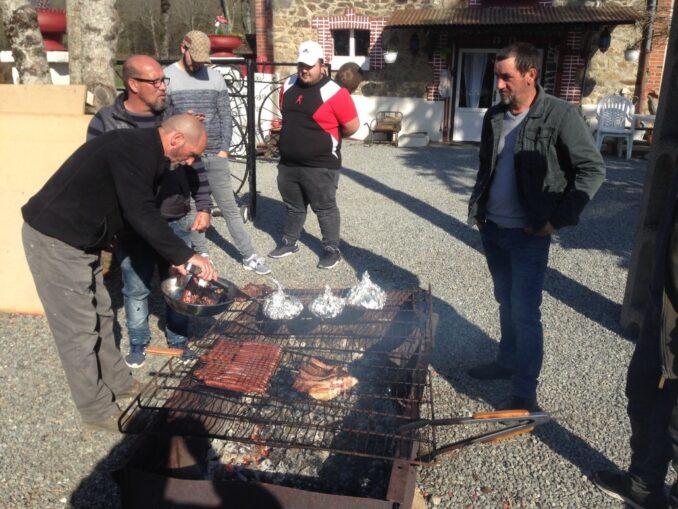
Paquili arrived and we had lunch – some things hadn’t changed, with the men eating first, and the women and children waiting their turn when we had finished. But their culture was being gradually eroded; televisions were on all day dripping their poison, few of the children spoke Manouche any more even if they still seemed to understand it
We went to find Ghuno who had her caravan on a small patch of land surrounded by woods. There were two other families in caravans there, without running water or toilets. They were living as they always had.
“I knew you would be back,” Ghuno said with a smile when she saw me and held my hands. “At the end of last year, I saw a white butterfly, and I thought of you.” Which was just insane, because that was about the time I had first mooted the idea of finding my Manouche family again.
“What’s this with white butterflies?” Beudjeu asked.
“They bring good news,” Ghuno told him. “If a white butterfly comes to you, then you can be sure it is bringing good news.” And I remembered her saying the same many years before.
Ghuno told me that she rarely travelled anymore, but did go to Lourdes once a year, because she found it peaceful. We left after an hour or so, and after final embraces Ghuno simply wandered off to her washing lines behind the caravan without a backwards glance. I wondered if I’d ever see her again.
We returned Blon and Niglo to their houses, where Niglo showed me his collection of fighting cocks, which was a sideline of his. His best two were English cocks, he said. “Isn’t it illegal?” I asked, and he just shrugged.
I stayed for a week before retracing my way back to Dieppe and Newhaven. “I feel you like a brother,” Beudjeu said as I got ready to leave. “You will come back, won’t you?” I assured him I would, and I did go back, several times, now we all had mobile phones it was easy to stay in contact. I left that first time happy in the knowledge that not only had I found my old friends, but also that they were well, as close-knit as ever, living in such beautiful surroundings, with their culture still more of less intact for the time being. They were now living within society rather than ostracised and at the bottom of the pile, but still outside of it, a kind of parallel existence. They no longer had to travel from nowhere to nowhere, they had found their place, somewhere to belong, and in a way I was envious. I live in a country I no longer recognise, my children live on the other side of the world, and I still struggle to identify with anywhere and still feel rootless. In that sense I suspect my Manouche family are richer than many of us.
© text & images Porkpie 2026


