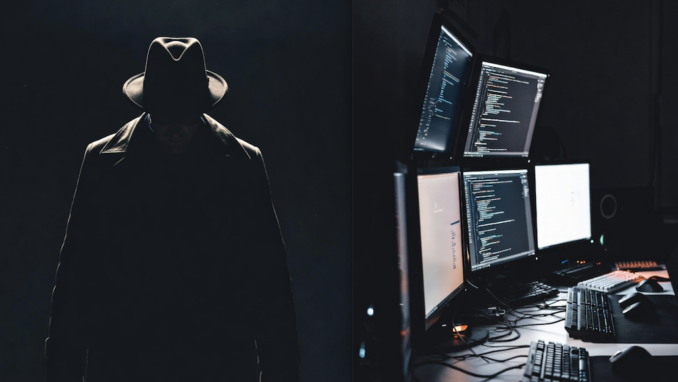
Image generated using GROK AI
An alignment of Le Carrés occurred over Christmas. A new series of The Night Manager dropped on BBC 1 and iPlayer alongside a repeat of the Corporation’s 1979 adaptation of Tinker Tailor Soldier Spy, also on iPlayer and weekly on BBC4. Filmed almost half a century ago, Tinker Tailor originated from John Le Carré’s 1974 book of the same name. The current Night Manager is a sequel to the 2015 TV series, a loose adaptation of the espionage novelist’s 1993 work.
Having died five years ago, this series is written by David Farr, who adapted the previous Night Manager for television. Both contrasting storylines and backgrounds catch the eye.Tinker Tailor takes place in the London of the Circus, Cambridge Circus, Le Carré’s home for MI6, the Secret Intelligence Service. Dilapidated cage lifts clank between floors. Lino squeaks. Beyond the sash windows of cramped meeting rooms lie deserted streets.
Scene one contains a single line of dialogue. Four middle-aged, white male spies arrive in turn and take their places at the high table. There are waistcoats and a pink shirt. Folders are carried. A fob watch is checked. There is a burning cigarette and a smoker’s cough. Michael Aldridge as Percy Alleline delivers the three-minute-long introduction’s only line, ‘Right, we shall start?’ Cue the opening titles; Russia dolls being removed from each other, with the final having – as a representation of a Soviet double agent or ‘mole’ at the heart of British intelligence – no face. Super stuff or, as the critics at the time noted, television caviar.
In pursuit of a potential defector (or stumbling into a trap set by the mole), the action moves to Eastern Europe. During filming, Glasgow stood in for Czechoslovakia’s Cold War Brno. Locations in Govan and the city centre streets of Sauchiehall Street, Hope Street, and the underground arcade at Watt Bros captured the grim, industrial atmosphere both of late 1970s Britain and of the bleak Eastern Bloc.
Not so, Night Manager Two. As the action begins, London is a Mayfair hotel hosting a high-stakes card game in a private room full of foreigners. Main character Jonathan Pine, the eponymous Swiss hotel night manager (who sneaked on arms-dealing rotter Richard Roper in Night Manager One), is now part of the Night Owls operation.
This keeps an eye on the comings and goings at the capital’s hotels, albeit via CCTV and hidden microphones rather than by climbing up the outside of the Hilton with a notebook and pen between one’s teeth.
Screens, keyboards and comms predominate, as do multi-ethnic colleagues; a black one, a brown one, a white girl half heartedly trying to act working class. For Cambridge Circus, read The River House, the real-life Thames-side post-modern Lego ziggurat which is the current home of MI6. But herein a problem emerges – an overemphasis on the structure of the organisation and its internal wranglings. Besides Tinker Tailor or Night Manager Two, we might also be watching Slow Horses with its Slough House outcasts in conflict with their own side at The Park. Likewise, the endless unctuous euphemisms for different departments: dogs, scalp hunters, lamplighters. Is this crisp storytelling, or lazy, albeit sophisticated, secret world cliché?
What we can say with certainty is that between Le Carré’s early work and this present extension of his franchise, the intensity of reported inner turmoil is deeper. While searching for the mole, rough chain-smoking hard man Roy Bland laughs as he recalls two nervous breakdowns brought on by being stationed in the likes of Poznań and Kiev. Not to worry, back to the Circus, take a promotion, sit at the high table, do your duty, line your own pockets if you can. Mole hunter George Smiley’s wayward wife Anne brings a sigh and a grimace from Sir Alec Guinness as his character’s failures as a husband are used against him.
Decades later, Tom Hiddleston’s Pine sits in front of HR. Black and female, she is used to intelligence officers shouting, screaming and throwing things at her. She worries about Pine. He refuses promotion, never complains, doesn’t say anything, smiles and then, she confides, one day his type is expected to explode. All very dramatic. Smiley’s retired Scotland Yard inspector assistant, Mendel (George Sewell), on the other hand, in an off-the-cuff remark, recalls the tough are (less pyrotechnically) to be found crying at their desks when they’re 40.
Not content with a quick sob when thinking no one would be looking, Pine sinks into himself and wrestles with the demons left over from Night Manager One (as if every character in Apple TV’s Slow Horses). Spymaster Smiley remains stoic, both to his marital problems and the conundrum of Witchcraft. A body of Soviet intelligence being passed to the service by a too-good-to-be-true source called Merlin in return for crumbs, but crumbs that might be being used to secrete valuable UK intelligence by the mole.
The England thus betrayed is one where eccentrics and their dotty mothers run prep schools (to where Brno ambush victim Jim Prideaux retreats). Smiley can drive his Rover 2000 around London and always find somewhere to park, even in Brixton when visiting émigré and head of Lamplighters, Toby Esterhase (Bernard Hepton). Everyone is white. In conversation with Roy Bland (Terence Rigby), the view from Primrose Hill is devoid of skyscrapers. A Morgan can do a steady 70 on the M4.
And an England where middle-aged ladies retreat to academia after ‘losing their sense of proportion’ as a researcher in the secret world. Step forward Connie Sachs, played by the amazing Beryl Reed, who Smiley visits in her dingy Oxford ground-floor flat to jog some archive memories in the hunt for the mole. A grandmother clock ticks in the background. A student, a ‘dunderhead’, has his tutorial cut short. Le Carré and Connie use the opportunity to make a state of the nation address.
Halcyon days. Trained to empire. Trained to rule the waves. ‘Englishmen could be proud then, they could, George. All gone, all taken away. Bye-bye world. If it’s bad, George, don’t come back. Promise? I want to remember you just as you were, my lovely, lovely boys, promise?’ By which time Smiley is out of the room and the door is closed behind him.
In a similar theme, in an interview for the 40th anniversary of the first broadcast, Tinker Tailor’s director, John Irvin, told the Guardian his understanding of what the story required was filtered through values born of empire. ‘What we wanted to reveal dramatically was the complexity of the secret state. The contradictions, the betrayals of loyalty. The aspect that I latched on to, I think, the one I felt personally, was the idea of service. Christian service and service to country. How that sense of Christian service could be corrupted into the most mendacious and reckless behaviour was something I was preoccupied with throughout the telling of the story.’
Elsewhere, Smiley encounters Fleet Street soaks, is threatened with colonial plods and is irritated by a Foreign Office poseur over-excited by London club gossip. All gone? Judging by Night Manager Two, not quite. Hiddleston is an old Etonian. Holes in the plot are filled by outrageous bluffs only an Englishman of a certain social class might attempt. Early in the tale, and before a predictable and tacky thriller travelogue commences, a summer garden party celebrates a birthday at a minister’s Surrey country house. A busy wife called Celia uses the F word. Blacks set the tables. Out of earshot of the ladies, gentlemen say important things to each other beside the French windows of a burgundy-papered office.
Empire and Christian values may be out of fashion – at least within a media bubble – but an elite remains. An elite who, as both the plot and a particular type of globalism develop, can’t wait to fill our England with ethnics, then jet off to somewhere better, like Spain, or even Colombia.
© Always Worth Saying 2026