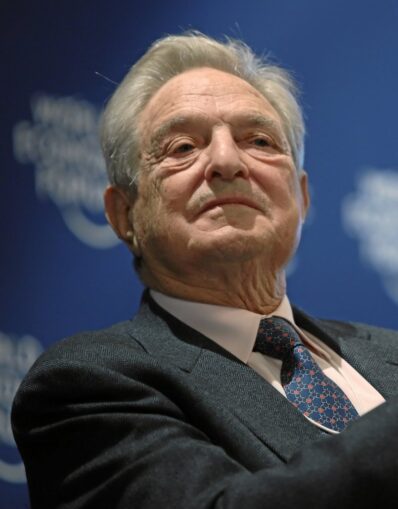
In 1988, George Soros deftly manoeuvered through the stock holdings of Société Générale, France’s banking titan, executing trades that yielded a modest $2.2 million profit. The transaction, unremarkable at the time, scarcely rippled the financial waters. Yet years later, it resurfaced with a vengeance when a French court convicted Soros of insider trading, alleging he had exploited confidential information to guide his moves—hardly the speculative gamble it appeared. His appeal, lodged with the European Court of Human Rights, was rebuffed in 2011, the court upholding the French verdict. This rare display of judicial resolve stood firm against the billionaire’s formidable shadow, underscoring a troubling truth: Soros, it seemed, harboured few qualms about leveraging privileged knowledge. The episode casts doubt on the pristine image he and his advocates project, prompting an inevitable question: was this merely the tip of a much larger iceberg?
Meanwhile, Stanley Druckenmiller’s tenure alongside Soros was no small feat. Operating in the orbit of a financial luminary was daunting, yet Soros soon lauded his protégé with unrestrained praise, eventually entrusting him with the fund’s helm. Druckenmiller’s performance, Soros declared, was nothing short of “fantastic.” Publicly, Soros reveled in the spotlight, courting attention that Druckenmiller shunned. Yet the younger man chafed under Soros’s watchful gaze, feeling stifled to the point of paralysis. A heated phone exchange laid bare his frustration, nearly sundering their partnership. Recognizing the need for change, Soros loosened his grip, granting Druckenmiller autonomy over the fund’s lion’s share. Industry observers often attribute the Quantum Fund’s triumphs to Druckenmiller’s acumen, suggesting Soros, enamoured of his own mystique, never corrected the public’s misattribution.
Druckenmiller, for his part, credited Soros’s terse yet incisive counsel, which proved pivotal in doubling the fund’s gains. Nowhere was this synergy more evident than on “Black Wednesday,” September 16, 1992—a day that cemented Soros’s legend. The target was the British pound, which Soros deemed grossly overvalued within the European Monetary System (EMS), a precursor to the euro. In a audacious speculative assault, among the most ferocious in decades, Soros orchestrated massive short sales. Over months, he borrowed $10 billion to bet against the pound, while Druckenmiller bought Deutsche Marks and sold sterling. The Bank of England, desperate to prop up its currency, raised interest rates from 10 to 12 percent to combat inflation—a move that tightened the screws on British homeowners, whose mortgages grew more burdensome, exacerbating an already deepening recession. Undeterred, the bank signaled a further rate hike. Soros and his cadre of speculators intensified their onslaught, unyielding in their resolve. In the end, Soros prevailed. The British Chancellor of the Exchequer announced the UK’s withdrawal from the EMS and a return to the original interest rate. The pound plummeted—falling 15 percent against the Deutsche Mark and 25 percent against the dollar in mere weeks. Soros’s gambit yielded a staggering $1 billion in profit, transforming 1992 into a banner year and elevating him to global infamy as “the man who broke the Bank of England.”
This triumph, however, was not without its shadows. The wreckage of Black Wednesday—unemployment, foreclosures, and economic turmoil—bore heavily on ordinary Britons, whose struggles stood in stark contrast to Soros’s windfall. His victory, a masterstroke of financial daring, underscored the ruthless calculus of speculation, where fortunes are forged at the expense of nations. In the annals of Soros’s career, Black Wednesday remains a defining chapter, a testament to his brilliance and a reminder of the human toll exacted by the games of the powerful.
To be continued
© DJM 2026