
When our neighbours travel, we look after the cat. Being a feline, at feeding time we go to it, not it to us. But upon their return, her owners come to us bearing a present. Very nice. This time, from the banks of Lac d’Annecy, a box of some of the world’s finest chocolates, accompanied not by a bottle of wine or a dead mouse but a tale of derring-do.
Hotel alarms ringing in the night. Corridors filling with smoke. No longer young, our neighbours struggled downstairs — and then back up again — having stumbled upon tear gas and riot police as the streets of provincial France descended into turmoil.
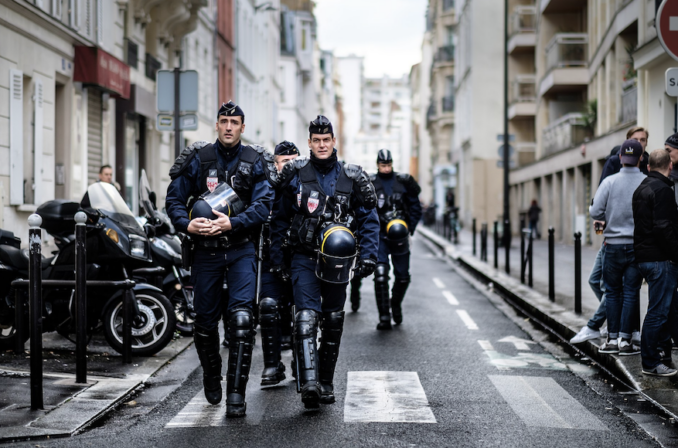
French Anti Riot Police,
Kristoffer Trolle – Licence CC BY-SA 2.0
For this humble chronicler of events, in his outer-suburban Debatable Lands pile, sits but one degree of separation from tragic events over there, handled so discreetly by the British mainstream media as to be almost censored.
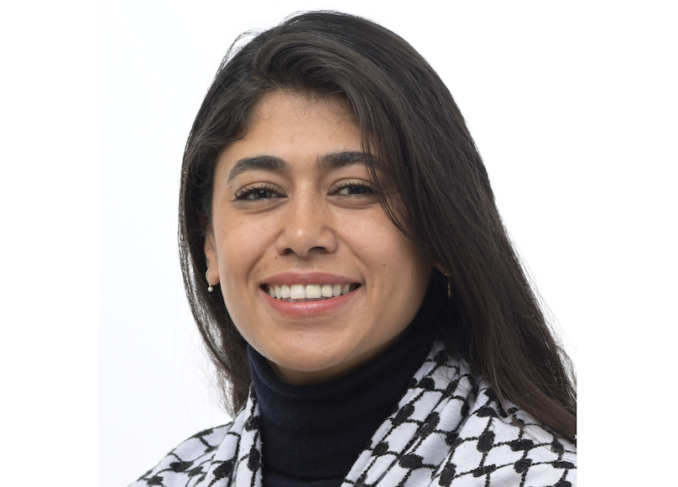
The previous Thursday, 12 February 2026, began like any other winter day in nearby Lyon — grey skies and brisk air. But there was something restless in the streets. Notices and counter-notices announced protests and counter-protests surrounding a lecture at the Sciences Po Lyon University to be delivered by Rima Hassan, a controversial Member of the European Parliament from the left-wing party La France Insoumise (LFI).
Not her real name, Rima Hassan Mobarak is a lawyer and politician, a French national but an ethnic Palestinian born in a Syrian refugee camp. The 33-year-old’s controversies include embarking, Greta Thunberg-style, on the Madleen, part of a pro-Palestinian ‘freedom flotilla’ which sailed from Catania, Italy, in an attempt to breach Israel’s naval blockade of the Gaza Strip. Additionally, she has described Hamas terrorism as a legitimate action against Israel and has disputed that the State of Israel has a right to self-defence.
As for the venue, Sciences Po Lyon is a selective public university, founded in 1948, which offers five-year multidisciplinary programmes, though not in the traditional sciences as understood on this side of the Channel, but in political science, law, economics, sociology, international relations, and public policy.
Regarded as a strong and competitive French political studies institute, the Sciences Po universities are ranked in the top five worldwide for politics and international studies subjects in global league tables. As such, they attract students who may well become future public and private sector leaders — thus providing an opportunity for controversial guest speakers to exert influence.
On the day, rival political groups gathered around the Hassan event. In the late afternoon, clashes broke out in the 7th arrondissement near Rue Victor Lagrange. During the confrontation, 23-year-old Quentin Deranque, who was said to be part of the security protecting Collectif Némésis (women who protest their rights being eroded by immigration and Islamism), became separated from others and was violently assaulted by a group of masked individuals. Witness videos later showed chaotic street fighting, with several people being struck while on the ground.
French MEPs official portraits,
European Union – Public domain
Emergency services transported Deranque to hospital with severe head injuries. Despite medical intervention, he died on 14 February 2026 from the trauma sustained during the beating. The case quickly became politically charged. National political figures across the spectrum condemned the violence, and the National Assembly observed a moment of silence.
In the aftermath, social media and online forums saw calls for reprisals, and the circulation of personal information about individuals suspected of involvement. Various local offices of LFI were vandalised in multiple French cities, including the one hosting our holidaying neighbours.
Who was Quentin Deranque? Photos released by his grieving family show a fresh-faced young man who was a mathematics student, church volunteer, and convert to Catholicism, originally from the idyllic riverside community of Saint-Cyr-sur-le-Rhône, south of Lyon.
As for the media reaction, French outlets immediately applied left- and right-wing and anti-fascist and fascist labels to the events and those involved, rather than framing the incident in terms of Islam and counter-Islam or, God forbid, describing it in racial terms such as North African or Middle Eastern versus European.
Over here, by comparison with the deaths of George Floyd or Stephen Lawrence, the reaction was muted. The Guardian managed fewer than 400 words and referred to the victim as a ‘far-right activist’. The Telegraph penned 900 (sensible) words, albeit five days after the killing and on the Opinion rather than the News pages.
In Italy, coverage was less restrained, with Prime Minister Mrs Meloni claiming Quentin’s death was ‘a wound for all of Europe’.
One suspects British outlets might limit reporting of the killing of Quentin Deranque out of concern that high-profile coverage of violence abroad could inflame tensions here. The United Kingdom has experienced periodic clashes linked to Islamism and immigration.
The neutral observer — suspicious of under-reporting — might conclude that editors are instructed to weigh content against the possibility of incited behaviour, protests, or online reaction. Might newsrooms moderate tone, imagery, and repetition in politically sensitive cases to avoid amplifying inconvenient truths?
Besides being known as a peaceful Alpine town and as the chocolate capital of the world, Puffins will also remember Annecy for a knife attack on 8 June 2023, when a man described as ‘Syrian with refugee status in Sweden’ attacked four children and two adults in a city park. Despite wearing a keffiyeh, being called Abdalmasih Hanoun, and being dressed all in black, the authorities publicly concluded there was no terrorist motive.
If such inventive labelling was meant to solve the problem of violent conflict caused by racial and religious tensions brought about by mass immigration, it has not – as evidenced by the tragic death of Quentin Deranque.
© Always Worth Saying 2026


.jpg)