
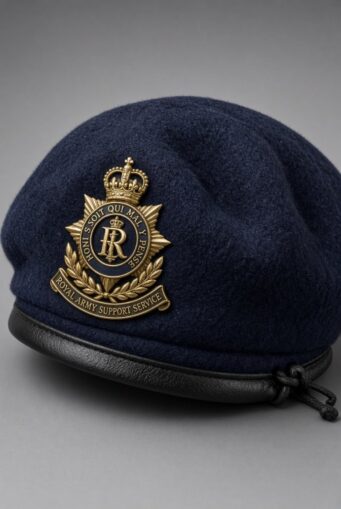
My name’s Wallace. Not the Wallace, a Wallace, or rather A. Wallace, Albert Wallace that is and…
Let me start over.
My name is Albert Wallace and I’m a driver for the RASS – the Royal Army Support Service, soldiers with ‘issues’, for the support of. Issues both physical and mental are catered for and, while Lord knows there’s no shortage of poor buggers with physical disabilities, I provide transport for officers visiting squaddies whose problems are on the mental side.
Having been in this gig a while now I’ve seen a multitude of officers attempt a myriad of approaches with wide-ranging degrees of success. Not for me to judge though. Is there a ‘correct’ approach for dealing with a private who jumps a foot when a car backfires, a lancejack who’s in tears for the duration of the visit or a corporal who welcomes you to his small flat through freshly-minted breath while desperately trying to hide the empties?
Don’t ask me, I just drive the car. I soon settled down into my routine which, though worthwhile, could also be a little humdrum. That is, until the day I was assigned to the new arrival, Captain Clive Mountfort.
He certainly stood out at the base, and not just for the red silk scarves that he favoured in an otherwise unbroken sea of khaki. While he was clearly public school (hardly unusual amongst the officers), it was more the relaxed self-assurance he radiated, a deep-rooted sense of confidence common to those of his presumably patrician background. An expectation that his orders would be obeyed and what he wished would come to pass with nothing so vulgar as a raised voice. Wagstaffe reckoned this was down to him being able to trace his lineage all the way back to Simon de Montfort. On the one hand, it wasn’t beyond the realm of possibility. On the other you needed to remember that Wagstaffe a. went to Leicester Poly and b. was full of shit.
Anyroad, while quite content to be his new chauffeur (as this meant I got to drive his vintage Rover, all leather seats and walnut panelling) I must admit to being just slightly concerned about how he would relate to his new charges.
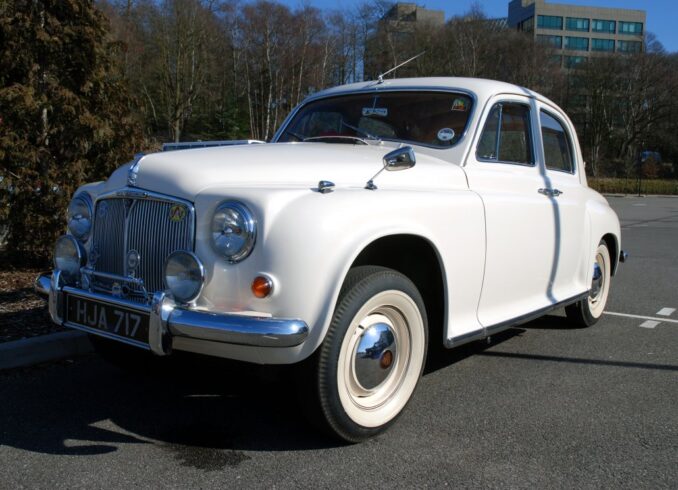
allen watkin from London, UK, CC BY-SA 2.0, via Wikimedia Commons
Not that I need have worried as he was a natural, offering a conspiratorial swig of his hip flask to the drinkers and endeavouring to engage the nervy in calm conversation. If they wouldn’t (or couldn’t) engage he’d start a discussion with me in the manner of the Test Match Special team filling in on a long rain break so that, even if they weren’t talking, they still felt included, still ‘one of the boys’ as they had been when they were serving.
Which made it all the more intriguing as to how he’d approach our first visit to Sergeant Stephen Skinner.
Skinner was the anomaly in the ranks of our wards. Didn’t drink, not nervy (or at least not obviously so). He’d been a good soldier, a very good soldier even, made Sergeant without breaking sweat as he built a reputation for efficiency and dependability. Then one day there’d been a mess-up, a snafu of some sort. He’d made a call and men had died. He didn’t do anything as dramatic as going AWOL, just retreated back to his flat and didn’t come out. These days you can live just fine without ever leaving the four walls of your dwelling. Asda delivered his groceries and his Peloton kept him fit. The Army and the medics teamed up to look after him, the former out of respect for what had hitherto been an exemplary military career, the latter out of their duty of care (plus the potential glory of ‘curing’ him). They agreed on some blurb to keep him on the books – ‘long-term medical leave’ or some such – and he was duly added to our rota.
And this was where the problem (challenge? No, definitely a problem) started for us RASS types. Skinner was bald, clean shaven and extremely fit. This, plus his well-defined bone structure, only served to accentuate the harshness of his appearance. Just as a Yorkshireman is a Scotsman with all the kindness and generosity squeezed out of him, so Skinner was a man from whom every gram of fat, of non-essential skin even, seemed to have been scraped away, giving him the look of a particularly humourless warrior monk. More than this, anything resembling human sentiment had also seemingly been pared away, including pity (and, indeed, self-pity). Would his men have died had he made a different decision? (So, Sergeant Skinner, says the shiny-jacketed gameshow host, let’s see what would have happened had you opted to kick in door number two). Or were all of his options equally doomed to failure? Who knows, but Skinner believed the deaths of his men were down to him, full stop. And how do you go about treating someone like that?
He lived on the outskirts of a small town in Staffordshire. A funny county Staffs, one moment you’re driving through a town centre and, before you know it, you’re in the middle of the countryside. Still, one man’s isolation is another man’s seclusion and that’s the way he seemed to like it. We drew up outside to find the curtains closed as usual.
‘Right, Corporal’, said the Captain, ‘what can you tell me about the good Sergeant?’
I took him through Skinner’s background and the efforts made by his predecessors, culminating in the psychiatrist (who’d perhaps seen Good Will Hunting once too often) taking his life in his hands by grasping Skinner’s shoulder, looking him square in the eye and, aiming for empathy but achieving only condescension, saying ‘Stephen, it wasn’t your fault’ (to which he received the reply ‘That’s Sergeant Skinner, and yes, it was’).
‘So, he hates officers, doctors and himself? A bitter, scornful cynic who sneers at all efforts made by those trying to help him?’
‘Not… exactly sir. It’s true he has no time for what he sees as the airy-fairy but he’s no barrack-room lawyer; he just stands at the back of the court returning everything served at him by the trick cyclists. I still think he wants to be helped, he just doesn’t know how. And, so far, neither do they’.
He bit a nail in contemplative fashion. ‘I see. Well, you go in. Give me five minutes and I’ll join you’.
I went up the drive, rang the bell and it was as awkward as it always was, with the stone-faced Sergeant flat-batting every conversational gambit I attempted, letting me prattle on about Stoke or Vale’s chances in the upcoming season when he was a rugby man, of course he was, and it therefore came as something of a relief when Captain Mountfort bounced the door off its hinges with a bellow of ‘ON YOUR FEET’, that saw us both jumping to attention like scalded cats.
Perhaps ‘relief’ is the wrong word. Sure, I was taken aback at seeing this new side to the previously cool, calm and collected Captain Clive but mostly I was anxious to see how Skinner would take it. While he wasn’t known for his temper, if he decided to go for him, I wasn’t sure there was much I could do about it. A black belt in Judo isn’t exactly a prerequisite for being a RASS driver, especially when you’re up against a man who used to break necks for a living.
Still, no blows had been exchanged so far and, as Mountfort continued to berate him ‘I wouldn’t keep pigs in this sty of a hovel you call home’ – this, mark you, in a flat so sterile you could have eaten off the floor with more confidence than diners in a Heston Blumenthal restaurant – I ventured a glance in Skinner’s direction. He was standing ramrod straight, gazing fixedly at a point over Mountfort’s left shoulder and there was a gleam in his eye that I hadn’t seen there before.
The tirade continued. He had been sitting on his backside and stealing a living for the last couple of years but the Captain had some good news for him: the RASS were looking for NCO volunteers and Skinner’s application (first I’d heard of it) had been accepted. He was to report to the barracks at seven sharp the next day. Questions? No? Then welcome to the regiment and if you let me down I’ll make you wish you’d never been born. At which point he turned on his heel and left, leaving me trailing in his wake.
Back in the car, the relaxed Captain Clive reappeared. ‘Wallace, you disapprove’.
‘Not exactly disapprove sir, but weren’t you taking a hell of a risk?’
He removed his cap and ran his fingers through his hair. ‘Well, you see, it’s like the little Belgian detective says, it’s all about the psychology of the individual. These men have all had pebbles thrown into their mental millponds and it takes a while for the ripples to die down. The talking cure works well for some – it certainly helped those Tornado boys in the first Gulf War – others self-medicate through alcohol, and, over time, we can try to help them cut down. Then there are those for whom it’s less of a pebble in a millpond and more like a bowling ball in a paddling pool. For them there’s no coming back but that doesn’t mean we can’t at least pay them a visit and show them they haven’t been forgotten about. And then there’s the likes of our Sergeant here’. (At this point he broke off for a reflective nip from the flask). ‘Skinner is a serious man who understands there were serious consequences to the serious decisions that he took. He considers himself responsible for them and will never be persuaded otherwise. If we can have him help others find forgiveness then perhaps, in the fullness of time, he can begin to forgive himself but remember, Wallace, we do not offer redemption, merely purpose’.
‘Very good sir. One of your own?’
Our eyes met in the mirror and there was a pause during which glaciers formed and melted, civilisations rose and fell. Eventually Mountfort replied. ‘No, not one of mine. Just something I heard a long time ago. Now, carry on, Driver’.
I let in the clutch and we proceeded slowly down the road.
***
The red lights of the Rover faded into the gathering gloom. Behind it, in the rays of the setting sun, a figure could be seen silhouetted in the bay window, looking out over the green fields beyond.

Author’s note – as is undoubtedly clear to the reader, I know as much about the military and those who serve in it as I do about psychiatry. I’ve seen a lot of American YouTube over the last few years and a recurring theme is accountability and the importance of holding oneself accountable so the question I wanted to pose is: how do you support those who have taken complete accountability for their actions yet who still need help? Answers on a postcard to Albert Wallace, RASS…
© Ozymandias 2026

.jpg)