The population of Shirehampton village in 1914 is not explicitly documented in available historical records. However, it is noted that in 1901, the parish had a population of 2,570. By 1921, the population had increased to approximately 6,867. Given this growth trend, it can be inferred that the population in 1914 was likely between these two figures, possibly around 3,000 to 4,000 residents.
Ingratitude
Still gets to me, the unfairness
And waste of survival, a Nation
With so many Memorials
But no Memory
(Geoffrey Hill)
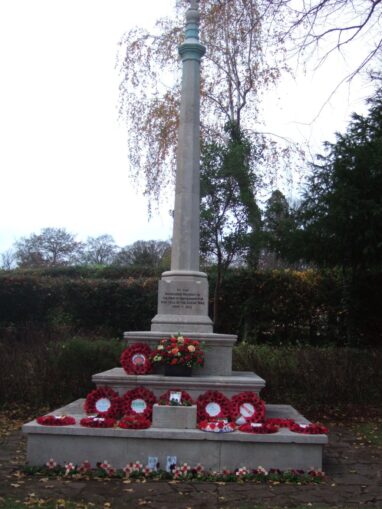
Just outside the village, set back from the main road into Bristol, stands a stone war memorial. At the foot of the cross are named over 43 men killed in the Great War, including one of my Great Uncles, three men from one family, & two from two others, in a town of fewer than 4,000 souls.
Who voted for the slaughter to begin?
Nobody.
At the time, the electorate comprised 5.2 million men (some 60% of all adult males, and no women at all), but they were not consulted. Instead, the order was given by King George V at a Privy Council meeting in Buckingham Palace attended by only two court officials and Lord Beauchamp. As historian AJP Taylor explained, this reflected ‘a general view that war was an act of state, if not of prerogative, with which ordinary citizens had little to do.’ By 1918, after nearly a million British servicemen had died (with another approximately two million permanently disabled), it was thought that the people might be entitled to more of a voice. The Home Secretary introduced the Representation of the People Act saying that the war :
‘has made it, I think, impossible that ever again, at all events in the lifetime of the present generation, there should be a revival of the old class feeling which was responsible for so much, and, among other things, for the exclusion for a period, of so many of our population from the class of electors.’
Nevertheless, while the Act extended the vote to all men only some women qualified – about 40% of them. The rest had to wait until 1928 to be included. Universal adult suffrage in Britain has yet to celebrate its centenary. Even modernised democracy didn’t stop the repeat use of the royal war-making prerogative in 1939; and it remains to this day the constitutional position for the United Kingdom.
While we complain today about infringements of our personal freedom, the government reserves the right to kill us (and the people of other nations) wholesale, so long as some pretext can be found that circumvents Nuremberg principles. Bliar bounced us into war with Iraq, and Call me Dave only desisted from bombing Syria because he chose to ‘respect’ a Commons majority opposing it.
The US Constitution attempted to restrain the Executive with a specification that it should be Congress that declares a war. Despite that country being almost continuously involved in armed foreign conflicts since its foundation, that declaration has been made only eleven times, the last in 1942. The use of the notion of ‘authorisation’ has allowed this power, like so many others, to drift towards the Chief Executive, and in any case the next Big One may happen so suddenly that there will be no need for a call-up before a general incineration begins.
And, we, in Britain are now being encouraged to consider stocking up on tinned foods/battery powered lighting/camping gas heating/bottled water, whilst the legacy media whips up storm clouds, & the war drums in SW1 are once more being dusted off for hard pounding.
Autumn winds blow around the old granite cross.
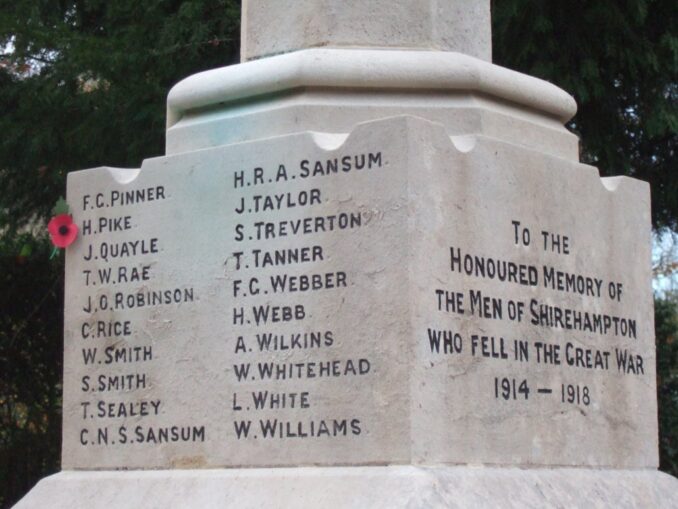
But we have the vote……………
© text & images DJM 2026