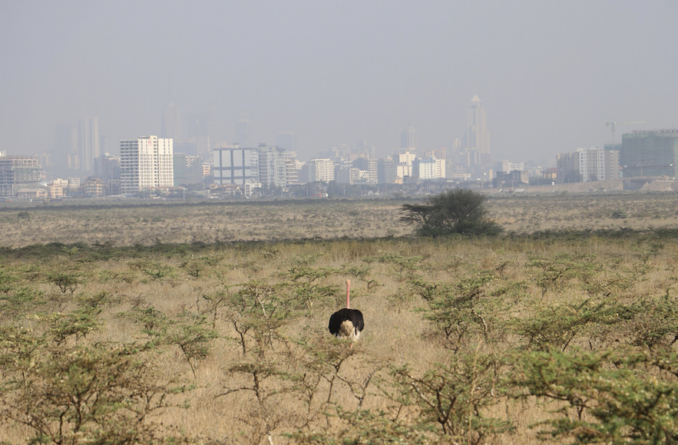
Male Maasai Ostrich facing the Nairobi Skyline,
Shadychiri – Licence CC BY-SA 4.0
Since the new year WSR, wanting total control of the IEBC (in ensuring Presidential results are announced first), saw the IEBC register 5M IDP Voters in a week in the Northern Kenya Refugee Camps Kakuma and Dadaab c/o former Interior CS Fred Matiangi. This despite the latest registered UNHCR data places total refugees in Kenya as 849,625.
With the impending deportation of Somalis from the US, Kenya people nationwide have made it clear they do not want them deported to Kenya. On 3rd Feb 2026, the IEBC confirmed its CEO and Commission Secretary Marjan Hussein Marjan was sacked. By no coincidence Smartmatic files were found at Marjan’s Anniversary Towers office. Smartmatic has been used in the last two elections in Kenya to ensure victory for the Western preferred candidate, more so in the last election.
Compounding this, WSR is actively engaged with Zimbabwean fraudster Wicknell Chivayo agreeing deal to print 2027 ballot papers. Further, Chivayo is implicated in mismanagement of government contracts, including a deal with the Zimbabwe Electoral Commission (ZEC) valued at circa US$40million for the supply of electoral materials. Chivayo is linked to disputed election processes in South Africa and Namibia through the supply of election materials, which he has yet to publicly answer. This echo earlier concerns raised by the late Raila Odinga over foreign involvement in Kenya’s 2022 election technology procurement, particularly the multibillion-shilling KiEMS kits contract awarded to Smartmatic. Despite KiEMS Kits supposed to have 10 year reliability, the IEBC announced it’ll replace 45,352 KiEMS kits costing Ksh 6.7 billion for the 2027 election.
Having lost the national vote completely, the latest is a clear attempt to enact the Shirika Plan (turning IDP camps into municipalities and registering IDPs to vote without any vetting) as a means to harvest votes. Identical to the illegal migrants that entered the US into “Safe Sanctuary” Cities to vote for the Democrats and receive financial support.
On 04 January during a church service at AIPCA Kiratina, Deputy President Gachagua accused WSR of publicly projecting a tough stance on crime while quietly shielding powerful figures within his inner circle, specifically referring to the Minnesota money laundering fraud that is negatively impacting Kenya. He urged the Don to bypass Kenya’s legal processes and act decisively against those implicated.
Stolen funds from Minnesota were used to acquire land, construct residential houses, develop shopping malls. Eastleigh BBS mall owner Abdiwali Hassan is a close business partner of WSR and has contributed (with Minnesota funds) WSR’s election campaign. Hassan was also awarded government contracts by WSR for circa 500,000 metric tonnes of duty free rice and sugar were allocated to be imported, using Minnesota funds and as an economic weapon crippling local producers.
Geopolitical Gamble
The announcement in April 2025 of the abrupt cancellation of US Secretary of State Marco Rubio’s visit to Nairobi, was occasioned by WSR’s latest dalliance with Beijing, rising corruption, and WSR’s relationships with rebels in Sudan and the Democratic Republic of Congo. This did not improve matters.
While WSR attempted to reiterate the trip was a continuation of the Comprehensive Strategic Partnership established in 2017, highlighting Kenya’s role as China’s leading partner in the Belt and Road Initiative (BRI) in Africa. In China, WSR openly criticised Russia’s invasion of Ukraine and, notably, condemned a recent U.S. vote at the UN Security Council that aligned with Russia – further straining relations with Washington.
RSF Sudan
More fuel was added to the geopolitical fire with US Concerns with WSR’s decision to have hosted Sudan’s Rapid Support Forces (RSF) in Nairobi, as well as alleged support for rebel factions in eastern DRC.
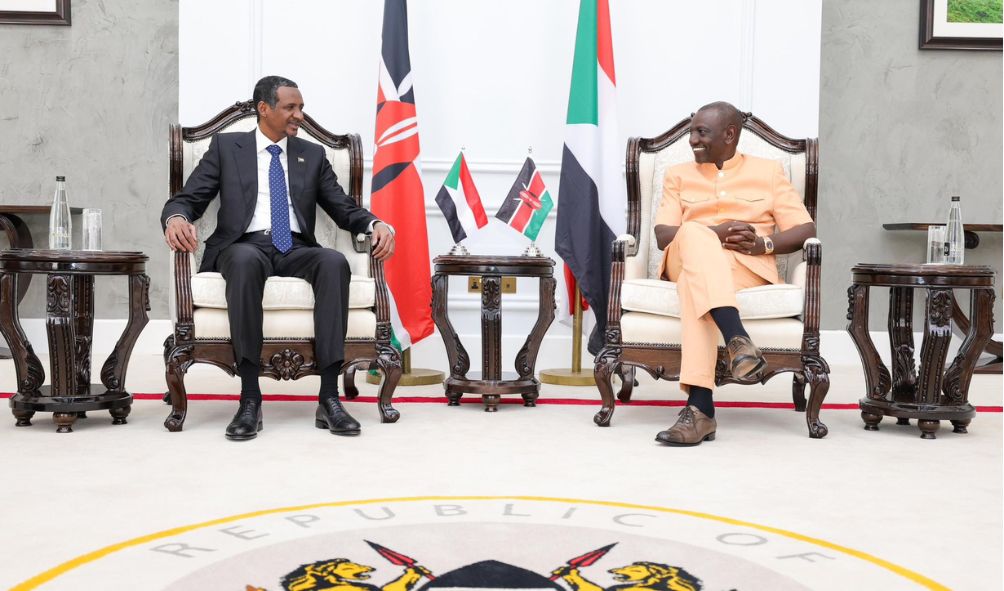
WSR had originally attempted to invite RSF leader Dagalo, popularly known as Hemedti back in 2023. Wider concerns are that WSR had been using Kenya as a financial hub to launder money from Sudanese gold in order to arm RSF militants against the Sudanese army. Western diplomats have privately expressed frustration with the Ruto administration’s regional posture. This prompted Sudan to suspend all imports from Kenya over security concerns.
M23 Eastern Congo
In January 2025, WSR chairing the East African Community (EAC), called for direct engagement between the Congolese government and Rwanda backed M23 rebels. WSR claimed the need to address the root causes of the long-running conflict.
WSR’s attempt to engage in direct talks with the M23 raised questions in Washington (and Kinshasa) about his approach to the DRC crisis and its impact on regional diplomacy. WSR’s previous remarks drew sharp criticism from Congolese authorities, particularly when he likened the DRC’s conflict to Kenya’s own domestic political rivalries – an analogy many in Kinshasa saw as dismissive of the seriousness of the crisis.
Tshisekedi openly accused Ruto of interfering in DRC’s internal affairs. In May 2024 during the Africa CEO Forum in Kigali, WSR dismissed claims Rwanda was fuelling the M23 insurgency, insisting that the group’s fighters were Congolese. Tshisekedi accused WSR of derailing the Nairobi Peace Process, initially led by former President Kenyatta, and of openly aligning with Kigali.
Since assuming office in September 2022, WSR has actively engaged in DRC peace efforts. In November 2022, he oversaw the deployment of Kenyan troops under the East African Community Regional Force (EACRF), framing it as a peace enforcement mission rather than a peacekeeping one.
However, WSR’s relations with Kinshasa have deteriorated significantly. The Congolese government refused to accredit Kenya’s ambassador, for over a year, a clear diplomatic snub.
Further adding to the friction, in December 2023, Corneille Nangaa, the former DRC electoral commission chief now leading an armed insurgency with M23’s backing, launched his movement at Nairobi’s Serena Hotel. This sparked further outrage in Kinshasa, which accused Kenya of allowing its territory to be used as a platform for destabilization. Despite the backlash, WSR remained committed in his stance, rejecting demands to extradite M23 rebels to DRC, declaring that “Kenya is a democracy.”
WSR went further creating a wider storm of controversy appointing in August 2025, Ms. Judy Kiaria Nkumiri as Consul General to Goma, Democratic Republic of the Congo (DRC), an area currently under the control of the Rwanda-backed M23 rebel movement and its political ally, the Alliance for the Congo River (AFC).
Critics across the Great Lakes Region and beyond denounced the move as a blatant attempt to legitimise a terrorist organisation, even as the US and Congolese governments push for the disarmament of M23. The collapse of the Kenyan-led EAC Regional Force in Goma only reinforced suspicions that Nairobi was protecting rebel and WSR’s personal interests rather than fostering peace.
US Congress tabled a resolution that designates both M23 and Sudan’s RSF as terrorist organisations. Should this resolution pass, Kenya’s ties with both groups could trigger sanctions, further isolating WSR internationally.
With Kenya having concluded both its under-resourced MONUSCO deployment to Eastern Congo as well as its under-resourced/funded commitment to Haiti with the assurance under the Biden administration that Kenya would receive security assistance, and remain a powerful friend in Washington.
The first invoice for its failure arrived in the form of an amendment to the National Defense Authorization Act (NDAA) submitted by Sen. James Risch, (R-Idaho) on the Senate Foreign Relations Committee, calling for a sweeping review of Kenya’s recently conferred Major Non-NATO Ally (MNNA) status, citing urgent concerns over Nairobi’s alleged ties with adversarial states, extremist groups, and the potential misuse of US military and intelligence support.
The review deadline is the end of February.
Post their departure early from both Eastern Congo and Haiti deployments, there is a sense in Nairobi (but not WSR) of a disconnect between the initial assurances and security challenges on the ground. Equipment – guns and armoured personnel vehicles – was either inadequate or substandard, that placed Kenyan forces at further risk.
Despite Kenya’s deployments to Eastern Congo and Haiti, WSR tried to put on a brave face. UN “peacekeeping” budgets were slashed due to substantial changes in cost parameters, including from higher fuel prices and increased requirements for air operations and freight. WSR committed Kenya regardless.
The Kenya tax payer funded cost for deployment to Eastern Congo was US$37 million at the same time the Monusco budget was cut. Cuts were attributed to the higher cost for travel on rotation and repatriation for uniformed personnel from higher market prices; contingent-owned major equipment, the higher cost of the long-term charter for the movement of troops, higher costs for renting and operating aircraft and the higher average price of fuel.
For Haiti, Kenya lost upwards of US$35 million in reimbursement, after spending taxpayers’ money on the mission over the past nine months in Haiti which was never reimbursed.
How does this and previous pieces knot together?
With WSR’s international reputation in shreds, no domestic support base to speak of, so looks to repeat the US Democrats model (funding IDPs/immigrants in response for their votes) by domestically utilising his “Somali” option. With a dormant economy and the US recent Senate announcement tabled that camel herders will be banned 25 yrs from US supports this approach.
Providing funding support, the WSR truffle hunting continues with the World Bank through a US$229 million concessional credit for the National Youth Opportunities Towards Advancement (NYOTA) Project, sold as a youth empowerment initiative targeting over 820,000 unemployed young Kenyans is in the trough. This concessional credit is being used to attempt to bribe Kenyan youth to vote for WSR and would be used in Kakuma and Dadaab.
© AW Kamau 2026