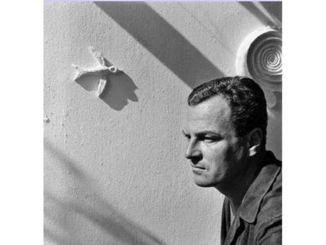

War Office official photographer, Public domain, via Wikimedia Commons
I never really had a deep interest in WWII, my knowledge was sketchy and based on WWII films. Of course, I had imbibed that Hitler was the devil incarnate and Churchill was a national hero. However, recently, more attention has been given to how WWII and the postwar settlement between the great powers has led us to the sorry state of Britain. For example, there was a reading by Academic Agent of Major General Richard Hilton’s book, Imperial Obituary, that was highly critical of the American interference in the Empire. Interest piqued, I started poking about in dusty bookshops for any books written either at, or shortly after, the war to see how the war was viewed at the time. I came across a 2 volume collection of Lord Alanbrooke’s diaries edited and narrated by Arthur Bryant published in 1957 and 1959 that I snapped up for the princely sum of £6.
I had never heard of Arthur Bryant but he was an influential writer, especially of the history of England. Born in 1899, he came from a distinguished family. He served in WWI in the Royal Flying Corps and finished his education reading Modern History at Oxford. He became the youngest headmaster in England, then an Oxford lecturer and in 1936 took over GK Chesterton’s column in the Illustrated London News. His first published book was called the ‘Spirit of Conservatism’ in 1929. He wrote over 40 books, selling over 2 million copies. In January 1940 he published Unfinished Victory, a sympathetic look at how Germany had rebuilt after WWI. It was reviewed postively but later, according to historian Richard Griffith, he tried to buy up unsold copies as the war unfolded. It seems he had a populist touch and his histories of England sold well and he was praised by many prime ministers, including Churchill, but did not seem to get recognition from fellow historians. One, J.H. Plumb said: ‘there was often a note of falsity, even of vulgarity, but largely his failure was of intellect’. Andrew Roberts called him ‘a supreme toady’. The Spectator headlined a review of a scathing biography of him by W. Sydney Robinson in 2021 as a ‘monstrous chronicler of Merrie England’ and ‘The popular historian who specialised in patriotic versions of our island story was a vain philanderer and Hitler admirer’. Sounds like an interesting person. He died aged 85 in 1985.
Bryant was a personal friend of Lord Alanbrooke and spent much of the 50’s working on 2 giant volumes giving a narrative history of the war with extensive quotations from Alanbrooke and quotes from his diaries. Turn of the Tide (1957) runs to 727 pages and Triumph of the West (1959) to 541 pages. Alanbrooke was born in 1883 from a family of Northern Irish baronets and was a career soldier. In his early years he was brought up in France and spoke fluent French. He also learnt German, Urdu and Persian. He received recognition for his distinguished service in WWI and was deeply affected by his war experiences. At the outbreak of WWII he was already a General. He was known for his formidable character, high energy and strategic nous. He was appointed to the role of Chief of Imperial General Staff (CIGS) in 1941. He died of a heart attack, in bed, at home, in 1963. It is interesting to note that Alanbrooke had had to move after the war into the gardener’s cottage of his former home due to his difficult financial sitution including being forced to sell some of his beloved illustrated books of birds. How different to the public servants of today with their noses permanantly in the trough after leaving office. There is a statue to Lord Alanbrooke situated outside the Ministry of Defence building at Whitehall Road near Downing Street that was unveiled in 1993.
The 2 books are based on Alanbrooke’s diaries that were said to be written for his wife Benita. However, I am sure that he intended his account of the conduct of the war to be written into the history books. They are an extremely interesting account of decision-making at the highest levels giving us deep insights into the negotiations between allies and allocation of resources in war. Turn of the Tide deals with the years 1939 to 1943. The story starts at the point that Hitler conquers Poland. In the book he delivers a scathing analysis of the French and Belgian readiness for war. He helped to save many lives by commanding forces to hold the flank whilst soldiers evacuated at Dunkirk. Alanbrooke takes over as CIGS in 1941 and from then on was largely responsible for the British strategic approach to the war. When the Americans entered the war he became part of the joint strategic committee, the Combined Chiefs of Staff. His main strategic idea was to take the fight into Europe via the Mediterraenean. The Americans intially disagreed and much of the 2 books talk about the constant need to revisit and negotiate between the differing strategic ideas of the allies across all theatres.
The first books ends with the conference in Quebec following the invasion of Sicily. The second book deals with remainder of the war and the turnaround of the fortunes of the allies and winning the war. He is highly critical of the Americans approach after D-Day, especially the strategy of Eisenhower but, as British resources dwindled and Americans committed more troops into Europe, he was unable to persuade the Americans of the failure of their strategic approach and Alanbrooke argued that this prolonged the war.
The relationship with Churchill was a difficult one and there is much criticism of Churchill in both books. Alanbrooke often lamented that Churchill pursued pet ideas that he considered unworkable, tried to intervene directly with commanders in the field and Alanbrooke seemed to dread what he may agree to in discussions with allies when he was not present. This was acknowledged in the forward by Alanbrooke to Volume 2 but says that without Churchill: ‘there would have been neither turn of the tide nor triumph of the west’. Personally I would not be surprised if there was a bit of playing to the national audience. By the time of publication Churchill was a national icon and I am sure that such criticism was not well received. However, there seemed to be genuine affection between Alanbrooke and Churchill and Alanbrooke stated that Churchill was: ‘the greatest war leader of our times’ and that he felt he did not make enough allowances for his tiredness and ill-health.
I found the accounts of the various political conferences of the allies by far the most interesting part of the diaries. His observations of Stalin were that he was extremely astute in a military sense and he seems to have held him in high regard. He was perceptive though as to the character of Stalin. Alanbrooke recounts that a toast was made at a dinner to a member of Stalin’s delegation, Maisky; everyone laughed, except Maisky who said that Stalin referred to him as a poet-diplomat ‘but that our last poet-diplomat was liquidated-that is the joke!’ As an aside Maisky was later sidelined, arrested and accused of being a British spy but was saved from execution by the death of Stalin. A set of Maisky’s diaries was published in 2015 that sound interesting.
The Alanbrooke diaries show how the war exhausted Britain and gives us an insight into the post-war settlement and even the global turn to the left and the progressive agenda. One passage caught my eye recounting a dinner to celebrate Churchill’s 69th birthday at the Tehran conference November 1943.
”when Winston was referring to political tendancies in England he said that the whole political world was now a matter of ‘tints’ and that England could be said to have now quite a ‘pink look’. Without a moment’s hesitation Stalin snapped back, ‘a sign of good health’. The President finished up by returning to the tint theme and said that the effect of the war would be to blend all those multitudinous tints, shades and colours into a rainbow where their individuality would be lost in the whole, and that this whole rainbow represented the emblem of hope…”
I found this quite chilling considering what has happened in the intervening years even to the mentioning of the rainbow symbol. Maybe I am just reading too much into it!
The later part of the second volumn deals with the end and aftermath of the war. Alanbrooke noted how the Russians failed to withdraw from the Continent. Alanbrook stated that the allies ‘were prisoners of their own propaganda…(they)… had presented the Russian Communist leaders as champions of democracy’.
He documented the end of the Conservative Government and comments ‘I feel too old and weary to start off any new experiments’. Alanbrooke was clearly exhausted and wanted to step down. He was persuaded to stay on until the following year. Alanbrook oversaw the discussions on Britain developing its own nuclear deterrant. He outlined his scepticism about the United Nations and on that matter he has since been proved completely right.
The last part of the journal concludes with accounts of a phenomenal amount of globetrotting in the final months of his tenure. He criticises British negotiators around the Suez Canal and the giving up of India and Burma but his influence seems to have been limited by this point. Alanbrook steps down in June 1946 and he retires from public life.
I noted that a new version of the diaries have been published edited by Danchev and Todman. Amazon in their description says that the Bryant version was ‘sanitised’ and in the new volume ‘they are explosive’. I actually found the Bryant version of the diaries quite the eye-opener but, not having read the new edition, I dont know what was added or left out compared to this version.
Alanbrooke’s diaries are still referrred to by political analysts today. I came across a blog by Dan Gardner from March this year that highlighted the relationship between Alanbrooke and Churchill, noting Churchill’s humility and deferment to Alanbrooke’s advice. The relationship certainly helped to win the war and contrasts with Hitler’s personal oversight of military decisions. In the diaries it seems that Alanbrooke was able to accurately predict Hitler’s moves based on his assessment of Hitler’s character. Gardner states that Elon Musk could do with someone of a similar ilk to Alanbrooke. Horrocks in 2023 wrote a biography of Alanbrooke, stating that the lessons of Alanbrooke were not applied in the Iraq and Afghanistan war.
Dominic Cummings also wrote a blog in January 2023 about Alanbrooke calling him a ‘largely unknown British hero’ and the ‘crucial strategist of WWII’. He calls Alanbrooke the kind of ‘extraordinary’ figure who can only work in existential times. He says the diaries ‘are reflections on the most basic and important questions of politics and war’. I do wonder if Cummings saw any similarities between Boris Johnson’s character, who he calls the ‘trolley’ (because he went wherever he was pushed) and Churchill’s and sees himeslef as potentially the Alanbrooke figure? It certainly struck me as I was reading the diaries. However, Churchill had a stable and less politically disastrous influence from his spouse and had the good sense to, in the end, defer to the advice of his military advisors. I also don’t see Cummings having the patience and persuasiveness of Alanbrooke.
All in all a jolly good read about this important figure in British history. I hope to see the statue of Lord Alanbrooke one of these days and will raise a glass to the life of this exceptional man.
© @Alurka 2025