
rickpilot_2000 from Hooksett, USA, CC BY 2.0, via Wikimedia Commons
Bretton Woods (I) Will Be Replaced by Bretton Woods (II)
In his recent interview at Manioco64 Alasdair Macleod used the term “Bretton Woods II” to describe the steady progress being made by China to make its currency, the yuan/renminbi, the preferred settlement unit of international trade for the nascent BRICS movement. (I will use the yuan although renminbi is its official name, the yuan being the unit of account for the renminbi.) As most readers know the Bretton Woods Agreement was struck in 1944, in which most nations accepted that the US dollar would be the unit of international trade settlement at thirty-five dollars per ounce of gold; thereby, making physical transport of gold among its signatories less necessary. At the time the US was the world’s largest industrial economy, the so-called Arsenal of Democracy, with highly efficient and productive industries untouched by war. Therefore, the dollar was the logical choice to serve as the world’s premier currency for indirect exchange, unit of account, and store of value.
The Collapse of Bretton Woods I
The lynch pin, of course, was that the US could be trusted not to inflate its currency beyond the ability of its gold reserves, which were vast at that time, to completely back the currency. Unfortunately, as predicted at the time by New York Times reporter Henry Hazlitt, too much responsibility was placed on the US not to succumb to printing dollars in excess of its gold reserves. This prediction came to fruition in the 1960’s and forced the US to “temporarily” suspend gold redemption entirely in the fall of 1971 in order to stop the run by international central banks on America’s gold reserves.
The Fiat Dollar Sails Along
Following this abrogation of its promises, one may ask why and how the US was able to avoid adverse consequences as the dollar seemed to sail along as always as the world’s premier reserve currency for international trade settlement. Why didn’t some other currency replace the dollar or perhaps a basket of currencies such as the IMF’s special drawing rights? The answer is that there were no better alternatives at the time. Maoist China was destroying itself with its Cultural Revolution. The Soviet Union was a dangerous military threat, of course, but its economy had the GDP and productivity of a third world banana republic. (I know. I saw it first hand in 1974 as a young Air Force officer.) There was no Euro, as each Western European nation had its own currency; i.e., the British Pound, the West German Deutsche Mark, the French Franc, the Italian Lira…none backed by gold and all unsuitable to replace the dollar. So, the dollar sailed along.
The Fiat Dollar Era for International Settlement Nears Its End
Eighty years after Bretton Woods and fifty plus years after its abandonment the international financial situation is completely different. The dollar has been debased by over ninety-nine percent from its 1971 exchange rate with gold. ($35 in 1971 divided by $3,650 in 2025).
In the meantime, while the US has been destroying the purchasing power of the dollar via unprecedented money printing and putting into question the true amount of its gold reserves, China has been accumulating gold and building trading relationships with non-G7 nations, mostly under the umbrella organization BRICS (Brazil, Russia, India, China, South Africa). Most importantly China has been developing an international trade settlement system to complete with the G7. This is not something that can be built overnight; nevertheless China has been working patiently to build the necessary infrastructure, starting with CIPS, the Cross-Border Interbank Payment System, to compete with SWIFT. One key difference is that SWIFT is a messaging system only. It does not actually execute the settlement; whereas, CIPS is both a messaging and settlement system. This is very similar to the way bank clearing houses work to settle debits and credits among its members, who learn the details of the net settlement and actually receive confirmation that the net settlement, either a debit or credit, has been executed. But this is NOT the most important innovation.
The Key Innovation–China to Build Gold Vaults Outside Its Borders
When the US suspended dollar redemption for gold, there was little that its trading partners could do. They held dollar claims upon US gold that could not be enforced, because the gold was held entirely in US vaults. Had the gold resided in vaults overseas, it might have been possible for US creditors to win a legal battle in international courts to get pro rata shares of what gold remained there. Of course, this never happened. The US simply adopted force majeure.
China intends to fix this weakness by building gold vaults overseas. One of the first vaults will be built in Saudi Arabia. This is quite a coup for China, not only because the Kingdom has always been firmly in the US orbit but it is the epicenter of oil production and petrodollar settlement since 1971. There can hardly be a more important decision taken by China than to expose its willingness to honor the redeemability of the yuan for gold in whatever exchange ratio that China deems to be unassailable.
A Golden Yuan Is Good for Americans
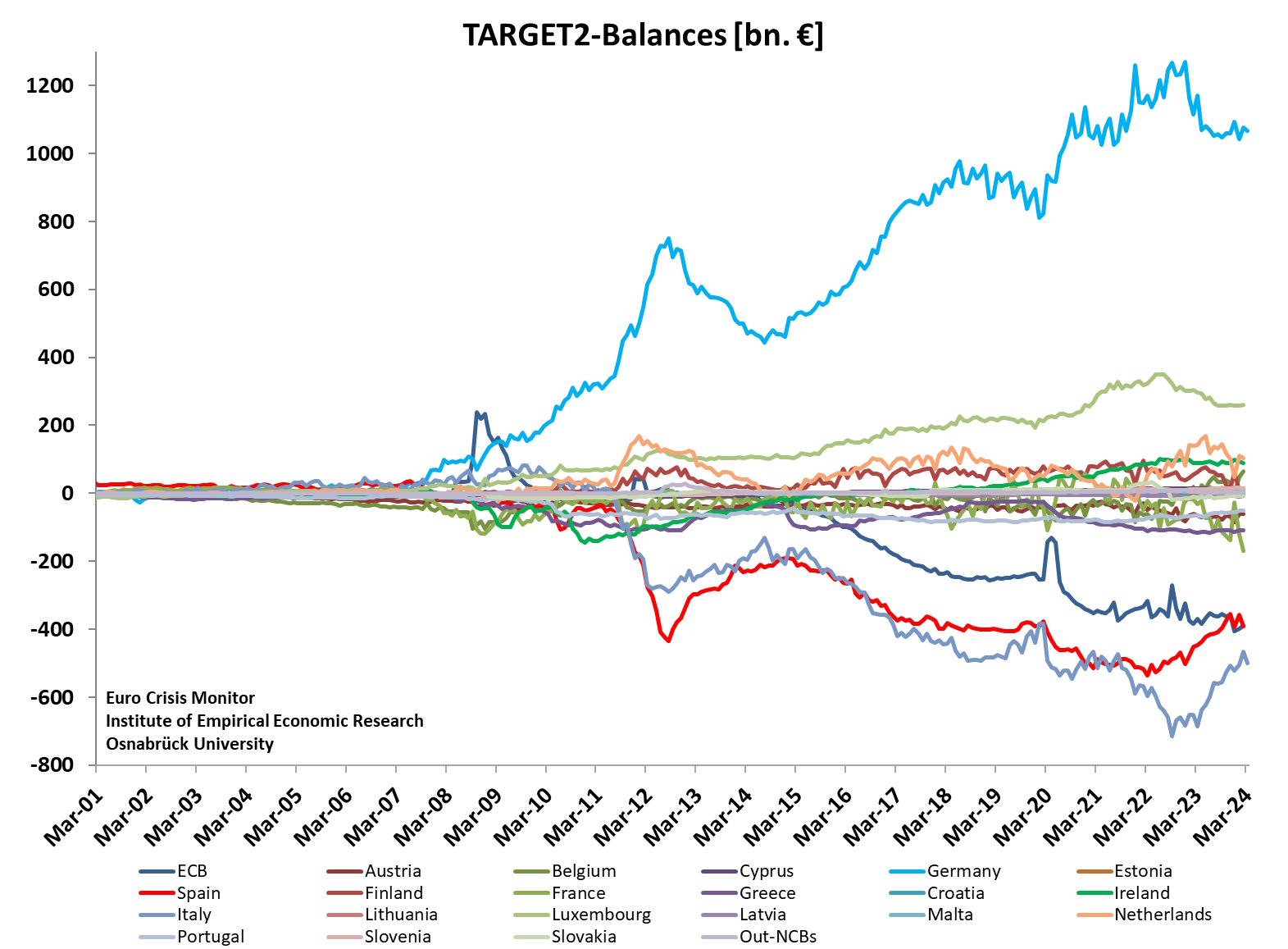
Yes, the dollar will lose its international trade settlement monopoly. Expect former allies, perhaps even Japan and South Korea, to move their trade settlement medium from the depreciating, fiat dollar to a stable, gold-backed yuan. This is the competition that US monetary authorities have needed to shake them from their arrogant presumption that there’s no alternative to using the dollar for trade settlement. This author had written extensively for years that the US needed a solid ally, such as Germany, to take this step. Had Germany reinstated its Deutsche Mark, all of northern Europe might have thrown off the Euro and become a Deutsche Mark zone. This would have shocked America into its monetary senses. Regrettably, German economists and bankers were thwarted by their own politicians. Instead, Germany scrapped the Deutsche Mark and adopted the Euro, which is controlled by French and Italian inflationists. Today Germany is owed over a trillion euros by the TARGET2 settlement system, a debt that it will never collect. It was a golden opportunity lost by the American people and the West in general. Now the golden yuan will lead the way.
Dishonest Money Creates a Dishonest Society
“Gold is money. Everything else is credit”, said J P Morgan over a century ago. And that was an era in which a nation’s currency—i.e., credit–was redeemable in gold. If a nation’s currency is NOT redeemable in gold, what is it? It certainly isn’t credit. Supposedly, the dollar is based on the full faith and credit of…what? Apparently, it is based upon the US government’s ability to print as much of it as it deems necessary. This unlimited power has attracted the worst to so-called public service. No longer held by even the slimmest of threads to reality, government prints as much money as it needs for its adventurism overseas and to satisfy constituencies at home–such as big business, big labor, and a welfare class—to keep it in power. This dishonesty in money has permeated all society, destroying cultural norms such as the nuclear family and making us blind to the damage our military foments overseas.
Good News for the American People
But the era of international trade dominated by the fiat dollar is drawing to a close, to be replaced by a golden Chinese yuan fully redeemable at one of its overseas vaults. The process is unstoppable and will gather more adherents as its benefits become apparent to current users of the dollar. When our trading partners no longer want to hold dollar assets, the US will have no choice but to end debasement and take the necessary steps to linking the dollar to its gold reserves, whatever those may be. This is good news for the American people, even though it will be portrayed as bad news for the US government. For the first time since WWII the US will not be able to print dollars to fund its bloated budget. This will be a wrenching process for a government and a people who have grown accustomed to unlimited government spending. But that spending came at a tremendous cost. How high? We will find out. The key point is that such a reckoning was inevitable. As Ludwig von Mises stated, currency debasement will end sooner or later, preferably sooner via voluntary action or later via its complete collapse.
© Patrick Barron 2025 Website