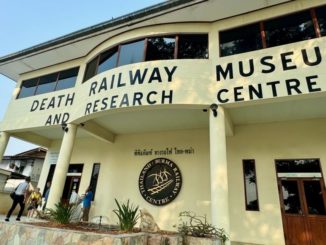
12th January
Laos * ປະເທດລາວ
*…well, almost
Mrs ABS’s father needs a new visa every few years to live in Thailand and, rather than fly to Bangkok, it is easier and cheaper for him to get the paperwork signed off in Vientiane, capital of Laos, which was just a few hours away by car from where he lives.
Knowing that Laos was within fairly easy reach gave us the germ of an idea that maybe we could fit in a visit there during our stay.
Being rather naïve in the matters of Thai road transport, we thought that although it would be a long day, it would be possible by bus.
Of course it wasn’t as simple as that.
Buses in the region are ‘erratic’ and from where we were staying, we’d first need to head into Sakon Nakhon and travel from there. No buses go direct to Vientiane and there would be a fair bit of waiting/walking involved – the stated overall journey time would be over 6hrs(!), so we’d have to take the wheelchair.
The pavements in Laos were described to us as ‘dreadful’, and not at all wheelchair friendly. Plus, with the journey taking so long we’d have to stay overnight and, while we had been expecting to do this anyway, a brief description of some of the hotel rooms her father & stepmum had stayed in over the years was enough to put the wife off going.
Hotel room for two in Laos? No problem, there’s no shortage of hotels. But with some hotels merely having a passing acquaintance with hygiene and/or decent plumbing and us more than likely having to share a room with lizards or bad-tempered crawly insects armed with teeth … no.
So, we canned that idea.
However, it gave Stepmum Nin an idea for a day out for us. She commandeered her son, Ning to do the driving and the four us headed east towards the town of Nakon Phanom, on the border with Laos just under 100 miles away.
Separating the two countries at that point is the Mekong River (The Mekong actually borders Thailand/Laos for just over 1100 miles).
So, while we couldn’t visit Laos, at least we could go and look at it! *
* We didn’t know it at the time, but there is a bridge to Laos from Nakon Phanom (one of the four ‘Friendship Bridges’ that span the Mekong to Laos), but the town in Laos there is very run-down and accommodation would be less than basic.
One thing I noticed on the road there that amused me:

Even their bus stops look like temples…!
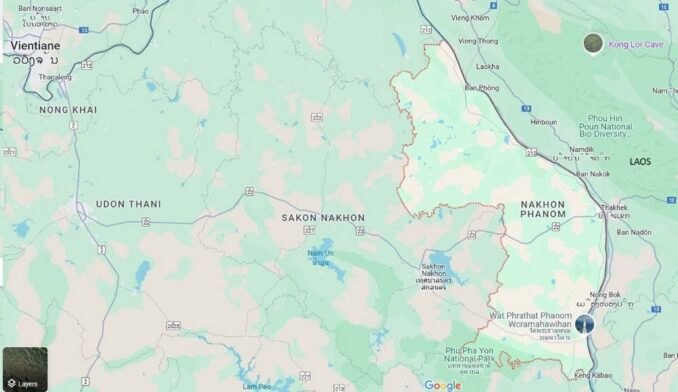
Nakon Phanom (province) นครพนม
We set off around mid-morning and about 2hrs or so later, after a drive along a wide, well-maintained highway (though still with the ever-present Thai road unevenness) we arrived at the municipal city of Nakon Phanom.
Situated on the bank of the Mekong River, it serves as the capital for the region.
We pulled up into a riverside parking slot and there, on the far bank of the Mekong was the country of Laos with some rather striking, if somewhat distant, scenery.
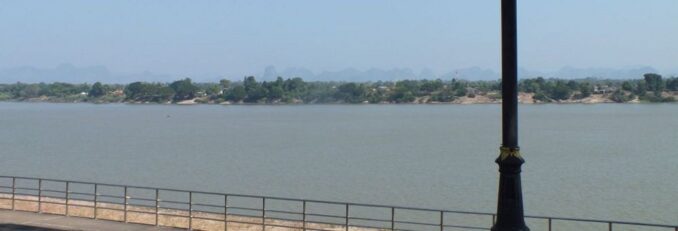
Have zoom lens; will bring scenery closer….
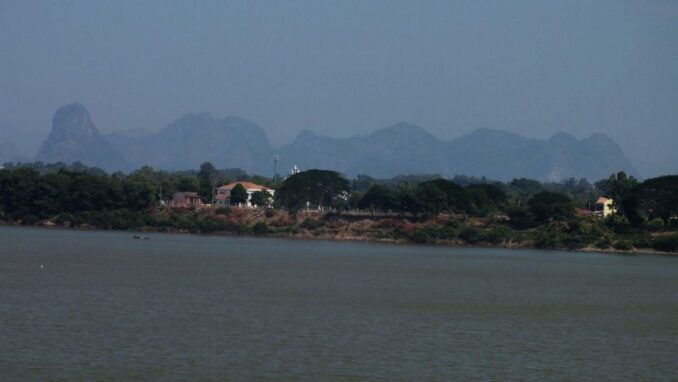
Unfortunately, that was the closest we were going to get to Laos, so after gazing at it for a while, we went off in search of a sit down and some coffee.
Being this close to Laos, it was somewhat inevitable that the café we chose offered Laotian coffee.
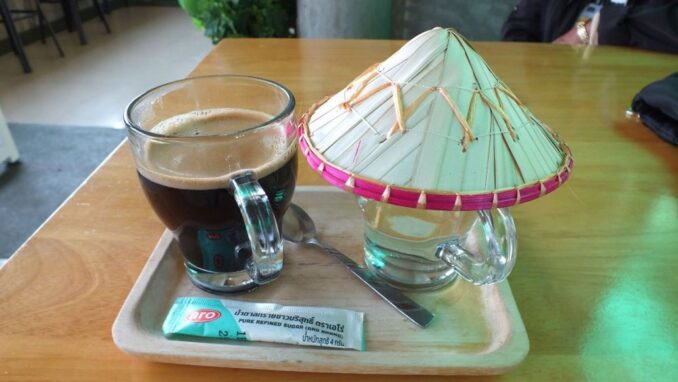
To pinch a phrase: it was very nice. Neither of us usually drink black coffee but this was very palatable.
If we had any complaint, it was that there wasn’t enough of it!
Laotian coffee is traditionally served with a glass/cup of Laotian tea as a chaser.
The tea I found very weak; merely warm water with some tea leaves sprinkled on and although they did infuse some flavour, by the time I had finished the coffee, the tea was almost cold. *
* .. and yes, I know the tea is meant to be drunk cold/chilled, but me no likee.

Decoration on a café table in Thailand.
Overlooking the Mekong River and Laos
Discuss.
Hint: Laos was once a French colony, gaining independence in 1953
Phra That Phanom พระธาตุพนม

Suitably refreshed and ‘Mekong-d’ out, we set off to the southern area of the region to visit a rather spectacular temple: Wat Phra That Phanom.
Legend has it that the main pagoda contains Buddha’s breast bones which makes this particular temple a revered site of pilgrimage for Buddhists and the most important Buddhist site in the region.
It was quite an impressive structure.
The pagoda is 174ft (53m) tall and since its initial construction sometime in the 11th century, it has been renovated many times to its current height.
Most recently, an earthquake in March 1975 weakened it before heavy rain in August the same year caused the entire pagoda to collapse.
After a 4 year rebuild, it was finally reopened to much ceremony in 1979.
Good luck can be bestowed upon you if you walk three times around the pagoda in a clockwise direction. No shoes to be worn inside the compound, of course.
There is also a prayer you should recite while doing so:
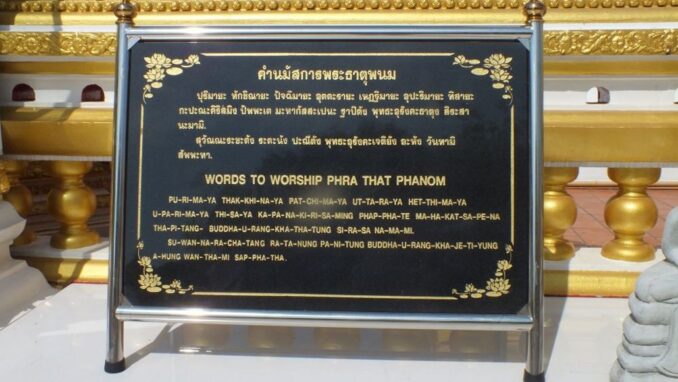
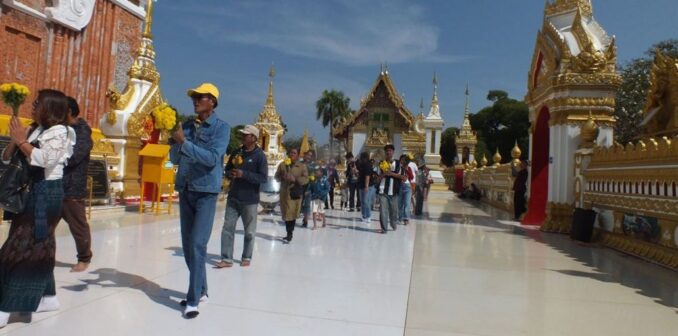
Being a Sunday the temple was quite busy and there was an almost steady procession of the devout doing this. Nearly everyone was carrying small bunches of yellow flowers; I asked, but Nin didn’t know why.
Most of the large groups were walking almost as a procession, although I did see two smallish (possibly family) groups each being led around by a monk.
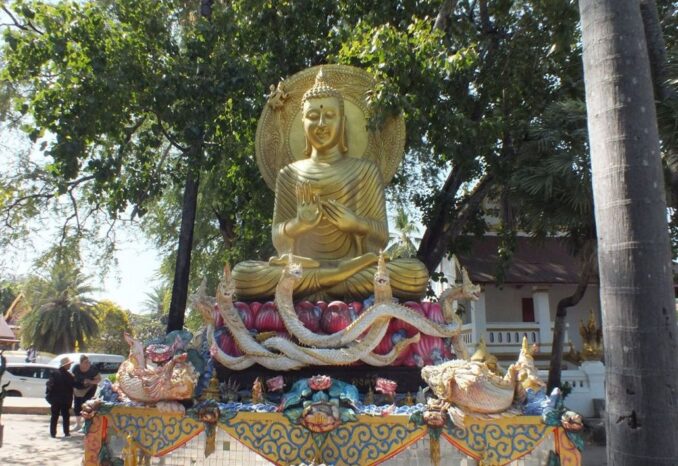
Outside, there were more evidence of Nagas
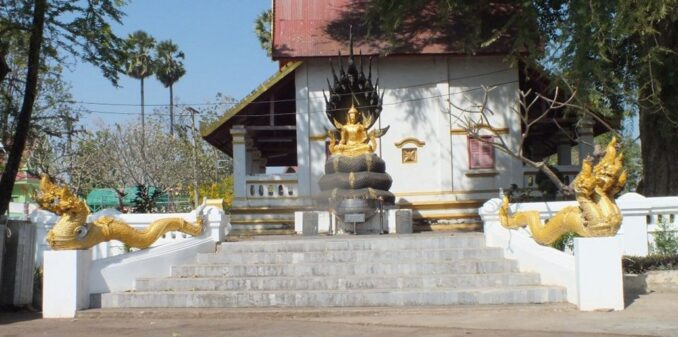
From there, we made our way home, arriving late afternoon.
With just a few days left before we departed, we spent the remaining time with the FiL and his wife. The village had also, by now, learned of our presence, and on our last full day there, a small number of villagers came to pay their respects to us (it was seen as an honour that we had visited their village).
Many bought with them small gifts, mostly fruit – pineapple, strawberries & mango; one lady rocked up with some lovely cakes!
It was very touching gesture from a tight-knit community and as my FiL told us, it was typical of Thai hospitality.
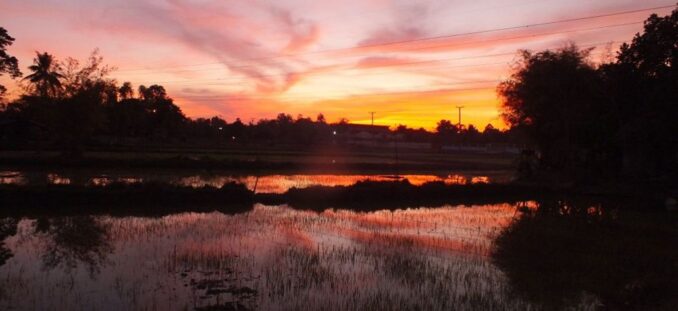
On our final night, the sunset laid on some strong colours over the neighbouring paddy fields.
15th January
Ban Chiang National Museum พิพิธภัณฑสถานแห่งชาติ บ้านเชียง
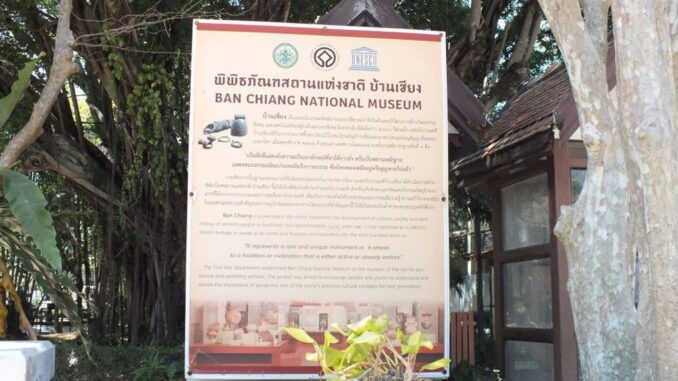
Nin again commandeered Ning to kindly drive us to the airport – Mrs ABS’s dad was too frail to make the journey, so goodbyes were said before we left his home.
The route to the airport took us past the Ban Chiang archaeological museum – this is a UNESCO World Heritage site and is the most important archaeological site in South East Asia cataloguing the development of life in the area from some 5000 years ago.
Nin wanted us to see it, so we all stopped in.
We both like wandering around the occasional museum – and there was plenty there to see – with a (at least for me) fascinating window on an ancient time. I could have easily spent all day there.
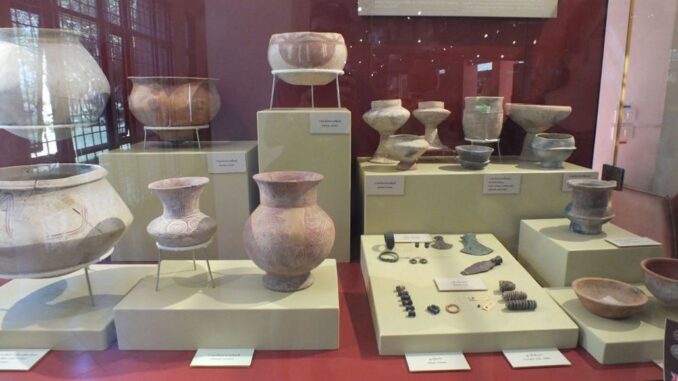
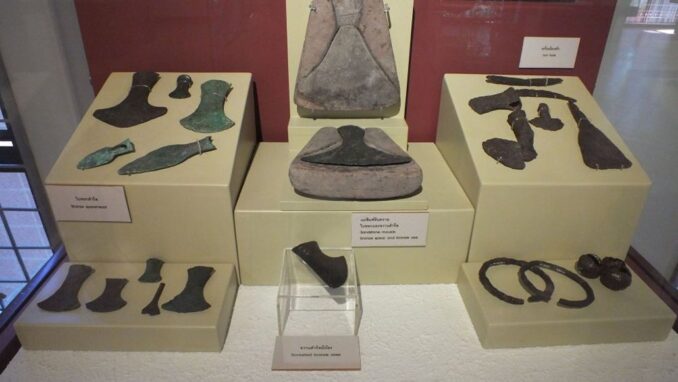
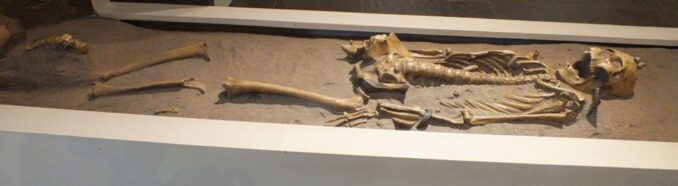
Unfortunately, we were a little pressed for time – the Thais have a somewhat laid-back approach to things like flight schedules! J – and we couldn’t really spend any length of time here, which was a bit of a shame.
Some further laid-back driving (and more bouncy roads!) found us arriving at the airport with just under an hour to our flight.
With just enough time for some hurried farewells, we handed over the wheelchair into the tender loving care of the airline and very soon we were on our way back to Bangkok.
It’s not uncommon for monks to be seen on internal flights – they travel free on such flights in Thailand and are treated very reverently by airport staff and aircrews alike, with priority seating in the departure lounge and being first on/first off, the flight.

© Afghanistan Banana Stand 2025