
© Google Street View 2026, Google.com
Old Holborn
Between 1983 and 2015, the Labour MP for Holborn and St Pancras was northerner Frank Dobson. A railwayman’s son from York, Dobson was a grammar school boy and economics graduate. After leaving the London School of Economics in 1962, he remained in the capital, working at the headquarters of the Central Electricity Generating Board from 1962 to 1970 and then for the Electricity Council from 1970 to 1975. At the same time, he worked his way up from Camden councillor to parliamentary candidate.
As an example of Labour’s permanent divisions, Dobson took his party’s nomination to run for Mayor of London in 2000, only to face defeated nomination rival Ken Livingstone, who stood as an independent — and won. Dobson left the House of Commons in 2015, and died four years later aged 79. Succeeded by Keir Starmer, the Blair-Brown favourite secured the safe seat with a majority of 17,048 at that year’s general election. Times have changed in the central London constituency, which encompasses most of Camden, including Euston, Covent Garden and Bloomsbury.
Four decades on
More than forty years later, the Labour candidate in the forthcoming October 8th vote — triggered by former prime minister Keir Starmer’s departure from Parliament — is Sagal Abdi-Wali. Sagal came to Camden as a “child refugee” in the 1990s after fleeing war-torn Somalia. According to her own account on the Labour Party website: “This new home is where I was raised and educated; it’s where I now work for the council and volunteer for local community groups and charities.” Before becoming leader of Camden Council in May 2026, she helped lead the borough’s campaign to achieve “Borough of Sanctuary” status in 2024.
The psephologists
As for the forthcoming by-election, Electoral Calculus puts Labour’s chance of victory at 59%, with the Greens on 40%. Predicted vote share is Labour 34% and the Greens 30%. Given the margin of error inherent in such calculations, there might be all to play for. Or perhaps not.
Predicted vote share and chance of winning diverge because they measure different statistical concepts under Britain’s first-past-the-post (FPTP) system. Vote share is an estimate of a party’s total ballot volume, whereas winning probability represents the mathematical likelihood of finishing first across simulated scenarios. Because under FPTP a candidate needs only one more vote than their closest rival, a modest 34% vote share translates into a high likelihood of victory when opposition votes are fragmented among the fifteen candidates in St Pancras and Holborn. A higher 42% share might produce only a 50% chance in a tight two-way contest. For clarity, we shall consult the bookies.
The bookmakers
At the time of writing, according to Oddschecker, Labour’s chances hover around the 10/1-on mark, with the Greens at 6/1 against. George Galloway, standing for the Workers Party of Britain, is at 125/1, with the other contenders so distant that they are almost certain to lose their deposits. Just to make life a little more difficult — and further squash any possibility of Dundee’s finest producing a Rochdale-style shock for the blob — the left-wing, fedora-wearing firebrand has recently been de-banked by Lloyds.
At the July 2024 general election, Keir Starmer’s majority in Holborn and St Pancras more than halved, from 27,763 in 2019 to 11,572. Why so, given the unprecedented scale of the simultaneous Labour parliamentary landslide? Because the Greens and an independent called Andrew Feinstein, standing on a pro-Palestine ‘Gaza genocide’ ticket, took a large bite out of Labour’s support.
New realities
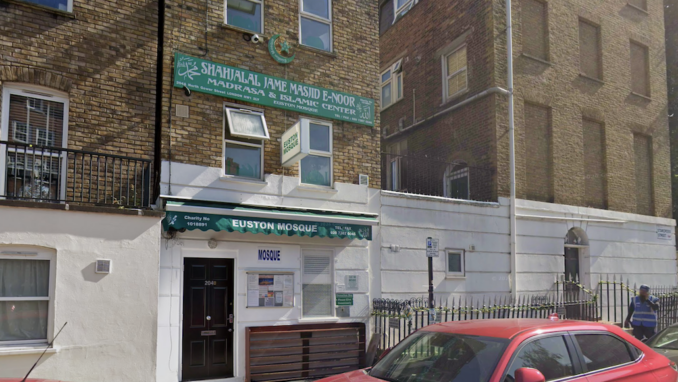
Although the census closest to Dobson’s first win (1981) did not ask a direct question about race or religion, a subsequent demographic study by Philip Rees and Dominic Phillips reverse-mapped 1981 “Country of Birth” data using 1991 ethnic baselines. They estimate 88% to 90% of Camden’s population in 1981 was white. Today, according to Pollimapper, only 54% of the Holborn and St Pancras seat is white, with 45% of the population foreign-born. The Henry Jackson Society tells us 22% of the constituency are Muslim, with a Jewish community of only 2%.
Pollimapper also describes a young, and therefore easily influenced, 21% of voters being between 18-24, compared to a national average of 8%. Fertile territory for the Greens, given the disgraceful but successful sectarian campaign in July’s Gorton and Denton by-election, which returned posh Cheshire housewife Hannah Spencer – later banned from entering Israel – to parliament. Question Time favourite former Green Party co-leader and MP for Bristol Central, Carla Denya, is also banned.
Play with fire
In a thinly disguised attempt to counter a by-election upset, on 8th September (the day the date of the Holborn contest was announced) Jewish foreign secretary Ed Miliband announced a series of anti-Jewish measures regarding West Bank settlements. Jewish Zac Polanski, present leader of the Greens and their Holborn candidate, plays with the same fire. His campaign colours are green, black and white as per the Palestinian flag. Campaign material is translated into Somali, Bengali and Arabic. One such leaflet shows Polanski against a background of the Palestinian flag and includes the text, ‘endorsed by the Muslim Vote [and] Camden Muslim Alliance ’.
If Puffins think the term ‘anti-Jew’ is harsh, although detailed legislation has not yet been implemented, it would be naive to expect Israeli Arabs owning businesses or properties in the West Bank to be sanctioned too. Given the special relationship between Israel and the USA, blowback was swift. Four days after Miliband’s announcement, during his visit to Ireland, Donald Trump told Taoiseach Micheál Martin at Farmleigh House that he would “love to see” a united Ireland and said reunification was “going to happen eventually”.
London Labour may not be too dismayed by the land grab. The Borough of Camden boasts one of the capital’s most prominent Irish diaspora communities. Connected to neighbouring Irish hubs like Kilburn and Islington, the most recent Census puts the Irish presence at 2.44%. This represents individuals who selected “White Irish” as their primary ethnic group. Demographic studies conducted by organisations like Irish in Britain indicate the extended Irish community — including children and grandchildren of Irish immigrants — is 3.5 times larger than the first-generation census figure.
Applying that 3.5x generational multiplier to the Holborn and St Pancras baseline brings the estimated population with Irish ancestry to about 8.5% (perhaps 8,000 to 9,000 residents), many of whom will be old enough to vote.
Conclusion
Holborn and St Pancras is not Frank Dobson’s old Labour constituency. Forty years of mass immigration have produced a younger, more segregated electorate, with Gaza/Palestine now a potent dividing line on the Left. Labour still enjoys the advantages of incumbency and organisation, but elsewhere the Greens have developed a proven and effective vehicle for harvesting a decisive Muslim bloc vote.
Next Thursday the psephologists give Labour the edge; the bookmakers agree. By-elections have a habit of exposing the limitations of both, yet in this case it makes little difference as the contest is between two unpleasant extremist sectarian factions forced upon traditional English politics by mass immigration.
© Always Worth Saying 2026