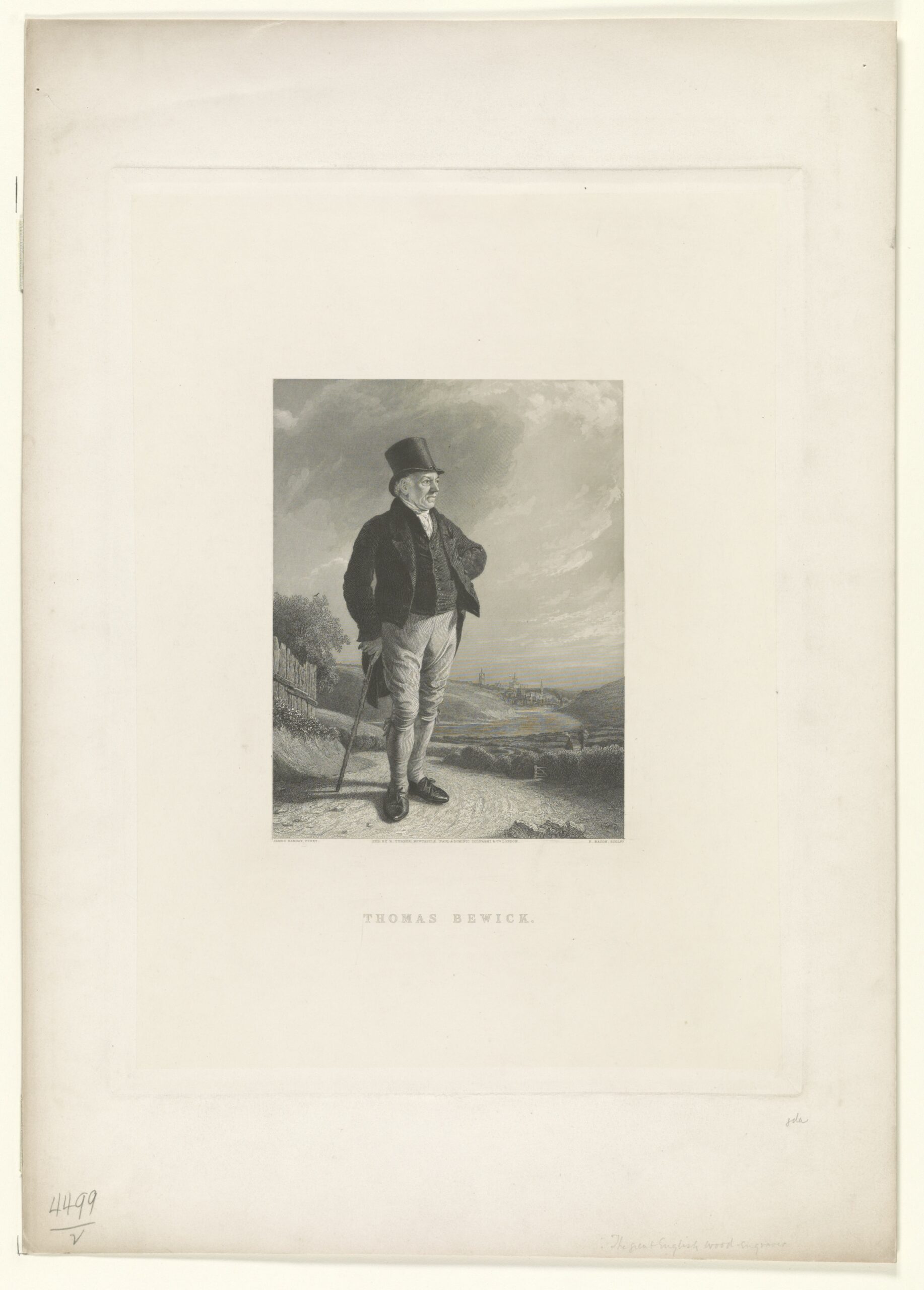
Thomas Bewick redrew every bird in Britain on blocks of boxwood the size of a beer mat, hid some very rude jokes in the margins of a natural history book, and created fingerprints 80-odd years before Scotland Yard got round to it. He also thrashed a famous radical with a cudgel.
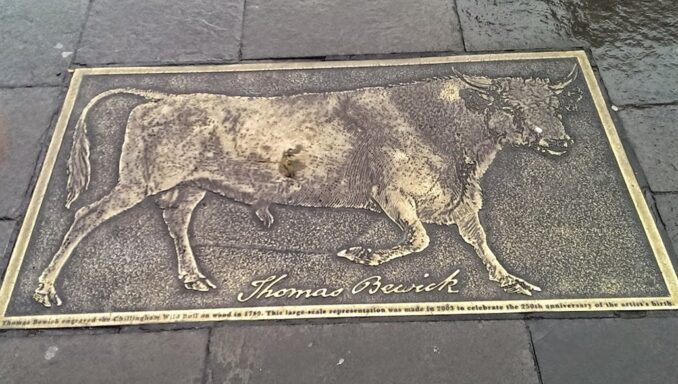
Come out of Newcastle Central Station, cross to Bewick Street and look down by the bus stop. There is a bull in the pavement. A bronze panel the size of a table top, with a line of small print saying that Thomas Bewick engraved the Chillingham Wild Bull on wood in 1789. Thousands walk over it every day on the way to the trains, yet very few of them could tell you who he was.
Tom Walburn, CC BY-SA 4.0, via Wikimedia Commons
The cottage above the river
Bewick was born at Cherryburn in August 1753, in the parish of Ovingham, in a cottage above the south bank of the Tyne about 12 miles west of Newcastle. His father rented a small farm and a land-sale colliery at Mickley Bank that employed around 6 men.
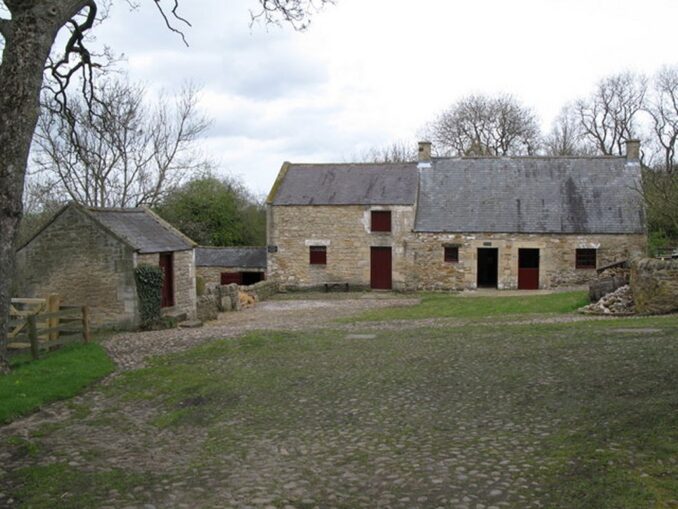
Mike Quinn / Cherryburn, the birthplace of Thomas Bewick
In his memoir he describes filling every blank space in his books, then moving on to the gravestones and the floor of the church porch with a bit of chalk, then to the flags of the kitchen floor. His schoolmaster caught him mid-mural in the porch and put him off by calling him a conjurer. His father complained he was mispending his time in idle pursuits. Neither made the slightest difference. He did not even have a word for it: “I had never heard of the word ‘drawing’.”
On 1 October 1767, aged 14, he became an apprentice to Ralph Beilby, engraver, of Newcastle. The shop took whatever came through the door, from sword blades to coffin plates. Somewhere among the coffin plates, Beilby began handing him the wood blocks.
The weekly walk
Once he had finished his apprenticeship aged 21, he stayed in Newcastle, but went home almost every week for the best part of a decade. He called them his “weekly pedestrian ‘flights’ up the Tyne”, and was proud of never missing one: “in summer’s heat and winter’s freezing cold, I did not miss a single week.” He made a point of not dressing for it, either. “On setting out, I always waded through the first pool I met with. I never changed my clothes, however they might be soaked with wet.”
[Editorial note – this is a behaviour common to the natives. Yours truly can also remember donning a short sleeved Hawaiian shirt whilst out on the Tooon, in the middle of January, in the snow.]
The walks stopped in 1785, the year his mother, his eldest sister and his father all died. On the day his father died he sat down and cut a dromedary, the first block of what became A General History of Quadrupeds.
What he did to a block of wood
Book illustrations prior to Bewick came in two forms: Copperplate gave fine detail but needed a press of its own and a run of its own, which is why the plates in old books sit bunched at the front. Woodcut could sit alongside the type, but it was knifed into a soft plank along the grain, and it was crude enough for ballad sheets about murderers.
Bewick revolutionised the latter.
Boxwood, dense and hard, cut across the end grain so there was no grain to fight, and worked with a graver, the copperplate man’s tool. The result stood at type height, so it locked into the same form as the words and went through the same press in the same pass, and it lasted for thousands of impressions. Bewick did not, nor ever claimed to, invent this process. What he did, which was different, was cut in white line, light out of dark rather than black out of white, and add a trick of his own: lowering parts of the block so they took less ink and printed grey. Feathers, fur and wet stone, all worked in reverse on a piece of wood a few inches across.
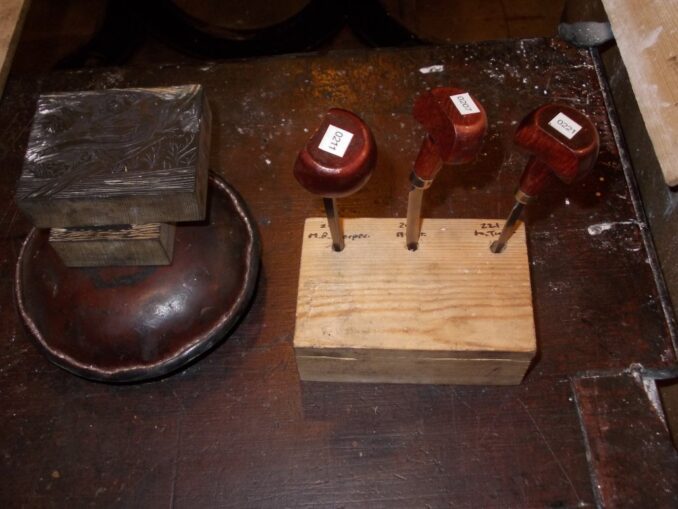
Ian Alexander, CC BY-SA 4.0, via Wikimedia Commons
Thomas Bewick, Public domain, via Wikimedia Commons
Quadrupeds, birds, and a falling-out
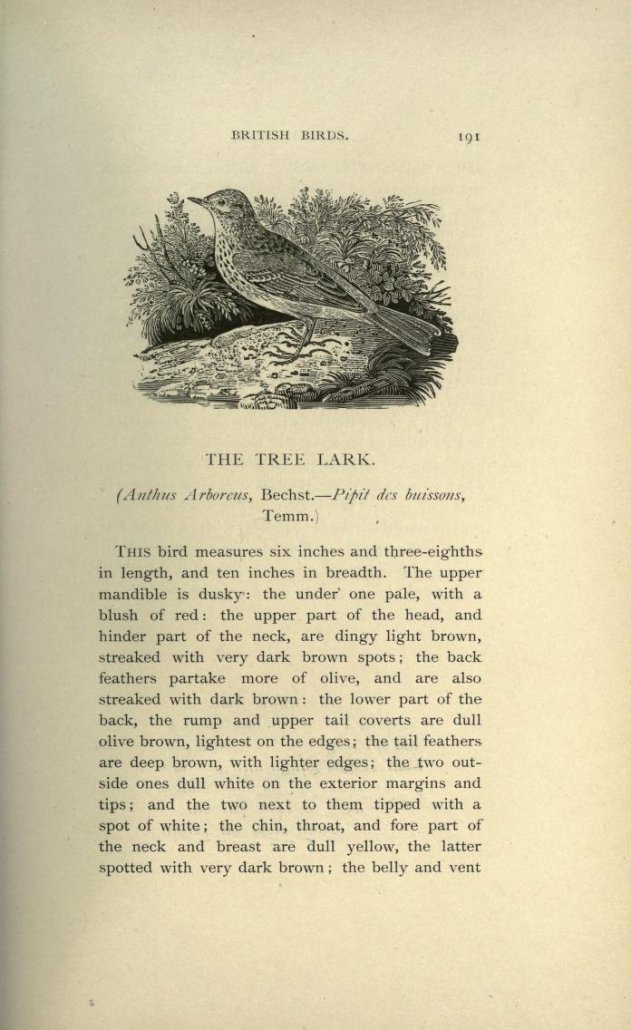
Quadrupeds came out on 26 April 1790: 200 animals and 104 tail-pieces by Bewick, text by Beilby, 8 editions by 1824. Then the birds. Land Birds in 1797, Water Birds in 1804, worked from birds sent in by gamekeepers, from specimens kept in spirit and from live ones he watched himself, and still held up as some of the most accurate natural history illustrations ever cut by a British artist.
[Editorial note – my mind still boggles at how much time was spent on this one publication. It is amazing how much one person can achieve when they don’t have modern-day distractions such as smartphones, YouTube and GP]
Land Birds also ended the partnership. Beilby wanted his name alone on the title page, with Bewick thanked inside for his “assistance”. A friend in the trade tipped Bewick off, the quarrel went to an informal panel of Newcastle printers, and the compromise was that Beilby’s name went nowhere at all. Bewick wrote the Water Birds text himself.
The Bull
In November 1788 the collector Marmaduke Tunstall wrote asking for an engraving of the wild cattle at Chillingham, “and that a copper one”. Bewick walked up at Easter 1789 to draw the bull, ignored the instruction, and cut it on a single block of boxwood a little over 7 inches by 9, which by woodcut standards is enormous. The block split in the sun after the first few proofs were pulled. It became the most famous thing he ever made anyway.
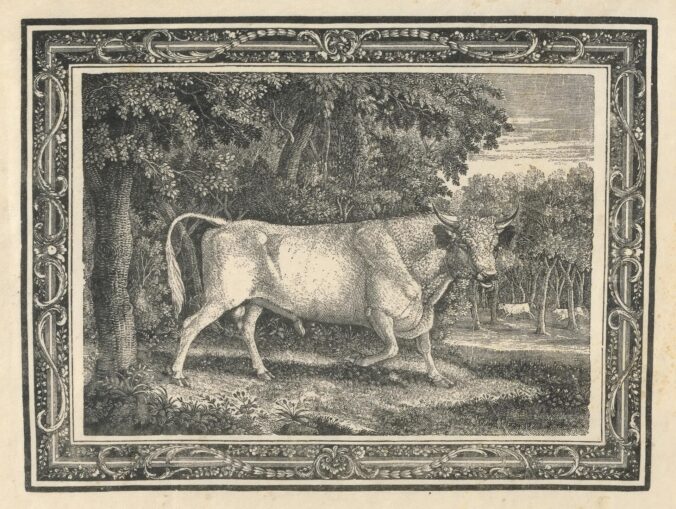
Thomas Bewick, CC0, via Wikimedia Commons
The jokes in the margins
At the foot of the entries in the bird books he put small scenes of country life. He called them tale-pieces, with an a, because he was making a pun and could not help himself. There are around 230 of them, most no bigger than a matchbox.
A good number also displayed his sense of humour. A man relieves himself against a ruined wall while a boy waits beside him. A drunk gazes up at two moons. A monkey bastes a roast. Boys ride gravestones like cavalry horses. A cat robs an old man’s dinner while he says grace over it.
Bewick’s public explanation, in a preface of 1826: “as instruction is of little avail without constant cheerfulness and occasional amusement, I interspersed the more serious studies with Tale-pieces of gaiety and humour; yet even in these seldom without an endeavour to illustrate some truth.”
Some of them do illustrate a truth. Some of them are just a man having a wee. Modern readers walk straight past the lot, because nobody opens a Georgian bird book expecting a gag, but find the first and you go hunting for the rest.
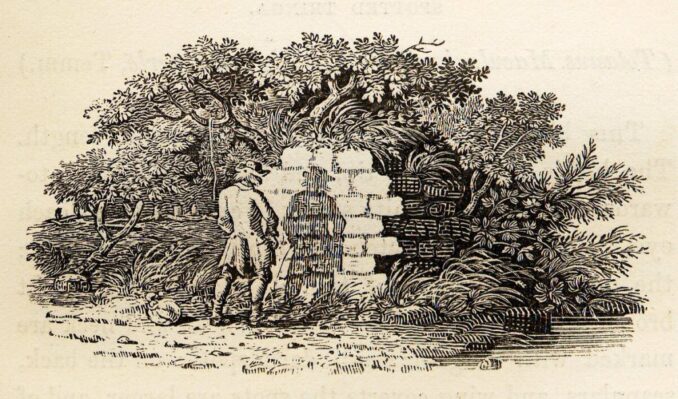
Thomas Bewick, Public domain, via Wikimedia Commons
Nearly 6 feet of Northumbrian
Bewick was a big man. The painter Thomas Sword Good, who knew him, described “a man of athletic make, nearly 6 feet high and proportionally stout”, and then this: “On one occasion, being assaulted by two pitmen on returning from a visit to Cherryburn, he resolutely turned upon the aggressors, and as he said, ‘paid them both well’.” I am still wondering what ‘proportionally stout’ actually means.
He spent the evenings of the French Revolution years in Newcastle’s radical debating clubs, but a revolutionary he was not. Thomas Spence, who held that property in land is everyone’s right, counted on Bewick to back him at his debating society in the Broad Garth, and Bewick sat through the whole thing in silence. Spence lost the vote.
Spence waited until the company had gone, produced a pair of cudgels and went for him. What he did not know was that Bewick was a proficient at cudgel playing. “After I had blackened the insides of his thighs and arms, he became quite outrageous and acted very unfairly, which obliged me to give him a severe beating.”
[Editorial note -I’m now trying to remember the last time I read the word cudgel]
In 1787 he cut the kneeling-slave emblem, “Am I not a man and a brother?”, for the abolition committees in London and Newcastle, and it turns up on an anti-slave-trade poem in 1789 and the Newcastle society’s Abstract of the Evidence in 1791.
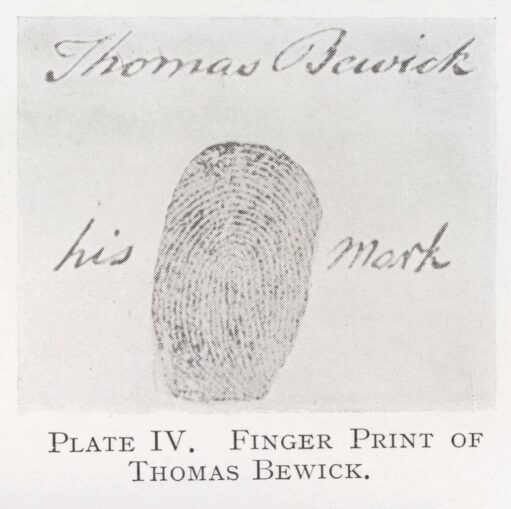
Thomas Bewick, his mark
In 1809 a page of British Birds carried a small oddity: a fingermark, printed as though somebody had smudged the vignette. He did it again in 1818, on the receipt issued to subscribers of his Fables of Aesop, and once more in 1826, beside a letter complaining about people copying his cuts. The last two carry a line of script alongside the print. Thomas Bewick, his mark.
He seems to have meant it as a signature nobody could forge. Whether he understood what he had hold of is another matter, but the two men who later made fingerprinting work, Francis Galton and William Herschel, both named him as the first modern case.
Scotland Yard opened its Fingerprint Bureau on 1 July 1901, 83 years after the Bewick receipt.
See page for author, CC BY 4.0, via Wikimedia Commons
Gateshead, 1828
His wife Isabella died in February 1826 and he kept working. He was pulling the first proofs of Waiting for Death, a worn-out horse he meant to dedicate to the Society for the Prevention of Cruelty to Animals, when the last illness took hold. He died at half past one in the morning on 8 November 1828, at his house in West Street, Gateshead, aged 75.
He is buried at Ovingham, in the churchyard on whose gravestones he had done his first drawings with a bit of chalk 65 years before.
Why we stopped looking
The craft was overtaken. Photography arrived, then photo-mechanical halftone, and by the end of the century nobody needed a man with a graver and some wood. His shop had trained some 30 apprentices who carried end-grain engraving to London and made it the standard way Victorian books were illustrated. He also stayed put, and the people handing out places in the national memory were all in London.
What is left
There is a swan named after him, Bewick’s Swan, by William Yarrell in 1830, and a wren named after him in America by Audubon, who came to Newcastle in April 1827, took tea with him and wrote in his journal: “Thomas Bewick is an inventor, and the first wood-cutter in the world!”
Wordsworth wished in verse for “the genius of Bewick”. Charlotte Brontë wrote 20 stanzas to him at 16, then put Water Birds into Jane Eyre’s hands on the first page of the novel, where Jane reads the solitary rocks, the Arctic Zone and “the black horned thing seated aloof on a rock” while the rain beats on the window. A good deal of that book’s weather comes off his blocks.
Cherryburn is still there, National Trust since 1991, with printing in the barn on the right day.
His mark stayed the test of time but, sadly, his name didn’t.
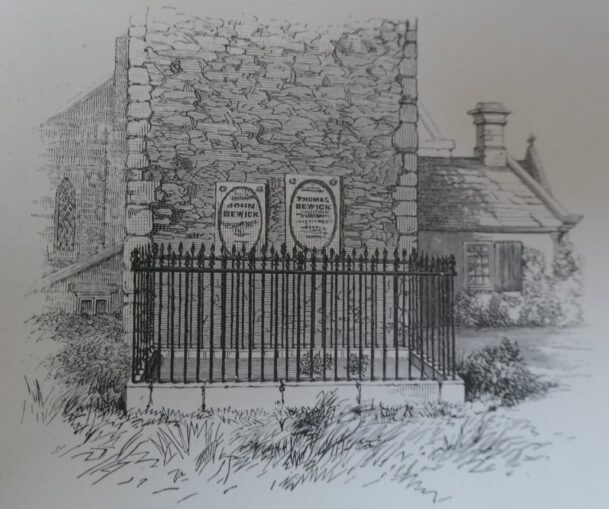
William James Palmer, Public domain, via Wikimedia Commons
© Paranoid Android 2026