
Although the present crisis in the Gulf has provoked both mockery and concern at the thinness of the Navy, a lump came to the throat all the same when seeing HMS Dragon finally leave Portsmouth on Tuesday, bound for those dangerous waters, her complement staring stoically out to sea from the rails.
This high-profile deployment offers an opportunity to wonder what the Senior Service may look like in the future and if lessons are being learned. Three quotes spring to mind, one attributed to Nelson but likely apocryphal: ‘It takes two years to build a frigate and 200 years to build a tradition.’
The second, more of a truism, holds that the Navy needs thirty years’ notice of a war, given the time required to design, build, and prepare a modern fleet for combat. Naval power cannot be created quickly in response to an immediate threat; it demands decades of planning, shipbuilding, and training.
As we look forward, what kind of future navy can we expect, what’s in the pipeline and what might be a better idea?
Attack submarines
Presently in the grey area between commissioning and being fully operational, HMS Agamemnon is the sixth of seven nuclear-powered Astute-class submarines built at Barrow-in-Furness. The seventh, HMS Achilles, is still under construction at the Cumbrian yard. Given that the first of the class, HMS Astute, was laid down in 2000, it has taken an astonishing 26 years for 5 submarines to join the fleet.
Owing to a backlog in refit and maintenance, only one is available at the moment, and it’s in Australia – HMS Anson. With an original reactor life of ’25 years or more’, the best we can hope for is that 2 or 3 Astutes will be active together at any one time for the next couple of decades.
The submarine-based deterrent
The Dreadnought-class submarine will replace the Vanguard-class (which carries the UK nuclear missile deterrent) in the 2030s. A fleet of four submarines will allow one boat to maintain a continuous at-sea nuclear-armed presence. It will carry Trident II D5 missiles with nuclear warheads. The new submarines feature improved stealth, sensors, and a new nuclear reactor for long endurance.
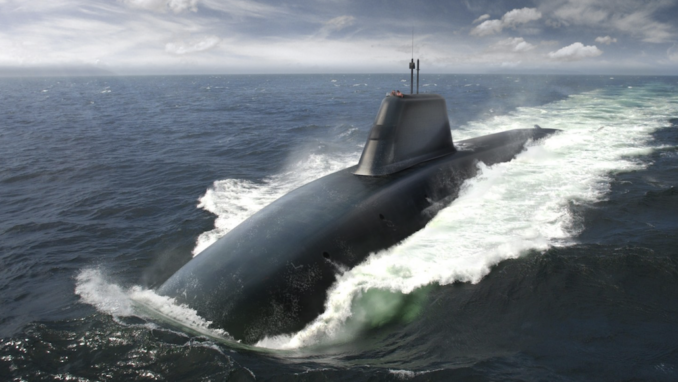
Rendering of planned British Dreadnought-class,
Royal Navy – Open Government Licence 3.0
The first are building now, also at Barrow, and are hoped to gradually replace the Vanguard-class from the early to mid 2030s – at vast expense. Build costs are put at between £31-41 billion for four vessels with running costs of £3bn a year – to allow for one boat to be permanently on patrol.
Frigates
Better news with the frigates. The Type 26 is the Royal Navy’s newest speciality in anti-submarine warfare, designed to replace the existing Type 23s, which are now well beyond their planned lifespan, thus producing the present ‘frigate gap’. The UK plans eight ships. Nelson was somewhat optimistic. The first, HMS Glasgow, began construction in 2017, with further ships starting in 2019 and 2021.
Following delays, the first frigate is expected to reach initial operating capability in 2028. The programme costs roughly £8 billion for eight ships. These frigates are planned to form a core part of future Royal Navy aircraft carrier strike groups and anti-submarine operations.
At 492ft and 8,000 tons the 26s are the size of a Second World War light cruiser. They will replace the 16-strong Type 23 Duke class, which tipped the scales at 436ft and 4,900 tons. The Type 23s had a crew 185, whereas the T26s will be crewed by 157 sailors.
The export version is titled the Global Combat Ship and threatens to be a big success.
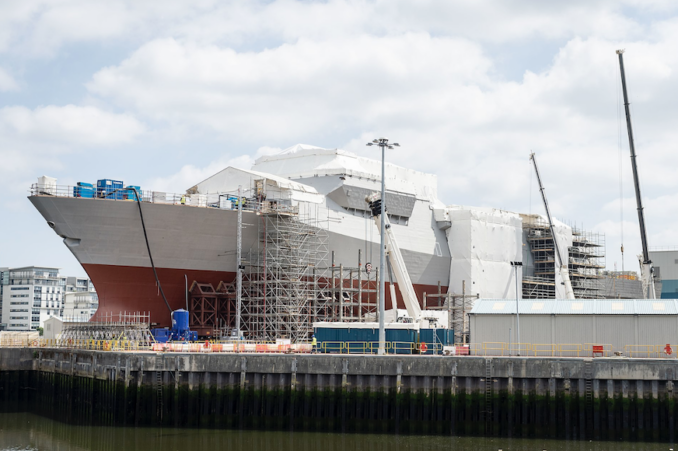
Image of HMS Glasgow,
Ministry of Defence – Open Government Licence v1
Australia is building its own version for the Royal Australian Navy. These ships are called the Hunter‑class and are an adaptation to Australian requirements. Six will be designed and built at Osborne Naval Shipyard in South Australia by BAE Systems Maritime Australia. BAE Systems yards at Govan and Scotstoun on the Clyde are building the British version.
The Canadian Surface Combatant procurement project also selected a Type 26 Global Combat Ship–derived design for its next generation of major warships for the Royal Canadian Navy. These are being built in Canada by Irving Shipbuilding at the Halifax Shipyard in cooperation with Lockheed Martin Canada and other partners. Construction preparations began in the early 2020s, with delivery of the first vessel in the early 2030s. The programme will run into the 2050s with 15 vessels built as part of the project.
Likewise, Norway has formally chosen the UK’s Type 26 frigate design for its next generation of warships. In August 2025, the Norwegian government announced a strategic partnership with the UK to acquire at least five Type 26 anti‑submarine warfare frigates, replacing its ageing Fridtjof Nansen‑class ships and enhancing its maritime defence.
Deliveries of the British‑built frigates are expected to start around 2030, and the agreement is roughly a £10 billion deal— Norway’s largest defence procurement to date. The vessels will operate alongside Royal Navy Type 26s for NATO security in the North Atlantic.
While Norway may participate in some local assembly, outfitting, or systems integration, the hulls and main construction will remain UK-based, taking advantage of the experience gained from building the Royal Navy’s version.
The Type 31 frigate is a new, smaller general-purpose warship being built for the RN by Babcock’s at Rosyth to replace some of the roles carried out by the outgoing Type 23. The UK plans five ships. The design was selected in September 2019, and a £1.25 billion contract was awarded in November 2019, averaging about £250 million per ship.
Construction of the first, HMS Venturer, began with steel cutting in 2021. The ship entered the water in 2025, with service expected around 2027. All five frigates are planned to be delivered by the end of the decade, providing a cheap, flexible escort for global deployments.
As with Type 26, other navies are reported to be interested in T31. These include Poland, Indonesia, Denmark and Sweden
Destroyers
With the frigate programme looking to be a possible success, what of the destroyers? These are traditionally bigger than frigates and in today’s configurations specialise in long-range air defence. At the moment, the Navy’s destroyer force consists of six troubled Type 45s (like HMS Dragon).
These have had a disappointing service life, suffering frequent power and propulsion failures, especially in hot climates, resulting in high maintenance and reduced availability. The propulsion units are being rebuilt at a snail’s pace, with the class experiencing dreadful availability.
They are supposed to be succeeded by the Type 83 but, ominously, according to the UK Defence Journal, this project has been placed ‘under hybrid navy review’
Fleet Solid Support Ship
The Fleet Solid Support Ship Programme aims to deliver up to three fleet solid support ships to the Royal Fleet Auxiliary. The ships will be used to provide underway replenishment of dry stores, such as ammunition, spare parts and supplies. They will regularly deploy with the UK Carrier Strike Group, providing crucial supplies to the Queen Elizabeth-class aircraft carriers and their escorts.
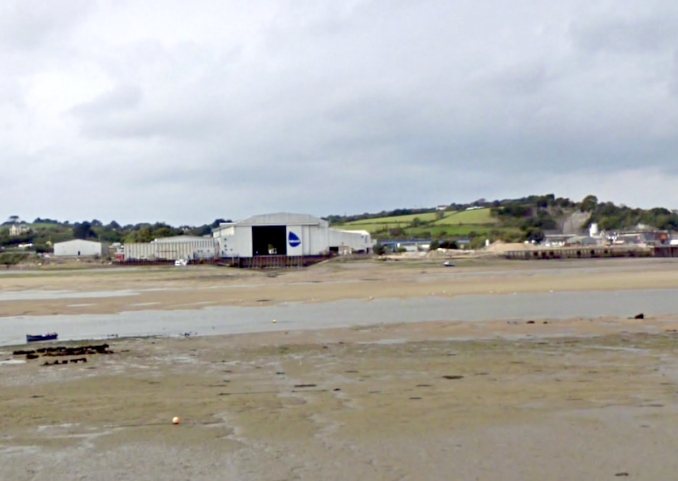
© Google Street View 2026, Google.com
The programme is currently in the construction phase, with the first vessel, RFA Resurgent, having officially commenced production with a steel-cutting ceremony at Appledore’s in North Devon on December 3, 2025. The project is on track for all three ships to enter service by 2032, with the first vessel expected to be operational by 2031.
Multi-Role Strike Ship
The Royal Navy’s Multi‑Role Strike Ship (MRSS) project plans up to six modern amphibious vessels to replace the withdrawn Albion‑class and ageing Bay‑class. Designed for Royal Marines operations, MRSS will carry landing craft, vehicles, helicopters, and drones, supporting littoral warfare, amphibious assaults, and future unmanned systems, enhancing UK expeditionary capability. Don’t hold your breath.
The Albion-class ships, HMS Albion and HMS Bulwark, were announced to be decommissioned and removed from the active fleet in November 2024. However, HMS Bulwark had not been to sea since 2017, and HMS Albion returned from its final deployment in July 2023.
Author’s conclusions
It goes without saying that the MoD branch of the Civil Service needs to be reduced by a half, if not three-quarters. Likewise, HM dockyards and defence contractors’ facilities are no place for trade unions.
On the Grey Funnel Line side, everyone in the private sector understands that sometimes you have to murder your favourite baby because he or she is bleeding money. The unaffordable submarine-based deterrent and the aircraft carriers must be abandoned. In place of more good money after bad, extra Type 26s and 31s can be ordered. Bereft of specialised vessels, the Royal Marines must merge with the Parachute Regiment.
A generational opportunity is arising for the Royal Navy, with a shift to a ‘frigate and attack submarine’ service (similar to Germany, Greece, Turkey and many others), allowing for more fully equipped, fully funded and fully crewed hulls to be in the water. The nuclear deterrent will be carried by the already planned RAF F-35A with its nuclear stand-off/dumb bomb capability.
Which brings us to the third quote. Please excuse this author his ‘effortless ignorance of the midshipman’, and feel free to draw better conclusions below the line!
© Always Worth Saying 2026


