
Baroness Casey
Baroness Casey is the author of several major reports addressing institutional failure, social integration, and policing culture. Her 2015 work, Reflections on Child Sexual Exploitation, provided guidance for local authorities and police forces on tackling child sexual exploitation. The report drew on her inspection into the Rotherham Asian Muslim pedophile rape scandal and highlighted deep systemic failings in how institutions protected children.
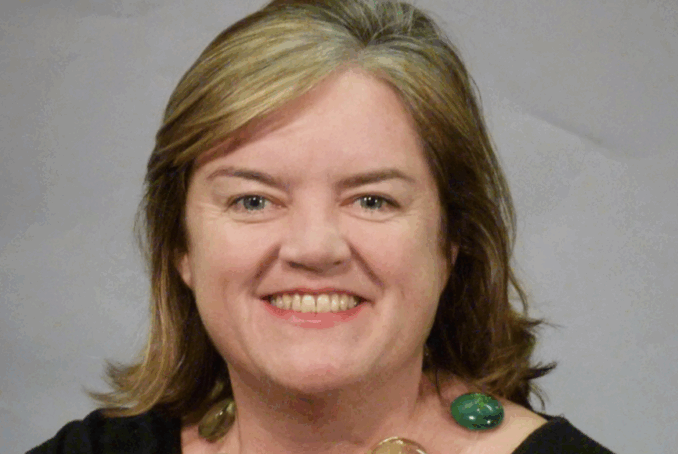
Dame Louise Casey,
UK Government – Open Government Licence CC BY-SA 2.0
This made her well-placed to carry out a 2023 investigation into the culture and standards of the Metropolitan Police Service. Commissioned after a series of high-profile failures — including the murder of Sarah Everard by a serving officer — the review exposed deep cultural problems within the Met, identifying institutional racism, misogyny, homophobia and a failure to protect women and children.
In 2025, she led the National Audit on Group-based Child Sexual Exploitation and Abuse (referred to as the “Casey audit”). This report examined the scale of such exploitation across England. A cynic might suggest the lightning-fast delivery of this review on a topic usually kicked down the road, might be because of her initial stated opposition to the holding of a full national enquiry.
The Casey audit
Casey’s audit found unreliable data and appalling gaps in the reporting of ethnicity, which was not recorded in two-thirds of cases. The report said more effort was needed to explore why it appears perpetrators of Asian and Pakistani ethnicity are disproportionately represented. It also highlighted serious gaps in accountability and was critical towards the government and local authorities’ responses to grooming and exploitation to the extent her position changed. Amongst her recommendations, therefore, was for a time-limited statutory national enquiry into group-based CSE (child sexual exploitation) with full powers to compel evidence and witnesses. Group-based CSE being the latest code word for the mass rape of British girls by Asian Muslim pedophiles.
At the time the Casey audit came out, some commented about what was happening in London. However, the mainstream media didn’t give these concerns much attention — being mentioned rather than highlighted or amplified. Amongst the low-key publicity, a Mr Chris Wild, a care sector activist and abuse survivor, claimed grooming and criminal exploitation are rife in the capital, and it is being missed due to poor data-sharing and underfunded services. A Ms Warda Mohammed, founder of the safeguarding charity Lasting Support, agreed.
According to Baroness Casey’s audit, the Metropolitan Police Service logged 2.77 child sexual abuse cases per 1,000 children. However, the London boroughs recorded only 1.3 children per 1,000 in child in-need assessments for child sexual exploitation. The local authority figures for child sexual abuse were 1.79 per 1,000 children. In other words, with, according to Casey, the matter already being underreported by the police, many of those cases then fall through gaps in the system – or are being ignored – at the London borough level.
Despite pressure from opposition members in the London Assembly, Mayor Sadiq Khan rejects the idea that the kind of organised, ethnic-based “grooming gangs” seen in other parts of England operate in London. Supported by Met chief Sir Mark Rowley, he has also declined to support a major independent inquiry into grooming gangs within London, despite pressure levelled by his political opponents.
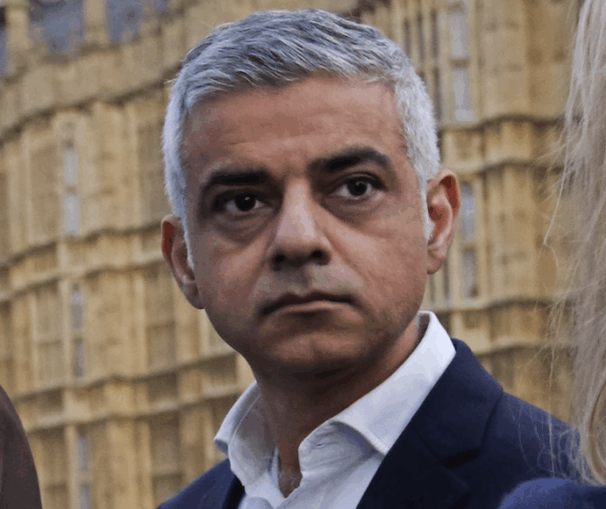
Sadiq Khan shortly before interview.,
Shayan Barjesteh van Waalwijk van Doorn – Licence CC BY-SA 4.0
At the national level, and in response to Casey, Prime Minister Sir Kier Starmer did announce a full national enquiry. At this point, the matter may have been kicked a long way down the road, as per Post Office Horizon and Contaminated Blood, were it not for the collapse of the enquiry at its outset. A hysterical Commons answer from Jess Phillips, the withdrawal of candidates who might lead the enquiry and resignations from its survivor/victim panel put the matter on the front pages. This gave a timely opportunity to the Daily Express newspaper and MyLondon website to break a story one suspects they had been sitting on for a while.
Hidden in official reports
Their coverage alleges substantial grooming-gang-style child sexual exploitation occurs in London, contrary to previous public statements by the Metropolitan Police Service and Sadiq Khan’s City Hall. Much of the legwork was done by MyLondon journalist Calum Cuddeford, who made a Freedom of Information request to Hounslow Council in February. Callum explains, ‘If I have learned anything from FOI-ing public bodies about this, it is that information is hard to come by. Every word is contested, the data is poorly stored and difficult to extract. I repeatedly tried to get clarity on my FOIs this week, but in my opinion, Hounslow Council took every opportunity to dither and delay.’
Frustrated, Cuddeford spent three days, sent 13 emails, made 14 phone calls and went in person to a council meeting to force Hounslow to explain their own FOI response about an investigation into an alleged grooming gang in West London. The FOI requests revealed an undisclosed three-year-long police investigation into an alleged West London grooming gang which had been dropped the previous year.
Despite being asked by opposition councillors during this time, Labour’s Hounslow council officers assured them there were ‘no concerns around organised/group sexual exploitation of young people by men/harmers’. This was untrue. When challenged over the delays, Hounslow council leader Shantanu Rajawat responded, “We have to strike that balance between absolutely being serious about it, and being very publicly serious about it, and providing the mechanisms to report cases and concerns, without creating panic amongst our communities.”
Emboldened, the Express and MyLondon investigated public records such as His Majesty’s Inspectorate of Constabulary (HMIC) reports. A 2021 University of Nottingham Rights Lab paper also proved useful as did trawling articles in the Local Government Chronicle. Persistent legwork uncovered cases in London fitting a Rotherham-style CSE pattern. Despite the lack of detail provided in such reports and the paucity of case studies used by HMIC, a 19th October Sunday Express exclusive was able to highlight six victims, aged 15, 13, 15, 17, 16 and 13.
The offences against them were: ‘raped by numerous men’, ‘sexually exploited by two men’, ‘plied with substances and made to carry out sex acts on men in a hotel room’. Another was given alcohol and raped by a number of men. A fifth was raped on numerous occasions by a group of men, and the sixth was found in a house with six men. All these offences took place in London.
G-P enters the fray
Downloadable and searchable, this correspondent found many other cases hidden in plain sight in the inspector’s reports. Although mention of race, religion and ethnicity is neglected, asides to female genital mutilation and mention of nationality fill some gaps. Quoting from the 2016 HMIC Met report (Sadiq Khan became mayor in May that year):
“Police officers attended an address where they spoke to a 16-year-old Romanian girl, who was dressed inappropriately and was in a room with five much older males. One of the officers was able to speak in Romanian with the girl, who confirmed that she had arrived in the UK two weeks earlier, and was staying at the address with her father (the police then spoke to him). While at the address the girl propositioned the officer. Officers also noted that the girl’s mobile phone was constantly ringing with English-speaking males calling her.”
“Police protection powers were considered but the officers deemed that she was not likely to suffer significant harm. This was a missed opportunity to safeguard the child at the earliest opportunity, despite the officers having concerns about her behaviour and living conditions. The officers made a referral, and the initial assessment team in the sexual exploitation team conducted a risk assessment in relation to CSE and categorised the risk as being category 1 (which means there are concerns a child is being targeted and groomed, but currently there is no evidence of any offences).”
“The case was therefore handed to the borough. A strategy discussion took place with children’s social care, at which it was agreed that a joint visit should be made to the address. This visit took place six days after the first police interaction with the girl. She was found in identical circumstances, with older men present. The living conditions were found to be squalid, and a decision was made for the girl to be taken into police protection.”
“An interview was conducted with the child. She made no disclosures in relation to CSE, but accepted that she had offered the officer sex for money as she was desperate for money. The child was subsequently placed into foster care with the intention of returning to Romania. A review of the case concluded that there was no evidence to suggest that exploitation has taken place. The file was closed but it is not confirmed if the child did return to Romania or if the risk of CSE remains.”
In other words, a child being trafficked across borders for the purpose of prostitution and kept in squalid conditions isn’t being harmed and shows ‘no evidence of exploitation’.
Also:
“A 15-year-old looked-after child was reported missing. The recorded history on police systems said that the child was extremely vulnerable, and had previously gone missing on many occasions. The child was flagged as being at risk of CSE and was the subject of a child protection plan due to neglect. Records also showed that the child was abusing drugs and alcohol.”
“Despite these vulnerabilities and known risks, the child was categorised as absent rather than missing, and therefore the police made no attempt to locate them or to establish the circumstances of the absence. The police therefore could not evidence that they had done everything possible to protect the child from harm. Since this incident, the child has been reported missing on a further 21 occasions.”
Therefore, no attempt was made to find a missing 15-year-old in danger of child sexual exploitation.
“A 14-year-old boy was in care because of serious neglect by his mother. At the time of the inspection, he had been missing on 22 occasions, and he was shown as absent on four occasions. He was involved in a wide variety of offences (including robbery), and also had connections with gangs, and associations with girls known to be at risk of CSE.”
“We found no evidence of the police actively working to reduce the number of missing episodes, and we noted significant delays in conducting debriefs and updating systems (on one occasion, it took 8 days to conduct a debrief and a further 11 days to update the police records). The child therefore continued to be at risk.”
Another:
“A 13-year-old girl at risk of CSE who went missing overnight was assessed as being at medium risk because she was described as being ‘streetwise’. Separately from the missing incident, the communications centre had received another report that the child was alone and unsafe in a house with three men; this information had been in an email inbox in the MPS for 14 hours before the force acted on it.”
“This additional information, when the force did act on it, resulted in the risk level being raised to ‘high’. The child was found, but, in an effort to safeguard her, rather than taking her into police protection, officers arrested her for a minor assault on her mother. At the time of the case audit, the MPS had not formally interviewed the three men she was with while she was missing, which meant that potentially they still posed a risk.”
In this particular annual HMIC report, there are 25,379 reported missing children instances in London. HMIC examined only 38 cases, and in only two of those was the police reponse assessed as being ‘good’. One of which was this one:
“The following case was, in the opinion of the inspectors, handled correctly by the police. A 16-year-old girl made an initial report to another police force that she had been raped on numerous occasions over a three-year period by a group of men in London. If she refused to meet the men, threats would be made that they would hurt her and her family. The force categorised this as a case of CSE quickly and, importantly, assessed the wider risk posed by the perpetrators.”
No matter how this outcome is graded by HMIC, this is Rotherham / Oldham / Telford / Barrow et al-style abuse taking place in London and being reported upon in official reports while the mayor and police chief deny such things occur.
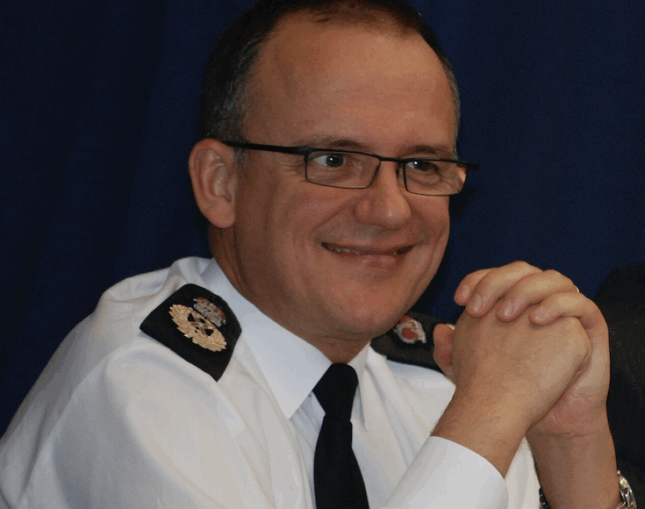
Mark Rowley, Chief Constable,
Surrey County Council News – Licence CC BY-SA 2.0
In light of the parliamentary furore and media publicity, Metropolitan Police Commissioner Sir Mark Rowley announced an enquiry into 9,000 historic cases. This is good news. Or is it?
A wall of silence
Hold on a minute, why are hardened Fleet Street journalists leafing through old public domain reports with a microscope instead of using their usually willing eyes and ears within the Met and London borough councils? Because of a telling wall of silence. Besides the capital’s racial and religious sensitivities, this isn’t happening through sleazy takeaways or grubby taxi firms in the North or Midlands but close to the heart of the British establishment. In a 22nd October MyLondon follow-up to their exclusive, Ms Mohamed elaborated on her previous comments.
A former children’s home worker, she claimed girls in Hounslow care placements were sexually exploited by gangs and wealthy older men in local hotels. She said victims are taken to alcohol-fuelled parties and manipulated into believing they were consenting, later returning “feeling violated and dirty.” Mohamed believes the abuse included “rich international businessmen” and is linked to organised crime. Mohamed says authorities failed to act despite reports, and further accused the care system of prioritising profit over protection.
This reinforces the long-held suspicion of race and religion-tainted mass rape of young people not being reported in the capital. Not because it doesn’t happen, but because of who some of the perpetrators are and the way in which their activities dovetail towards similar crimes committed by well-protected establishment figures.
Rather than providing a ray of hope to victims, Puffins can expect Sir Mark’s enquiry into 9,000 historic cases to be met with a very vigorously applied size 10 standard issue service boot pointing towards the longest of grasses.
© Always Worth Saying 2025




_(cropped).jpg)