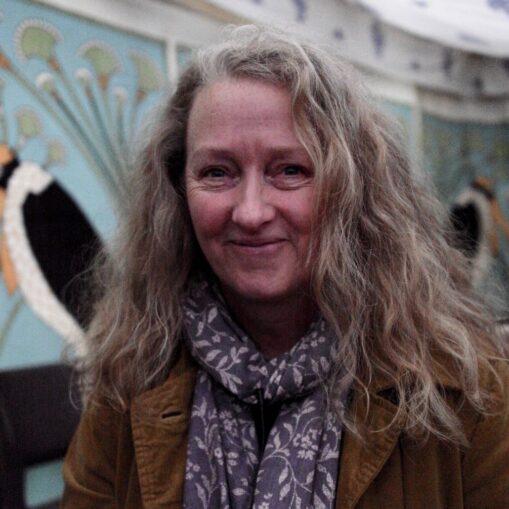
It has recently emerged that Raynor Winn (NHRN), whose trip with her husband Moth (also NHRN) along the SW Coastal Path inspired her book ‘The Salt Path’ (followed by the film of the same name starring Gillian Anderson and Jason Isaacs), may not have been telling the whole truth. Fey-looking Winn, whose real name is Sally Walker (her husband is Tim) seemingly wrote up their experiences in the guide book they carried, as she didn’t even have enough money for paper. Although their publisher, Penguin, described the prize-winning novel as an ‘unflinchingly honest, inspiring and life-affirming true story’, doubts are now amassing. Perhaps I should have said it has *finally* emerged as potentially not wholly true, rather than recently, as there have been rumours from the very beginning that maybe this particular book wasn’t all it appeared to be. Those rumours tended to rest on anonymous reviewers saying things like ‘Living where I live, and knowing what I know, I would be surprised if this book is the whole truth’. Perhaps a bit of artistic licence was involved, I thought, reading such comments, or maybe some slight rearrangements of places or events for literary purposes. Flesh can now be put on the bones of that argument, with national newspapers like the Observer and the Telegraph running pieces detailing allegations of fraud against the two protagonists. Briefly, the initial charge was that Sally (Raynor) was involved in some way in defrauding a previous employer of £64,000 or so while she was a bookkeeper for an estate agent in North Wales. Worse was to come: it appeared that Moth’s terminal diagnosis of rare neurological condition CBD (corticobasal degeneration) might also not be entirely accurate, as the prognosis for that disease is poor – yet, twelve years on, he seems quite fit, having in the meantime completed the 600 plus miles of the gruelling coastal path (equivalent to several ascents of Everest).
How, you might ask, has this happened? Fraud and deception have always occurred, yet the people involved are not usually taken to the public’s heart, fêted or transmogrified into movie stars. How did things get so far? In my opinion, a big part of the problem is what could be termed our societal addiction to victimhood. Here we had, so we were told, two basically homeless people (down supposedly at one point to their last 37p), one of whom was dying, who decided not to be beaten but to knuckle down and do something positive with their lives which would cost them next to nothing and would benefit their health. They would live in nature and ask for nothing. Who could not help but respond to this story of pluck, of initiative, of non-complaining people down on their uppers just getting on with it? Well, as it turns out, they may not so much have ‘just gone for a walk’, as Raynor said, but legged it.
Rousseau, that idealistic Utopian whose somewhat deluded ideas paved so much of the way for the bloodthirstiness of the French Revolution, once said of his ‘noble savage’ idea that the one virtue all men possessed at base was pity. Pity is, of course, a great virtue, and one we should never wish to be without, because it lifts us up above the level of the savage. But, on the downside, I suggest this feeling of instant pity which pulls us towards hard-luck stories, thinking in some measure ‘There but for the grace of God go I’, can prevent some from thinking too much about any oddities or inconsistencies of any story being put in front of them. That unfortunately opens up the possibility of our collectively being conned by those who wish to play on it. They present themselves as victims of circumstance, and we as a culture lap it up. It also infests our politics: the so-called ‘refugees’ are supposedly victims, the tinged are victims, women are victims, the disabled are victims, low paid people are victims, celebs are victims, Muslims are the real victims after a Muslim atrocity and so on. Meanwhile genuine victims are often ignored or even vilified, as for instance happened with the victims of the grooming gangs.
What we seem to have here is not so much genuine victimhood as the victim mentality, or a type of ‘victimism’ (yes, another ‘ism’), another play on the emotions to bypass rationality and the thinking parts of the brain in order to gain something which wouldn’t otherwise be forthcoming – much as the government spread fear and terror during Covid to prevent people from thinking straight and challenging the frankly ludicrous stuff some of our politicians were coming out with.
‘Moth’ and ‘Raynor’ (I even wonder if they made up the names deliberately: ‘rain or’ standing for weather, ‘win’ speaks for itself, while ‘moth’ conjures up fragility and fluttering) have now reportedly been dropped from the charity which represents the illness Moth supposedly had. Raynor has, I read, pulled out of the publicity tour accompanying the film and refunds have been issued to the public. The Walkers (ironically, their real name might have been the more appropriate one to use for the book) were, some time ago, given a Cornish farmhouse with land to ‘re-wild’ by a benefactor. Nice non-work if you can get it. Winn has called the current allegations ‘grotesquely unfair’ and ‘highly misleading’. It will be interesting to see how this one plays out. In the meantime, maybe we should all just stop having our heartstrings plucked quite so easily.
© foxoles 2025