
The series takes its first (but not final) turn to the darker side of the North East’s historical figures. Mary Ann Cotton of Low Moorsley was the first female serial killer in British history. This article may just be enough to put you off your cup of tea.
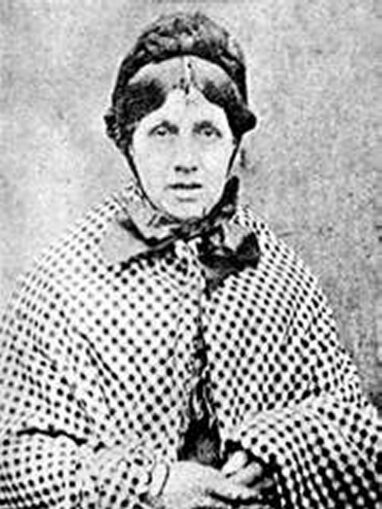
\the ledgeand, Public domain, via Wikimedia Commons
In the stores at Beamish (yes, the place I keep going on about and hope you have found time to visit by now), among the trams and the pit gear (did I mention you need to see it?), there is a small black teapot. Sadly no copywright-free pictures exist of it, but believe me when I say that, as far as teapots go, it looks about as evil as a teapot can get. It arrived in 1972 with no story attached.
In 1989 the donor’s daughter wrote to explain. Her father, a GP, had inherited it from his step-grandmother, who had been given it in the 1930s by an old lady in West Auckland, and he had never felt comfortable owning it. The old lady’s story was that it had belonged to Mary Ann Cotton, and that she had used it to make tea. Now that doesn’t sound so bad I admit, until you learn it was the murder weapon used in as many as twenty deaths.
The pit village girl (yes, another one)
Mary Ann Robson was born at Low Moorsley in October 1832 and baptised at West Rainton. Her father Michael was a pitman, and the family followed the work to Murton. In February 1842 he died falling down the shaft at Murton Colliery . She was nine. Her mother remarried a year later, to another pitman.
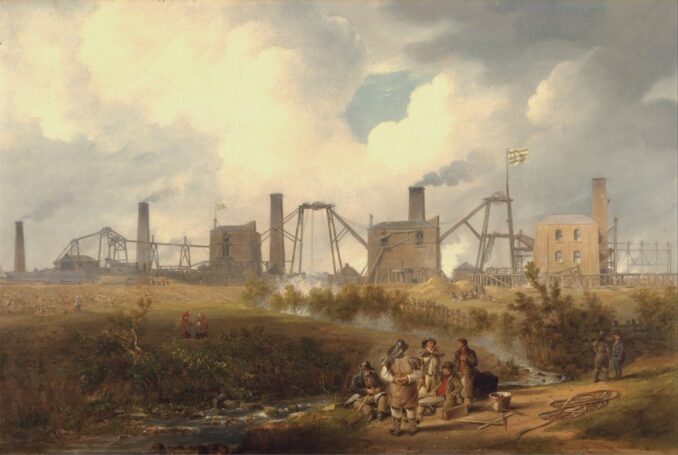
James Wilson Carmichael, Public domain, via Wikimedia Commons
The Wesleyan Sunday school at Murton was the bright spot of her childhood. A superintendent there remembered her as “a most exemplary and regular attender”, distinguished by “her particularly clean and tidy appearance”. Every doctor, insurance agent and neighbour she met in the next 30 years said something similar. But why insurance agents you ask? More on that later.
At 16 she went into service as a nursemaid at South Hetton, then learned dressmaking. On 18 July 1852, aged 19, she married William Mowbray, a colliery labourer, at Newcastle register office, and they went south to Cornwall for work. All very upstanding and civilised… Until….
Husband number one
They came back to the North East with a small daughter and a large gap in the family. Four or five children had been born in the south-west and died there, none of them registered, so nobody can now say what they died of. More followed at home. A son, John Robert, died of “gastric fever” in 1864, and the Prudential paid £2 5s on him. In January 1865 William Mowbray died of an “intestinal disorder”. The British and Prudential paid £35, at a time when a pitman might earn a pound a week.
Gastric fever was the Victorian catch-all for anything that emptied a patient from both ends, and in pit villages with cholera in the well and children dying every winter, a doctor wrote it down without looking twice.
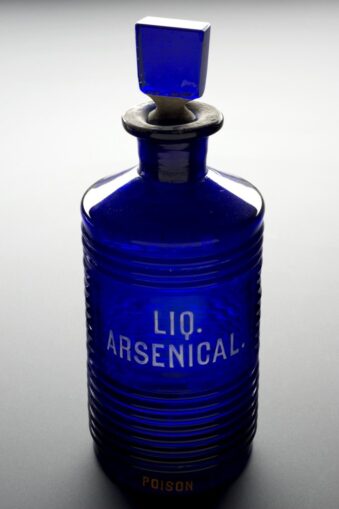
The thing is, arsenic has the same effect.
Arsenic in a hot drink produces vomiting, cramps, diarrhoea and bodily collapse over a day or two. Mary Ann kept the household spotless, nursed the sick with visible devotion, and had a receipt from the burial club or the Prudential ready for each funeral.
See page for author, CC BY 4.0, via Wikimedia Commons
The infirmary, the shipwright and the husband who survived
Widowed at 32, she took a job as a nurse at Sunderland Infirmary. One of her patients was George Ward, an engineer. They married in August 1865. He died in October 1866 after a long illness; his doctor said afterwards that he had been surprised by the death.
A month later she was housekeeper to James Robinson, a shipwright at Pallion whose wife had just died. His baby son died within weeks. Her own mother, living at Seaham Harbour, fell ill; Mary Ann went to nurse her, and she died nine days after her daughter arrived. Her daughter Isabella, the survivor of the Mowbray years, then died, and so did two more of Robinson’s children, all in the spring of 1867. Robinson married her anyway that August. Their baby daughter lived a few months.
Despite being, in this author’s view, ever-so-slightly oblivious to the huge red flags and marrying her anyway, to his credit Robinson is the man who saved his own life by being tight-fisted. She pressed him to take out life insurance but he refused, and by the account given at her trial he found her one day at an insurance office trying to arrange the policy herself. Then he found the debts, some £60 of them, the money she had been given to bank and had not, and the household goods his older children had been sent to pawn on her orders. He threw her out and kept their son George, who lived into old age. His father was the only husband who survived her.
She had, by then, already tried to buy the poison and been turned away. In January 1869 a chemist’s assistant called Thomas Detchon refused to sell threepence of soft soap and arsenic, “to kill bugs”, to a woman calling herself Mary Ann Booth, because the Arsenic Act required a witness. Four years later he picked her out in the dock.
West Auckland
Homeless in 1870, she was taken in by a friend, Margaret Cotton, whose widowed brother Frederick was a pitman at Walbottle with two small sons. Margaret died that March of a stomach complaint. By September Mary Ann was pregnant and married to Frederick at St Andrew’s, Newcastle, which was bigamy, since James Robinson was still alive and well and a lot wiser (finally).
In 1871 she moved the whole family thirty-odd miles to West Auckland, where an old flame from the Seaham days, Joseph Nattrass, happened to be living. Frederick Cotton died that September. Nattrass moved in as the lodger. She also took work nursing an excise officer through smallpox, and became pregnant by him.
Then came the spring of 1872. Frederick junior, aged ten, died on 10 March. Her own baby Robert, 14 months, died on 28 March. Nattrass, who had just made a will in her favour, died on 1 April. Of the household she had brought to West Auckland, one child was left: her stepson Charles Edward Cotton, aged seven.
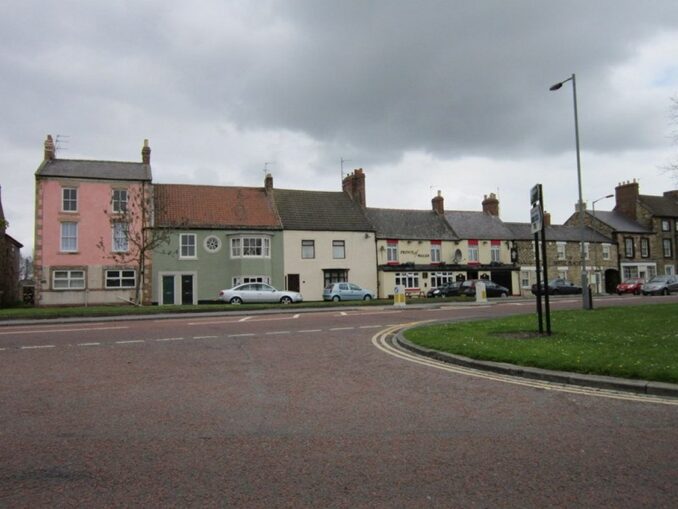
Houses on Front Street, West Auckland by Ian S, CC BY-SA 2.0, via Wikimedia Commons
“He’ll go like all the rest”
On Saturday 6 July 1872 Thomas Riley, the parish official, asked her to help nurse a woman with smallpox. She said she would, if he could get the boy into the workhouse. Riley said the workhouse would not take a child without its mother. She said it was hard to keep him, and that he was not strong.
Riley, according to the report of his evidence, said: “You don’t mean to say that a healthy boy like him will die?” She answered: “Oh, yes. He won’t live long. He shall go like all the rest of the Cotton family.”
The following Friday morning, 12 July, the boy was dead.
Riley heard, and walked to the police sergeant and then to the doctor. Dr William Byers Kilburn had attended the child and had been about to sign a certificate. He now declined.
The doctor’s shelf
The inquest was held next day in the Rose and Crown, the pub next door. Kilburn had opened the body in a hurry on a table in the house and found nothing he could swear to, and the jury returned natural causes. Mary Ann told the village that Riley had accused her because she had refused his advances.
What she did not know was that Kilburn had kept the stomach contents in a jar at home. On the Wednesday he got round to testing them by the Reinsch method, which is heating the sample in hydrochloric acid with a strip of copper.
The copper went black.
She was arrested on 18 July. Charles Edward was exhumed and his organs sent to Dr Thomas Scattergood at the Leeds School of Medicine, who found arsenic through the body. Over the following weeks the graves were opened for Nattrass, Frederick junior and the baby Robert. Arsenic in all three. Newspapers began looking up the addresses, the husbands and the children, and the figure they settled on was twenty.
The Trial
She was pregnant when arrested, so the trial waited. The baby, a girl she named Margaret Edith Quick-Manning Cotton after the excise officer, was born in Durham Gaol on 10 January 1873.
The trial opened on 5 March before Mr Justice Archibald. The Crown was led by Charles Russell, who ended his career as Lord Chief Justice. Russell’s case was mostly a list: where she had lived, who had lived with her, who had died and how soon after. The judge let in the deaths of Nattrass and the two other boys as evidence of a system, over the objections of her counsel, Thomas Campbell Foster, and that ruling had the biggest impact.
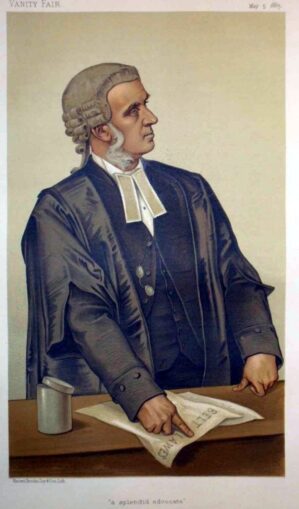
François Verheyden, Public domain, via Wikimedia Commons
There was also the chemist. Soft soap and arsenic had been bought in the village that spring, through a neighbour, for scrubbing a bedstead clear of bugs. Alfred Swaine Taylor, the leading forensic authority of the day, summarised the evidence in his textbook that same year and added one line that is worse than all the rest of it: “She sent her son, for whose murder she was tried, to procure the poison with which she subsequently killed him.”
Foster’s defence was the green wallpaper. Arsenical wallpaper was real and had killed people, and he argued that scrubbing it with soft soap had raised a poisonous dust the boy breathed in. It did not explain Nattrass, or the baby, or the long list of people who had died before she ever saw the paper. The jury were out for about an hour. When the verdict came she collapsed and was carried from the dock.
Calcraft
The Home Secretary refused the petitions. Five days before the end her baby was taken from her and handed to a childless couple from West Auckland, William and Sarah Edwards, who had asked for her.
On the morning of Monday 24 March 1873 she prayed with three Wesleyan ministers, sang “Rock of Ages”, which she had learned at Murton Sunday school, and made the warders wait while she brushed her hair. William Calcraft, 72 years old and 44 years into a career built on short drops, hanged her at eight o’clock in the yard of Durham County Gaol. The drop was under two feet. She took three minutes to die. They buried her inside the walls that afternoon.
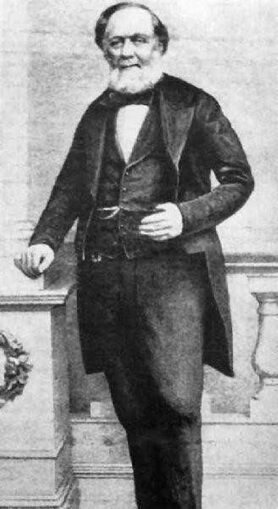
Wheaton (New York), Public domain, via Wikimedia Commons

John Illingworth / Durham Prison
The rhyme
The county did not put her away quietly. Within a generation the children of Durham were skipping to her:
Mary Ann Cotton, she’s dead and she’s rotten,
she lies in her bed with her eyes wide open.
Sing, sing, oh what can I sing?
Mary Ann Cotton is tied up with string.
Where, where? Up in the air,
selling black puddings a penny a pair.
It was still being skipped to in Durham playgrounds within living memory.
What is left
The modern books call her Britain’s first female serial killer, and the count has crept up to 21, taking in eleven of her thirteen children, three husbands, a lover, her mother, a friend and a run of stepchildren. She was convicted of one. Joanne Froggatt played her for ITV in Dark Angel in 2016, and the teapot came out of the Beamish stores for a while in response.
Her last house, on Front Street in West Auckland, still stands and still looks over the green. I wonder if the current owners are partial to a cup of tea?
© Paranoid Android 2026