
The phrase “grim up north” lingers in the national imagination and conjures images of soot-stained skylines, struggling towns, and industries long past their prime. Yet this caricature of tired decline obscures another, less frequently told story: one of extraordinary historic wealth, ambition, and industrial power.
My wife and I are on a plutocrats’ tour of the north to examine how the land lies now. We find ourselves in Liverpool (visiting a friend of Mrs AWS), the entrepot for the Industrial Revolution’s raw materials and exported finished goods.
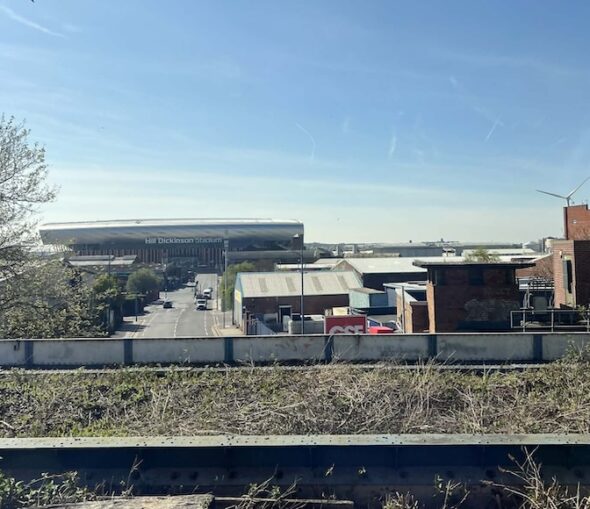
As the Gentlemen’s World Wendyball Invitation Shield passes for another four years, we pass Everton FC’s new stadium while we trundle along the Merseyrail Northern Line towards Southport. Can you tell where we’re going yet?
© Always Worth Saying 2026, Going Postal
En route, it being the people’s game, we’ve struggled to find a 19th-century round ball plutocrat. Our luck changes at Everton’s Hill Dickinson Stadium, freshly built in the city’s filled-in Bramley-Moore Dock. This is the successor to the grand old Goodison Park – once resplendent but now tired, with its iconic Archibald Leitch up-and-over stands and former standing terraces now covered with seats. Before Goodison, Everton played at Anfield, across the other side of Stanley Park. And this is where our plutocrat runs down the tunnel and onto the pitch.
Everton FC moved to Goodison Park in 1892 after a bitter dispute with their Anfield landlord, John Houlding. When Houlding tried to increase rent and take control of the club, Everton rejected his terms, left Anfield, and built the Goodison stadium on nearby land in Walton. Goodison Park opened on 24 August 1892.
When Everton moved, Houlding formed a new club to keep Anfield in use. You may have heard of them. Liverpool Football Club was officially registered on 3 June 1892, with Houlding as its first chairman and major shareholder. Houlding was a successful Liverpool businessman who built his fortune in brewing, having founded Houlding’s Brewery and owned several pubs.
Liverpool’s brewing dates back centuries, with records from the 1300s. It boomed in the 18th–19th centuries due to the port’s growth and its export trade.
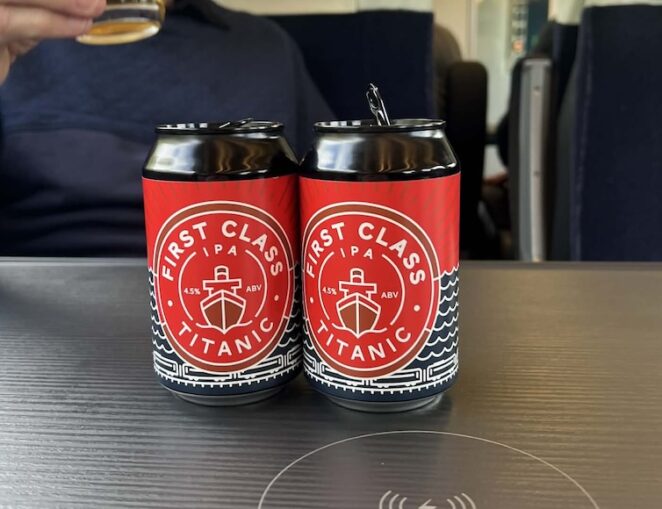
In 1839, the Crusader was shipwrecked nearby. Salvaged goods included casks of India pale ale, which in those days were produced only for export to the subcontinent. Salvaged ale auctioned off locally proved so popular that domestic pale ale sales were introduced. Not least popular with me. I often have a complimentary tin on my first-class plutocrats’ travels with Mrs AWS. More of which later…
© Always Worth Saying 2026, Going Postal
Although beer sales might not be what they used to be, wendyball continues to boom and boom and boom. Regular readers will be aware that your humble author is an even more humble wendyball player. Now playing for a local 16-to-60s seven-a-side team, in his prime he once competed in proper eleven-a-side football, albeit well down the pyramid of such things. So far down my feet were on the sand. I even had to call the camels ‘sir’.
However, other Worth-Sayings have fared better. You could even say that feet run in the family. An uncle played for the better half of Glasgow. One of my sons was signed to a league club at the academy level. Some of his little friends from those days recently competed in the World Cup. One plays for Hill-Dickinson’s Everton and, according to capology.com, earns an impressive £150,000 – A WEEK! Another, a pauper at Man City, tips the scales at only £93,000 a week.
As an aside, they keep on calling this a global game and even refer to the recent knockabout as the ‘World Cup’. But the most populous countries – China, India, Pakistan, Indonesia – aren’t in it. Perhaps ‘The Western European Countries And Their American And African Colonies’ might be a better name? For many years, the French national team has essentially been Afrique occidentale, équatoriale et du nord française. And England seems to be going the same way.
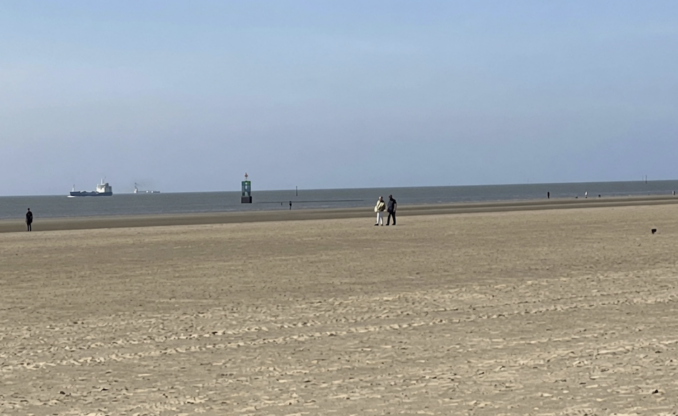
With the Wendyball playground out of sight, we near our destination. Can you tell where we’re going yet? We’re going to Waterloo, just beyond the northernmost of Liverpool’s docks. This is where Mrs AWS’s friend lives. Having dined on the train, we dine again there before a short walk through terraced streets and across grassy links to the beach. And what a beach. Crosby Beach is a two-and-a-half-mile stretch of a sandy coastline that runs all the way to Southport, nearly 13 miles away as a horse gallops or a car might race.
© Always Worth Saying 2026, Going Postal
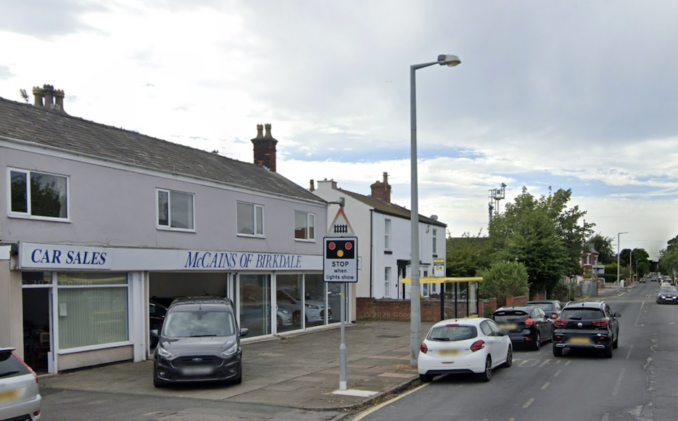
Switching from the people’s game to the Sport of Kings, the unorthodox trainer Donald ‘Ginger’ McCain operated out of stables behind his car showroom on Upper Aughton Road in Birkdale, Southport. He used the nearby beach as a track and employed a van with an attached harrow to smooth the sand to make gallops.
The veterinary department informs me that seawater acts as a natural antiseptic and reduces inflammation in joints, tendons, and hooves. Galloping and walking through wet, deep sand provides low-impact resistance that builds extreme stamina and leg strength. Added to which, an open seaside environment and splashing in the waves keeps horses relaxed and mentally fresh compared to standard enclosed tracks.
And it works. Bought in 1972, Red Rum suffered from pedal osteitis, a severe bone disease in his hooves. McCain swam and galloped him in the seawater and sand at Southport, curing the condition. Becoming a legendary steeplechaser, Red Rum is the only horse to win the Grand National three times, in 1973, 1974 and 1977. As for the Southport garage, it is still there and right next to the railway line.
© Google Street View 2026, Google.com
Away from royalty, the people, and closer to plutocracy (and staying with cars), we encounter Sir Henry Segrave. Although UK land speed history is more associated with Wales’s Pendine Sands or the USA’s Daytona, land speed records have been set on Southport’s Ainsdale beach. Not quite a self-made man, Henry O’Neal de Hane Segrave was educated at Eton and Sandhurst before serving with the Warwicks and the Royal Flying Corps in the First World War.
In peacetime he became a racing car driver. The Tuesday 16th March 1926 edition of the Liverpool Evening Express gushed of a Crimson Streak and of ‘The Thrills of Southport Sands’, following Segrave’s attempts at the world speed records for the mile and the kilometre.
Major H.O.D. Segrave is quoted as saying, ‘I think I did 155 miles an hour and broke the mile record’. The previous record having been set by Captain Campbell (Uppingham and the Queen’s Own Royal West Kent) on the sands at Camarthen. Back in Southport, the Earl of Cottenham (Charterhouse, Leicestershire Yeomanry and MI5), who drove in the previous year’s 200-mile race at Brooklands, was among the spectators.
Major Seagrave had intended to make an attempt in the morning, but fog intervened. Later, the tide was crossing the track, so the record was taken in the afternoon.
These days, might there be something dotted about the beach at the Waterloo end of the sands that might frighten a horse, or prang a 300hp Sunbeam called Crimson Streak?
Find out next time on Plutocrats Tour!
© Always Worth Saying 2026

